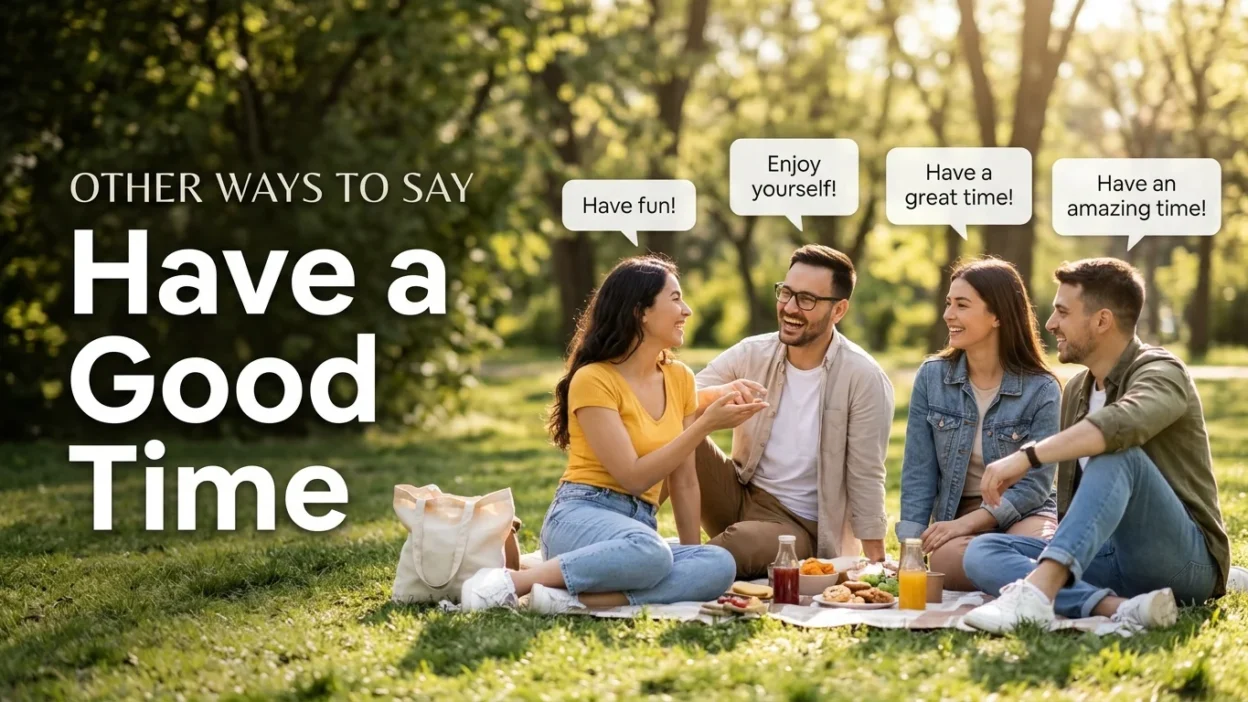
“Have a good time” is a simple and friendly expression used to wish someone an enjoyable experience. People commonly use it before parties, holidays, dinners, events, trips, celebrations, and other occasions where someone is expected to relax and enjoy themselves.
Although the phrase is natural and widely understood, using different expressions can make your conversations feel more personal and engaging. The right alternative can also help you match the tone to the situation, whether you are speaking with a close friend, colleague, client, family member, or someone attending a special event.
This guide explains other ways to say “Have a good time,” including casual phrases, professional alternatives, warm expressions, travel-related wishes, celebratory messages, and encouraging phrases. Each option includes a definition, usage rule, practical example, and helpful tip.
Quick Answer
Some of the best alternatives to “Have a good time” include “Enjoy yourself,” “Have fun,” “Enjoy every moment,” “Have a wonderful time,” “Make the most of it,” and “Have a fantastic time.” Choose the phrase based on the occasion, your relationship with the person, and the tone you want to convey.
Friendly and Casual Ways to Say Have a Good Time
1. Have Fun
Definition: “Have fun” is one of the most common casual alternatives to “Have a good time,” expressing a simple wish for enjoyment.
Usage rule: Use it with friends, family members, classmates, colleagues, and people you know casually.
Practical example: Have fun at the concert tonight!
Tips: This is a short, natural, and versatile phrase for everyday conversations.
2. Enjoy Yourself
Definition: This phrase encourages someone to relax and experience enjoyment during an activity or event.
Usage rule: Use it before parties, trips, dinners, celebrations, or social events.
Practical example: Enjoy yourself at the wedding this weekend.
Tips: It sounds friendly and slightly more thoughtful than simply saying “Have fun.”
3. Have a Great Time
Definition: This expression wishes someone an especially enjoyable experience.
Usage rule: Use it in casual conversations, messages, and social situations.
Practical example: Have a great time on your holiday!
Tips: It is a natural choice when you want to sound enthusiastic without being overly expressive.
4. Enjoy the Day
Definition: This phrase wishes someone a pleasant and enjoyable experience throughout their day.
Usage rule: Use it when someone is attending an event, exploring a place, or taking time off.
Practical example: Enjoy the day with your family.
Tips: It works especially well when you know the person has plans for the day.
5. Have a Good One
Definition: “Have a good one” is an informal expression that generally means have a good time or have a good day.
Usage rule: Use it in relaxed conversations and informal messages.
Practical example: Have fun at the game tonight. Have a good one!
Tips: Keep this phrase for casual settings because it can sound too informal in professional communication.
6. Enjoy!
Definition: “Enjoy!” is a short expression encouraging someone to appreciate an experience, activity, meal, or event.
Usage rule: Use it when the context already makes the activity clear.
Practical example: You’re heading to the beach? Enjoy!
Tips: Its brevity makes it ideal for texts, chats, and quick conversations.
7. Have an Amazing Time
Definition: This enthusiastic phrase wishes someone an especially enjoyable and memorable experience.
Usage rule: Use it for holidays, concerts, parties, celebrations, or exciting plans.
Practical example: Have an amazing time at the festival!
Tips: Use it when you want your message to sound energetic and genuinely enthusiastic.
Warm and Thoughtful Alternatives
8. I Hope You Have a Wonderful Time
Definition: This phrase expresses a warm and sincere wish that someone enjoys their experience.
Usage rule: Use it with friends, family members, colleagues, or acquaintances.
Practical example: I hope you have a wonderful time at the reunion.
Tips: Adding “I hope” makes the message sound personal and considerate.
9. Wishing You a Wonderful Time
Definition: This expression offers warm wishes for an enjoyable experience.
Usage rule: Use it in personal messages, cards, professional notes, or polite conversations.
Practical example: Wishing you a wonderful time during your holiday.
Tips: It has a polished tone while remaining warm.
10. Enjoy Every Moment
Definition: This phrase encourages someone to appreciate the entire experience rather than focusing only on individual activities.
Usage rule: Use it for holidays, weddings, celebrations, special occasions, and memorable events.
Practical example: Enjoy every moment of your trip to Italy.
Tips: It adds emotional warmth to a simple good-wishes message.
11. Make the Most of It
Definition: This expression encourages someone to take full advantage of an enjoyable opportunity.
Usage rule: Use it when someone is attending an event, taking a holiday, or experiencing something special.
Practical example: You’ve been looking forward to this concert for months, so make the most of it!
Tips: It can sound encouraging and supportive without being overly formal.
12. Hope You Have a Lovely Time
Definition: This warm expression wishes someone an enjoyable and pleasant experience.
Usage rule: Use it in friendly, personal, or polite conversations.
Practical example: Hope you have a lovely time at the dinner tonight.
Tips: “Lovely” gives the phrase a gentle and warm tone.
13. Wishing You Lots of Fun
Definition: This phrase expresses a cheerful wish that someone enjoys themselves.
Usage rule: Use it before parties, holidays, outings, celebrations, or recreational activities.
Practical example: Wishing you lots of fun on your weekend getaway!
Tips: It works especially well in friendly messages and greeting cards.
14. Hope You Enjoy Yourself
Definition: This phrase expresses a sincere wish that someone finds their upcoming activity enjoyable.
Usage rule: Use it in casual or semi-formal conversations.
Practical example: Hope you enjoy yourself at the conference dinner.
Tips: It is a natural option when you want to sound caring without being overly enthusiastic.
Professional Ways to Say Have a Good Time
15. I Hope You Have a Pleasant Experience
Definition: This professional expression wishes someone an enjoyable and positive experience.
Usage rule: Use it in customer service, business communication, workplace messages, or formal settings.
Practical example: I hope you have a pleasant experience during your visit to our offices.
Tips: It is more formal than “Have a good time” and works well with clients.
16. Wishing You an Enjoyable Experience
Definition: This phrase offers professional good wishes for someone’s upcoming activity or event.
Usage rule: Use it in formal emails, business correspondence, or professional hospitality situations.
Practical example: Wishing you an enjoyable experience at the conference.
Tips: Choose this when you want to sound polished and courteous.
17. I Hope You Enjoy the Event
Definition: This direct expression wishes someone enjoyment at a particular event.
Usage rule: Use it when the event has already been mentioned or is understood from the context.
Practical example: Thank you for joining us. I hope you enjoy the event.
Tips: It is especially useful in customer-facing and professional communication.
18. Wishing You a Wonderful Experience
Definition: This expression conveys positive wishes for someone’s overall experience.
Usage rule: Use it for conferences, business trips, cultural events, or special occasions.
Practical example: Wishing you a wonderful experience at the annual conference.
Tips: It sounds professional while retaining a friendly quality.
19. I Hope You Have an Enjoyable Evening
Definition: This phrase wishes someone a pleasant evening experience.
Usage rule: Use it in professional hospitality, restaurant, customer service, or formal social settings.
Practical example: Thank you for joining us tonight. I hope you have an enjoyable evening.
Tips: It is a polished alternative to “Have a good time tonight.”
20. Enjoy Your Time
Definition: This concise phrase encourages someone to appreciate the time they are spending somewhere or doing something.
Usage rule: Use it when the activity or location has already been established.
Practical example: Thank you for visiting. Enjoy your time with the team.
Tips: It is useful when you want a professional but approachable tone.
21. Have a Pleasant Time
Definition: This phrase politely wishes someone an enjoyable experience.
Usage rule: Use it in formal or semi-formal contexts where “Have fun” may sound too casual.
Practical example: We hope you have a pleasant time at the reception.
Tips: It is more formal than everyday expressions, so use it selectively.
Alternatives for Holidays and Vacations
22. Enjoy Your Holiday
Definition: This expression wishes someone an enjoyable holiday or vacation.
Usage rule: Use it when someone is taking time away from work, school, or their normal routine.
Practical example: Enjoy your holiday and get plenty of rest!
Tips: It is especially natural when someone is leaving for a holiday.
23. Have a Fantastic Holiday
Definition: This enthusiastic phrase wishes someone an exciting and enjoyable holiday.
Usage rule: Use it with friends, family, colleagues, or acquaintances.
Practical example: Have a fantastic holiday in Spain!
Tips: It works well in farewell messages before a holiday.
24. Enjoy Your Vacation
Definition: This phrase directly wishes someone enjoyment during their vacation.
Usage rule: Use it when someone is taking planned time away from work or everyday responsibilities.
Practical example: Enjoy your vacation and make some wonderful memories.
Tips: It is simple, natural, and appropriate for most informal situations.
25. Have an Amazing Holiday
Definition: This phrase expresses enthusiasm for someone’s upcoming holiday.
Usage rule: Use it with people you know socially or personally.
Practical example: Have an amazing holiday with your family!
Tips: Use this when you want to sound particularly excited for the traveller.
26. Make the Most of Your Holiday
Definition: This expression encourages someone to fully enjoy and appreciate their time away.
Usage rule: Use it when someone has planned a special holiday or extended break.
Practical example: Make the most of your holiday and take some time to relax.
Tips: It combines encouragement with a positive travel wish.
27. Enjoy Your Time Away
Definition: This phrase wishes someone an enjoyable break from work, school, or their normal routine.
Usage rule: Use it for holidays, vacations, weekends away, or personal breaks.
Practical example: Enjoy your time away and come back refreshed.
Tips: It is warm and particularly useful in workplace conversations.
28. Have a Wonderful Break
Definition: This expression wishes someone a pleasant period away from their usual responsibilities.
Usage rule: Use it for holidays, school breaks, work leave, or extended weekends.
Practical example: Have a wonderful break and enjoy some well-deserved rest.
Tips: It is a useful alternative when you do not want to repeat the word “holiday.”
Celebratory Ways to Say Have a Good Time
29. Have a Blast
Definition: “Have a blast” is an enthusiastic informal expression meaning have an extremely enjoyable time.
Usage rule: Use it with friends, family members, and people you know well.
Practical example: Have a blast at the party tonight!
Tips: It is energetic and casual, so avoid it in formal business communication.
30. Celebrate and Enjoy
Definition: This phrase encourages someone to enjoy a celebration while making the most of the occasion.
Usage rule: Use it for birthdays, anniversaries, achievements, weddings, and other celebrations.
Practical example: Congratulations on your promotion! Celebrate and enjoy this special moment.
Tips: It combines congratulations with a warm wish.
31. Have a Memorable Time
Definition: This phrase wishes someone an experience that they will remember positively.
Usage rule: Use it for special events, holidays, celebrations, or important milestones.
Practical example: Have a memorable time at your graduation celebration.
Tips: It sounds more meaningful than a generic “Have fun.”
32. Enjoy the Celebration
Definition: This expression encourages someone to appreciate and participate fully in a celebration.
Usage rule: Use it when the celebration has already been identified.
Practical example: You’ve worked hard for this achievement. Enjoy the celebration!
Tips: It is appropriate for both personal and semi-professional situations.
33. Have a Wonderful Celebration
Definition: This phrase wishes someone a positive and enjoyable celebration.
Usage rule: Use it for birthdays, weddings, anniversaries, festivals, and milestone events.
Practical example: Wishing you a wonderful celebration with your loved ones.
Tips: It sounds warm and respectful.
34. Enjoy the Festivities
Definition: This expression encourages someone to enjoy the activities and atmosphere surrounding a celebration.
Usage rule: Use it for festivals, public celebrations, weddings, parties, and holiday gatherings.
Practical example: Enjoy the festivities and have a fantastic weekend.
Tips: This phrase sounds slightly more polished than “Have fun.”
35. Celebrate in Style
Definition: This lively expression encourages someone to celebrate an important occasion enthusiastically.
Usage rule: Use it informally for birthdays, achievements, promotions, weddings, or milestones.
Practical example: It’s your big day, so celebrate in style!
Tips: It works best when the occasion is genuinely festive.
Encouraging and Enthusiastic Alternatives
36. Enjoy Every Second
Definition: This phrase encourages someone to appreciate every part of an enjoyable experience.
Usage rule: Use it for special events, trips, concerts, holidays, or memorable occasions.
Practical example: Enjoy every second of your weekend away!
Tips: It adds enthusiasm and emotional warmth.
37. Make Some Great Memories
Definition: This expression encourages someone to create positive and lasting memories.
Usage rule: Use it before holidays, celebrations, family gatherings, or adventures.
Practical example: Have a wonderful trip and make some great memories.
Tips: It is especially effective in personal messages.
38. Enjoy the Adventure
Definition: This phrase encourages someone to embrace an exciting or unfamiliar experience.
Usage rule: Use it for travel, outdoor activities, new experiences, or major life events.
Practical example: You’re heading somewhere completely new, so enjoy the adventure!
Tips: It works best when the experience involves exploration or discovery.
39. Have the Time of Your Life
Definition: This enthusiastic expression wishes someone an exceptionally enjoyable experience.
Usage rule: Use it for holidays, concerts, parties, weddings, and major celebrations.
Practical example: Have the time of your life at the festival!
Tips: It is expressive and informal, so use it with people you know well.
40. Enjoy Yourself to the Fullest
Definition: This phrase encourages someone to experience as much enjoyment as possible.
Usage rule: Use it for holidays, celebrations, special events, or exciting opportunities.
Practical example: Enjoy yourself to the fullest during your weekend in Paris.
Tips: It sounds enthusiastic and slightly more expressive than “Enjoy yourself.”
41. Have an Unforgettable Time
Definition: This phrase wishes someone an experience that will remain memorable.
Usage rule: Use it for major celebrations, romantic occasions, holidays, or special events.
Practical example: Have an unforgettable time on your honeymoon.
Tips: It is ideal for occasions that have emotional or personal significance.
42. Enjoy the Experience
Definition: This expression encourages someone to appreciate what they are about to experience.
Usage rule: Use it for events, activities, travel, courses, performances, or new opportunities.
Practical example: This is your first live performance, so enjoy the experience!
Tips: It is versatile enough for both casual and professional situations.
Short Messages and Text-Friendly Alternatives
43. Have Fun Tonight
Definition: This short phrase wishes someone an enjoyable evening.
Usage rule: Use it before parties, dinners, concerts, nights out, or social gatherings.
Practical example: Have fun tonight and don’t stay out too late!
Tips: It is natural, friendly, and ideal for text messages.
44. Enjoy Your Night
Definition: This expression wishes someone a pleasant and enjoyable evening.
Usage rule: Use it in casual conversations when someone has evening plans.
Practical example: I’m heading home now. Enjoy your night!
Tips: It sounds relaxed and conversational.
45. Have a Great Evening
Definition: This phrase wishes someone an enjoyable evening.
Usage rule: Use it with friends, colleagues, acquaintances, or customers.
Practical example: Thanks for stopping by. Have a great evening!
Tips: It can be casual or professional depending on the context.
46. Have a Wonderful Night
Definition: This expression offers a warm wish for an enjoyable night.
Usage rule: Use it in personal messages, social conversations, or polite farewells.
Practical example: Enjoy the dinner and have a wonderful night!
Tips: It sounds warmer than the shorter “Have a good night.”
47. Enjoy the Fun
Definition: This phrase encourages someone to appreciate the enjoyable atmosphere around them.
Usage rule: Use it in casual conversations about parties, festivals, games, or social events.
Practical example: Everyone is already there, so enjoy the fun!
Tips: It is informal and works best in relaxed settings.
48. Have a Great Time Out
Definition: This phrase wishes someone enjoyment while they are going out socially.
Usage rule: Use it before dinners, parties, nights out, or social gatherings.
Practical example: Have a great time out with your friends tonight.
Tips: It is especially natural in casual text conversations.
49. Go and Enjoy Yourself
Definition: This expression encourages someone to leave their responsibilities behind temporarily and enjoy an activity or event.
Usage rule: Use it when someone has earned a break or is hesitant about enjoying themselves.
Practical example: You’ve worked hard all week, so go and enjoy yourself!
Tips: The phrase can sound especially supportive when someone needs encouragement to relax.
Placement & Grammar Rules Table
| Synonym or phrase | Sentence position / placement | Tone / formality | Example sentence |
| Have a good time | Usually at the end | Neutral / friendly | Have a good time at the party. |
| Have fun | Usually at the end | Casual / friendly | Have fun at the concert tonight. |
| Enjoy yourself | Usually at the end | Friendly / neutral | Enjoy yourself at the wedding. |
| Have a great time | Usually at the end | Friendly / enthusiastic | Have a great time on your holiday. |
| Enjoy every moment | Usually at the end | Warm / thoughtful | Enjoy every moment of your trip. |
| Make the most of it | Usually at the end | Friendly / encouraging | Make the most of it while you’re there. |
| Have a blast | Usually at the end | Casual / enthusiastic | Have a blast at the party! |
| Wishing you a wonderful time | Usually at the beginning or end | Warm / professional | Wishing you a wonderful time on your trip. |
| I hope you enjoy yourself | Usually at the beginning or end | Warm / polite | I hope you enjoy yourself at the event. |
| Have a pleasant time | Usually at the end | Formal / polite | We hope you have a pleasant time at the reception. |
| Enjoy your holiday | Usually at the end | Friendly / neutral | Enjoy your holiday with your family. |
| Have an amazing time | Usually at the end | Enthusiastic / friendly | Have an amazing time at the festival! |
Common Mistakes
Using the same phrase for every occasion:
“Have a good time” is perfectly natural, but repeating it can make messages feel predictable. Choose a more specific phrase such as “Enjoy your holiday,” “Have a blast,” or “Have a wonderful evening” when appropriate.
Using casual expressions in professional settings:
Phrases such as “Have a blast” and “Have the time of your life” are usually too informal for clients or formal business emails. Use “Wishing you a wonderful time” or “I hope you enjoy the event” instead.
Choosing a phrase that does not match the occasion:
A person attending a business conference may not need the same wording as someone going to a birthday party. Match your expression to the event.
Overusing enthusiastic language:
“Have the time of your life” can sound exaggerated for an ordinary dinner or routine event. Save highly expressive phrases for genuinely special occasions.
Ignoring the relationship:
A close friend may appreciate “Have a blast!” while a professional contact may prefer “I hope you have an enjoyable evening.” Consider how well you know the person.
Making the phrase unnecessarily complicated:
Good wishes do not need to be lengthy. A simple “Enjoy yourself!” can be more natural and effective than an elaborate sentence.
Confusing “enjoy” with “enjoy yourself”:
“Enjoy” is often used when the object is clear or stated, such as “Enjoy your holiday.” “Enjoy yourself” focuses directly on the person’s experience and is especially common before social activities.
Practical Example Paragraphs
Message to a Friend
You have been looking forward to this concert for weeks, so I hope you have an incredible night. Sing along, enjoy the music, and spend time with your friends. Have a blast and enjoy every moment!
Holiday Message
I hope you have a relaxing break after such a busy few months. Take some time to explore, try new things, and enjoy being away from your usual routine. Enjoy your holiday and make some wonderful memories.
Professional Message
Thank you for joining us at this year’s conference. We hope you find the sessions informative and valuable and have the opportunity to connect with other professionals. Wishing you a wonderful time at the event.
Birthday Message
Happy birthday! I hope today brings you plenty of happiness, laughter, and wonderful moments with the people you love. Have an amazing time celebrating your special day!
Casual Text
I’m glad you’re finally getting a night out after such a busy week. Forget about work for a while, relax, and spend some quality time with your friends. Have fun tonight and enjoy yourself!
FAQs
What is another way to say “Have a good time”?
Common alternatives include “Have fun,” “Enjoy yourself,” “Have a great time,” “Enjoy every moment,” “Make the most of it,” and “Have an amazing time.”
What is a professional way to say “Have a good time”?
Professional alternatives include “I hope you have a pleasant experience,” “Wishing you an enjoyable experience,” “I hope you enjoy the event,” and “Wishing you a wonderful time.”
How do you say “Have a good time” to a friend?
You can say “Have fun,” “Have a blast,” “Enjoy yourself,” “Have an amazing time,” or “Have the time of your life.”
What is a better way to say “Have a good time” on holiday?
For holidays, natural choices include “Enjoy your holiday,” “Have a fantastic holiday,” “Make the most of your holiday,” “Enjoy your time away,” and “Have an amazing trip.”
What is another way to say “Have fun tonight”?
You can say “Enjoy your night,” “Have a great evening,” “Have a wonderful night,” “Enjoy yourself tonight,” or “Have a great time out.”
Is “Enjoy yourself” polite?
Yes. “Enjoy yourself” is polite and natural in most social situations. It can be used with friends, colleagues, family members, and acquaintances.
What does “Have a blast” mean?
“Have a blast” is an informal expression meaning to have a very enjoyable or exciting time. It is best suited to casual conversations.
Can I use “Have a good time” in a professional email?
Yes, but the context matters. For a more polished professional tone, phrases such as “I hope you have an enjoyable experience” or “Wishing you a wonderful time” may be more appropriate.
Final Thoughts
Knowing other ways to say have a good time gives you more flexibility when communicating with different people and in different situations. The best expression should match the occasion, relationship, and level of enthusiasm you want to convey.
For casual conversations, “Have fun,” “Have a blast,” and “Enjoy yourself” sound natural and friendly. For professional situations, “I hope you have an enjoyable experience” or “Wishing you a wonderful time” provides a more polished alternative while still expressing genuine goodwill.