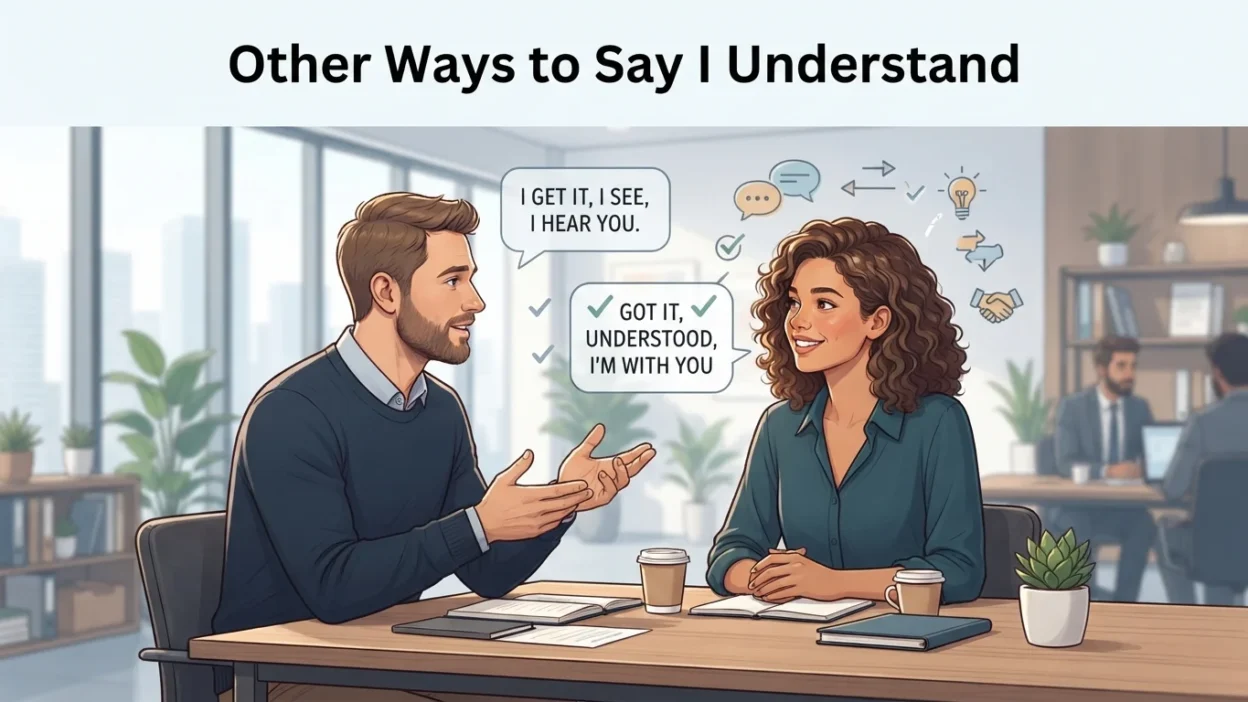
Knowing other ways to say I understand can make your communication more natural, thoughtful, and appropriate for different situations. While “I understand” is simple and useful, repeating it can sometimes sound formal, predictable, or emotionally distant.
Whether you are responding to a coworker, comforting a friend, acknowledging instructions, or showing empathy, the right alternative can communicate your meaning more clearly. This guide explains natural phrases you can use instead of “I understand,” along with examples and practical usage advice.
Quick Answer
Some useful alternatives to “I understand” include “I see,” “I get it,” “That makes sense,” “I follow you,” “I hear you,” “I completely understand,” and “I see where you’re coming from.” The best choice depends on whether you want to sound professional, casual, empathetic, or formal.
1. Casual and Everyday Ways to Say I Understand
These expressions work well in everyday conversations with friends, family members, classmates, and people you know comfortably.
I Get It
Definition: “I get it” means that you understand what someone is saying or explaining.
Usage rule: Use it mainly in casual conversations rather than formal business communication.
Practical example: “I get it. You need some time to think about the situation.”
Tips: This is one of the most natural informal alternatives to “I understand.”
I See
Definition: “I see” shows that you now understand a point, explanation, or situation.
Usage rule: Use it when someone has explained something that was previously unclear.
Practical example: “Oh, I see. That’s why the meeting was moved to Friday.”
Tips: It is short, polite, and suitable for both casual and moderately professional conversations.
Got It
Definition: “Got it” means that you have understood information, instructions, or an explanation.
Usage rule: Use it when acknowledging something clearly and quickly.
Practical example: “Got it. I’ll send the updated document before noon.”
Tips: It is especially useful when someone gives you instructions.
That Makes Sense
Definition: This phrase indicates that something is logical or understandable to you.
Usage rule: Use it when you understand the reasoning behind someone’s statement.
Practical example: “That makes sense. You wanted to avoid making the same mistake twice.”
Tips: It sounds supportive because it confirms that the other person’s reasoning is logical.
I Follow You
Definition: “I follow you” means that you understand someone’s explanation or line of thought.
Usage rule: Use it when someone is explaining an idea, process, or argument.
Practical example: “I follow you now. The second option would reduce the overall cost.”
Tips: It works particularly well during discussions and explanations.
I Know What You Mean
Definition: This phrase shows that you understand the point or feeling someone is trying to communicate.
Usage rule: Use it when you can relate to or understand someone’s meaning.
Practical example: “I know what you mean. Sometimes working from home can feel isolating.”
Tips: It is friendly and conversational.
I’m With You
Definition: “I’m with you” means you understand or agree with someone’s point of view.
Usage rule: Use it when showing understanding and support during a conversation.
Practical example: “I’m with you. We should finish this project before starting another one.”
Tips: Depending on context, it can communicate both understanding and agreement.
2. Professional Ways to Say I Understand
Professional communication often requires language that is clear, respectful, and confident without sounding overly casual.
Understood
Definition: “Understood” directly confirms that you have received and understood information.
Usage rule: Use it for instructions, requests, decisions, and workplace communication.
Practical example: “Understood. I’ll make the requested changes today.”
Tips: It is concise and professional, but avoid using it repeatedly because it can sound abrupt.
I Understand Your Point
Definition: This phrase acknowledges another person’s argument or perspective.
Usage rule: Use it during professional discussions, disagreements, or negotiations.
Practical example: “I understand your point, but we also need to consider the available budget.”
Tips: It is useful when acknowledging someone without necessarily agreeing with them.
I Understand the Situation
Definition: This expression confirms that you recognize the circumstances being discussed.
Usage rule: Use it when responding to workplace problems, explanations, or concerns.
Practical example: “I understand the situation and appreciate you bringing it to my attention.”
Tips: It sounds professional and neutral.
I’m Clear on That
Definition: “I’m clear on that” means that you have no confusion about the information.
Usage rule: Use it after receiving instructions, expectations, or clarification.
Practical example: “I’m clear on that. I’ll prioritize the client requests first.”
Tips: It works well in meetings and workplace conversations.
I’ve Got It
Definition: “I’ve got it” indicates that you understand what needs to be done.
Usage rule: Use it when acknowledging responsibility or instructions.
Practical example: “I’ve got it. I’ll prepare the presentation for tomorrow’s meeting.”
Tips: It is professional enough for many workplace situations but still conversational.
Your Instructions Are Clear
Definition: This phrase confirms that the instructions provided are understandable.
Usage rule: Use it when acknowledging directions, procedures, or assignments.
Practical example: “Your instructions are clear, and I’ll follow the process you outlined.”
Tips: It is particularly useful in emails and formal workplace communication.
I Appreciate the Clarification
Definition: This phrase acknowledges that someone has helped remove confusion or uncertainty.
Usage rule: Use it after someone explains or corrects information.
Practical example: “I appreciate the clarification. I now understand how the new process works.”
Tips: It sounds polite, professional, and appreciative.
3. Empathetic Ways to Say I Understand
When someone is upset, frustrated, disappointed, or going through a difficult situation, simply saying “I understand” may not feel emotionally supportive enough.
I Hear You
Definition: “I hear you” communicates that you are listening and taking someone’s feelings seriously.
Usage rule: Use it when someone is expressing frustration, sadness, concern, or a personal difficulty.
Practical example: “I hear you. It sounds like this situation has been really frustrating.”
Tips: It emphasizes emotional acknowledgment rather than simply understanding information.
I Can Understand How You Feel
Definition: This phrase recognizes and acknowledges another person’s emotional experience.
Usage rule: Use it when responding to someone’s feelings or difficult experience.
Practical example: “I can understand how you feel after everything that happened.”
Tips: Use it sincerely and avoid sounding as though you are minimizing their experience.
I See Where You’re Coming From
Definition: This expression means that you understand someone’s perspective or reasoning.
Usage rule: Use it when discussing different opinions, emotions, or viewpoints.
Practical example: “I see where you’re coming from, and I understand why you were concerned.”
Tips: It is especially effective during disagreements because it acknowledges the other person’s perspective.
That Must Be Difficult
Definition: This phrase acknowledges that someone’s situation is challenging or painful.
Usage rule: Use it when someone shares a difficult personal experience.
Practical example: “That must be difficult. I’m sorry you’re dealing with all of this.”
Tips: It shows empathy without pretending you know exactly how the person feels.
I Can See Why You Feel That Way
Definition: This expression validates the reason behind someone’s emotional reaction.
Usage rule: Use it when someone’s feelings make sense based on their circumstances.
Practical example: “I can see why you feel that way after receiving that response.”
Tips: It is useful when you want to validate feelings without necessarily agreeing with every conclusion.
I Understand What You’re Going Through
Definition: This phrase communicates recognition of someone’s difficult experience.
Usage rule: Use it when you genuinely understand or can relate to the situation.
Practical example: “I understand what you’re going through, and I’m here if you want to talk.”
Tips: Use it carefully when you have not personally experienced the same situation.
Your Feelings Are Completely Understandable
Definition: This phrase tells someone that their emotional response is reasonable given the circumstances.
Usage rule: Use it when offering reassurance or emotional support.
Practical example: “Your feelings are completely understandable after such a stressful week.”
Tips: It is warmer and more validating than simply saying “I understand.”
4. Formal and Polite Alternatives to I Understand
Formal language can be useful in emails, customer service, academic communication, official correspondence, and respectful conversations.
I Fully Understand
Definition: “I fully understand” strongly confirms that you comprehend the situation or message.
Usage rule: Use it when you want to emphasize complete understanding.
Practical example: “I fully understand the importance of meeting the revised deadline.”
Tips: Use it when complete comprehension matters; otherwise, “I understand” may sound more natural.
I Completely Understand Your Position
Definition: This phrase acknowledges someone’s viewpoint in a respectful and formal manner.
Usage rule: Use it during disagreements, negotiations, or professional discussions.
Practical example: “I completely understand your position and appreciate your concerns.”
Tips: It allows you to acknowledge a person’s position without automatically agreeing.
I Acknowledge Your Concerns
Definition: This phrase recognizes that you have received and considered someone’s concerns.
Usage rule: Use it in formal workplace, customer service, or official communication.
Practical example: “I acknowledge your concerns and will ensure they are reviewed by the appropriate team.”
Tips: It sounds more formal than “I understand your concerns.”
I Take Your Point
Definition: “I take your point” means you recognize and understand the argument someone has made.
Usage rule: Use it during discussions, debates, meetings, or disagreements.
Practical example: “I take your point regarding the additional costs.”
Tips: It does not necessarily mean you agree, making it useful for professional disagreement.
I Appreciate Your Explanation
Definition: This phrase thanks someone for providing information that helped you understand something.
Usage rule: Use it after receiving a detailed explanation or clarification.
Practical example: “I appreciate your explanation; the procedure is much clearer now.”
Tips: It combines acknowledgment with politeness.
I’m Fully Aware of the Situation
Definition: This expression indicates that you understand the relevant facts or circumstances.
Usage rule: Use it when responding to someone who has provided information about an ongoing situation.
Practical example: “I’m fully aware of the situation and understand the urgency involved.”
Tips: Use it carefully because “fully aware” can sound defensive in some contexts.
Your Meaning Is Clear to Me
Definition: This phrase confirms that you understand what someone is trying to communicate.
Usage rule: Use it in formal or carefully worded communication.
Practical example: “Your meaning is clear to me, and I appreciate the additional context.”
Tips: It is polite but somewhat formal, so choose it when the situation calls for professional language.
5. Alternatives That Show Agreement or Acknowledgment
Sometimes “I understand” is not only about comprehension. You may want to show that you recognize, accept, or agree with someone’s message.
Absolutely
Definition: “Absolutely” can confirm strong agreement or acknowledgment.
Usage rule: Use it when you want to communicate confident agreement with someone’s statement.
Practical example: “Absolutely. I understand why this needs to be handled quickly.”
Tips: By itself, it can mean agreement more than understanding, so use context carefully.
Exactly
Definition: “Exactly” confirms that you understand and agree with the point being made.
Usage rule: Use it when someone’s explanation matches your own understanding.
Practical example: “Exactly. That’s what I was trying to explain.”
Tips: It is highly conversational and works best when agreement is intended.
That’s Clear
Definition: “That’s clear” indicates that information has been understood without confusion.
Usage rule: Use it after receiving an explanation, instruction, or clarification.
Practical example: “That’s clear. I’ll follow the updated procedure.”
Tips: It is concise and works well in professional conversations.
I’m on the Same Page
Definition: This phrase means that you share the same understanding or expectations.
Usage rule: Use it in teamwork, business discussions, and planning conversations.
Practical example: “I’m glad we’re on the same page about the project’s priorities.”
Tips: It is especially useful when confirming mutual understanding.
We’re Aligned
Definition: “We’re aligned” means that people share the same understanding, goals, or expectations.
Usage rule: Use it mainly in professional and business communication.
Practical example: “It looks like we’re aligned on the next steps.”
Tips: It is useful in meetings, project management, and team discussions.
I Agree With You
Definition: This phrase directly communicates agreement with another person’s opinion or statement.
Usage rule: Use it when you want to express agreement rather than simple comprehension.
Practical example: “I agree with you; we should review the numbers before making a decision.”
Tips: Do not use it as a direct replacement for “I understand” unless agreement is actually intended.
I Recognize What You Mean
Definition: This phrase indicates that you recognize and comprehend someone’s point or reasoning.
Usage rule: Use it when acknowledging a perspective without necessarily agreeing with it.
Practical example: “I recognize what you mean, although I have a slightly different perspective.”
Tips: It is useful when maintaining a respectful tone during disagreement.
Placement & Grammar Rules Table
| Synonym or phrase | Sentence position / placement | Tone / formality | Example sentence |
| I get it | Beginning or middle | Casual | “I get it now.” |
| I see | Beginning or middle | Neutral | “I see what you mean.” |
| Got it | Usually beginning | Casual/neutral | “Got it. I’ll handle it.” |
| That makes sense | Beginning or middle | Neutral | “That makes sense to me.” |
| I follow you | Beginning or middle | Neutral/professional | “I follow you now.” |
| Understood | Usually beginning | Professional | “Understood. I’ll proceed.” |
| I hear you | Beginning | Empathetic | “I hear you, and I understand your concern.” |
| I see where you’re coming from | Beginning or middle | Neutral/empathetic | “I see where you’re coming from.” |
| I acknowledge your concerns | Beginning or middle | Formal | “I acknowledge your concerns.” |
| I’m on the same page | Beginning or middle | Professional/casual | “We’re on the same page.” |
| We’re aligned | Beginning or middle | Business/professional | “We’re aligned on the next steps.” |
| I appreciate your explanation | Beginning | Polite/formal | “I appreciate your explanation.” |
How to Choose the Right Alternative
The best synonym for “I understand” depends on what you are trying to communicate. If someone gives you instructions, “Got it” or “Understood” works well. If someone shares a personal problem, “I hear you” or “I can see why you feel that way” is more appropriate.
For workplace conversations, choose phrases such as “I’m clear on that,” “I appreciate the clarification,” or “We’re aligned.” For friendly conversations, natural expressions such as “I get it,” “I see,” and “That makes sense” usually sound better.
Common Mistakes When Saying I Understand
Using Casual Language in Formal Situations
Saying “I get it” to a senior executive, client, or official contact may sound too informal.
Better: Use “Understood,” “I appreciate the clarification,” or “Your instructions are clear.”
Confusing Understanding With Agreement
“I understand” does not necessarily mean “I agree.”
Better: If you agree, say “I agree with you.” If you only recognize the argument, say “I understand your point.”
Overusing “I Understand”
Repeating the same phrase can make your communication sound mechanical.
Better: Vary your language according to the situation.
Using Empathy Without Sincerity
Phrases such as “I understand what you’re going through” can sound insensitive if you have no genuine basis for saying so.
Better: Say “That sounds really difficult” when you want to acknowledge someone’s experience without assuming you know exactly how they feel.
Sounding Dismissive
A short “I understand” can sometimes sound like you want to end the conversation.
Better: Add context: “I understand your concern, and I’d like to see how we can resolve it.”
Choosing the Wrong Level of Formality
“Got it” and “I acknowledge your concerns” communicate similar acknowledgments but belong to very different contexts.
Better: Match the expression to your audience and communication setting.
Practical Example Paragraphs
Workplace Example
When a manager explains a new process, saying “Understood. I’ll follow the updated procedure” sounds professional and confirms that the instructions have been received. In a less formal workplace conversation, “Got it” or “I’m clear on that” may sound more natural.
Customer Service Example
When responding to a customer’s concern, a representative can say, “I understand your concern, and I appreciate you bringing this to our attention.” This sounds more empathetic and professional than simply saying “I understand.”
Friendly Conversation Example
If a friend explains why they canceled plans, you might say, “I get it. You’ve had a lot going on lately.” This feels natural, supportive, and conversational.
Disagreement Example
During a disagreement, “I see where you’re coming from, but I have a different perspective” is more effective than simply saying “I understand.” It acknowledges the other person’s reasoning without falsely suggesting agreement.
Emotional Support Example
If someone tells you about a difficult experience, you could say, “I hear you. That must have been really difficult.” This communicates that you are listening and taking their feelings seriously.
FAQs
What is another way to say “I understand” professionally?
Professional alternatives include “Understood,” “I appreciate the clarification,” “I’m clear on that,” “I understand your point,” and “I acknowledge your concerns.”
What is a casual way to say “I understand”?
Common casual alternatives include “I get it,” “Got it,” “I see,” “That makes sense,” and “I know what you mean.”
What is a polite way to say “I understand”?
You can say “I appreciate your explanation,” “I understand your position,” “I see where you’re coming from,” or “I appreciate the clarification.”
How do I say “I understand” without agreeing?
Use phrases such as “I see your point,” “I understand your perspective,” or “I see where you’re coming from.” These acknowledge someone’s reasoning without necessarily expressing agreement.
What is an empathetic way to say “I understand”?
Good empathetic choices include “I hear you,” “I can see why you feel that way,” “That must be difficult,” and “Your feelings are completely understandable.”
Is “I got it” the same as “I understand”?
Usually, yes. “I got it” is a casual way to confirm that you understood something, especially instructions or an explanation.
Can I say “understood” in an email?
Yes. “Understood” is appropriate in many professional emails, particularly when confirming instructions or acknowledging a request. For a warmer tone, you can say, “Understood, thank you for the clarification.”
Final Thoughts
Knowing other ways to say I understand helps you communicate with greater precision and emotional awareness. The best expression depends on whether you are acknowledging information, showing empathy, confirming agreement, or responding professionally.
Use casual phrases such as “I get it” with friends, professional options such as “Understood” at work, and empathetic expressions such as “I hear you” when emotions are involved. Choosing the right wording makes your communication sound more natural, respectful, and effective.