Choosing the right words can help you express effort, improvement, and dedication more thoughtfully. Exploring other ways to say work on helps you communicate clearly in everyday situations.
The phrase “Work On” is common in everyday communication, but it can sometimes sound vague or repetitive. Choosing more warm, clear, and expressive language can make your message more meaningful, whether you are writing emails, professional messages, or speaking in casual conversations. This guide explores alternatives to Work On, their meanings, scenarios, examples, tone explanations, and best uses. With 400+ alternatives across different contexts, you can find natural, personal, and engaging wording that suits your purpose.
From practical experience, choosing a phrase that matches the situation helps you show care, attention, and professionalism without sounding forced. For example, “improve your skills” may sound clearer than “work on your skills” when discussing growth or problem-solving. The best choice depends on your audience and the message you want to share.
Quick Answer
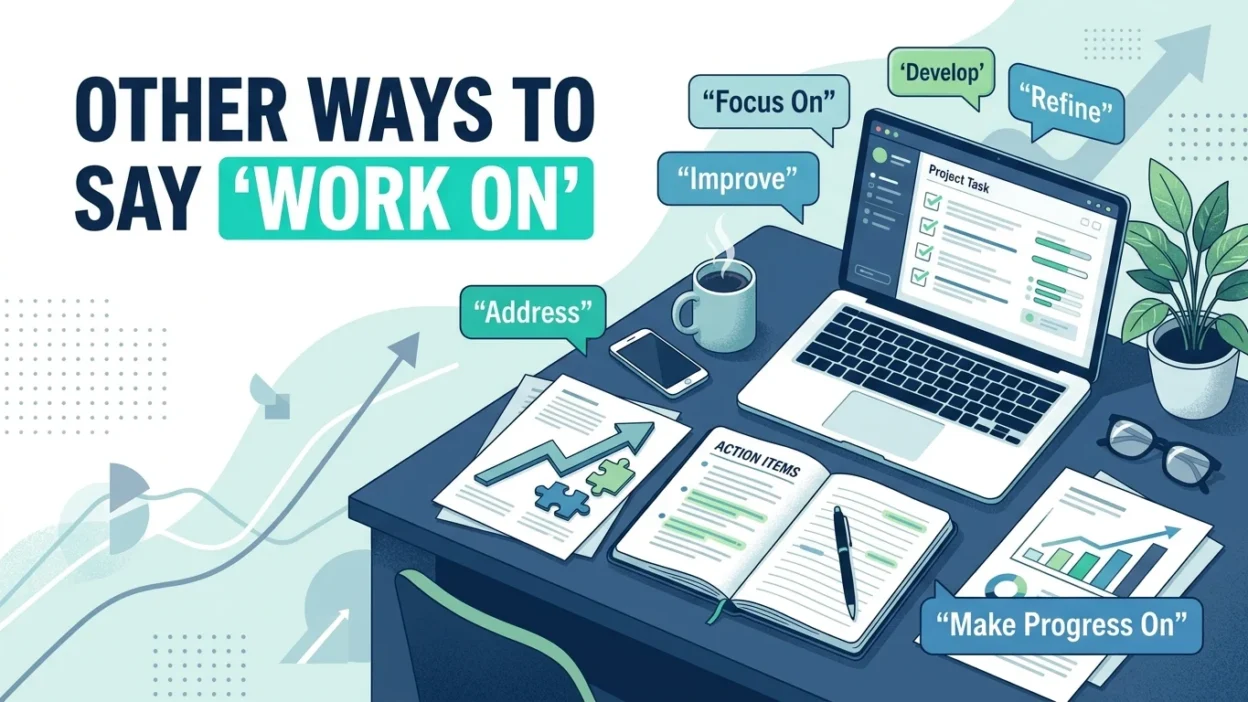
Useful alternatives to “work on” include focus on, improve, develop, refine, address, tackle, make progress on, concentrate on, practise, and make an effort to. The best choice depends on whether you mean completing a task, improving a skill, solving a problem, or pursuing a goal.
1. Professional Alternatives to Say Work On
These expressions are useful in business emails, project updates, meetings, reports, and formal workplace communication. They help you explain your priorities and responsibilities more precisely.
1. Focus On
Definition: To give particular attention to a task, goal, or subject.
Usage rule: Use “focus on” when you want to emphasise concentration or priorities. It is followed by a noun, pronoun, or verb ending in -ing.
Practical example: Our team will focus on improving customer satisfaction this quarter.
Tips: Choose this phrase when explaining priorities in meetings, project plans, and professional emails.
2. Concentrate On
Definition: To direct your attention towards a particular activity or objective.
Usage rule: Use “concentrate on” when an activity requires careful attention or mental effort.
Practical example: I need to concentrate on completing the financial report before Friday.
Tips: This expression works well when discussing demanding tasks, detailed analysis, and activities requiring fewer distractions.
3. Address
Definition: To deal with a problem, concern, issue, or requirement.
Usage rule: Use “address” with a problem, issue, concern, or similar noun. It does not automatically mean that the issue has been resolved.
Practical example: We are addressing the concerns raised during yesterday’s meeting.
Tips: This is particularly useful in formal communication when discussing challenges, feedback, or customer complaints.
4. Manage
Definition: To organise, control, or take responsibility for a task or situation.
Usage rule: Use “manage” when you are responsible for handling work, resources, people, or competing demands.
Practical example: She manages several marketing projects at the same time.
Tips: Use this phrase when discussing responsibilities, workloads, and ongoing activities rather than simply describing improvement.
5. Handle
Definition: To deal with a task, responsibility, or situation.
Usage rule: Use “handle” when referring to practical responsibilities or situations that require action.
Practical example: Our support team will handle the client’s request this afternoon.
Tips: This phrase is natural in workplace conversations and business emails, although it can sound less formal than “manage” or “address.”
6. Execute
Definition: To carry out a plan, strategy, task, or set of instructions.
Usage rule: Use “execute” when the emphasis is on putting an agreed plan into action.
Practical example: The team will execute the revised marketing strategy next month.
Tips: This expression is especially suitable for project management, business strategy, operations, and technical discussions.
7. Oversee
Definition: To supervise an activity or ensure that work is completed properly.
Usage rule: Use “oversee” when someone supervises a process rather than personally completing every task.
Practical example: The project manager will oversee the website redesign.
Tips: Choose “oversee” for leadership and management responsibilities. Do not use it as a direct replacement when you mean doing the work yourself.
2. Alternatives for Improvement and Personal Development
When “work on” refers to becoming better at something, an improvement-focused verb often communicates your intention more effectively.
8. Improve
Definition: To make something better in quality, performance, or effectiveness.
Usage rule: Use “improve” with a skill, process, habit, result, or other area that can become better.
Practical example: I want to improve my writing skills before applying for a new position.
Tips: This is one of the clearest alternatives when discussing personal development, professional growth, and measurable progress.
9. Develop
Definition: To build or strengthen a skill, ability, idea, or process over time.
Usage rule: Use “develop” when something needs to grow through learning, experience, or continued effort.
Practical example: She is developing her leadership skills through practical experience.
Tips: Choose this phrase when describing long-term learning rather than a single improvement.
10. Enhance
Definition: To improve the quality, value, effectiveness, or appeal of something.
Usage rule: Use “enhance” when you want to communicate an improvement that adds value to something existing.
Practical example: We are enhancing the user experience by simplifying the checkout process.
Tips: This expression is suitable for business writing, marketing, product development, and professional reports.
11. Refine
Definition: To improve something by making small, careful adjustments.
Usage rule: Use “refine” when a skill, idea, design, or process already exists but needs further improvement.
Practical example: The designer is refining the layout before the final presentation.
Tips: Use this phrase for editing, polishing, reviewing, and making precise changes.
12. Strengthen
Definition: To make something stronger, more effective, or more reliable.
Usage rule: Use “strengthen” with skills, relationships, arguments, strategies, or systems that need greater effectiveness.
Practical example: We are strengthening our communication process to reduce misunderstandings.
Tips: This phrase works well when the goal is greater confidence, stability, capability, or effectiveness.
13. Build
Definition: To create or develop something gradually through effort and experience.
Usage rule: Use “build” with expressions such as confidence, experience, skills, relationships, or knowledge.
Practical example: He is building his confidence by speaking during team meetings.
Tips: This is a natural choice for personal growth and long-term development.
14. Polish
Definition: To make something more finished, professional, or effective through small improvements.
Usage rule: Use “polish” when most of the work is complete but some details still need attention.
Practical example: I need to polish my presentation before sharing it with the client.
Tips: Use this expression for final edits, presentations, written documents, designs, and professional skills.
3. Alternatives for Tasks, Projects, and Productivity
These phrases help you describe taking action, making progress, completing responsibilities, and moving a project forward.
15. Tackle
Definition: To begin dealing with a difficult task, challenge, or problem.
Usage rule: Use “tackle” when a task requires effort, determination, or active problem-solving.
Practical example: We will tackle the most urgent issues before moving to smaller tasks.
Tips: This expression adds a sense of action and determination to workplace communication.
16. Work Through
Definition: To deal with a task, difficulty, or process step by step.
Usage rule: Use “work through” when emphasising the process of handling something that may take time or involve several stages.
Practical example: We need to work through the remaining feedback before approving the design.
Tips: This phrase is useful for complicated projects, disagreements, learning activities, and detailed reviews.
17. Make Progress On
Definition: To move towards completing a task or achieving an objective.
Usage rule: Use “make progress on” when reporting development without claiming that the task is finished.
Practical example: We made progress on the new website during this week’s planning sessions.
Tips: This phrase is excellent for status updates because it communicates movement without overstating results.
18. Advance
Definition: To move something forward towards a desired stage or outcome.
Usage rule: Use “advance” when an action helps a project, plan, discussion, or objective move forward.
Practical example: The new research will advance our understanding of customer behaviour.
Tips: This expression is particularly useful in formal reports, research, project planning, and strategic discussions.
19. Carry Out
Definition: To perform or complete a task, activity, instruction, or procedure.
Usage rule: Use “carry out” with nouns such as an assessment, investigation, task, or plan.
Practical example: The team will carry out a full review of the existing system.
Tips: This phrase is suitable for professional writing when you want to emphasise performing a defined activity.
20. Pursue
Definition: To continue making an effort to achieve a goal, opportunity, or ambition.
Usage rule: Use “pursue” with goals, ambitions, opportunities, careers, or objectives that require continued effort.
Practical example: She is pursuing her goal of becoming a qualified project manager.
Tips: Choose this expression when the focus is on achieving a longer-term objective rather than completing a routine task.
21. Get Started On
Definition: To begin working on a task or activity.
Usage rule: Use “get started on” in conversational or informal workplace situations when describing the beginning of a task.
Practical example: I will get started on the presentation after lunch.
Tips: This is a natural phrase for messages to colleagues, daily plans, and casual progress updates.
4. Alternatives for Problem-Solving and Challenges
When “work on” refers to fixing something or dealing with an obstacle, these alternatives can make the intended action clearer.
22. Resolve
Definition: To find a solution to a problem or bring a disagreement to an end.
Usage rule: Use “resolve” when the goal is to reach a solution, not simply to investigate the issue.
Practical example: Our technical team is working to resolve the login problem.
Tips: Use “resolve” in customer service, technical support, workplace discussions, and conflict management.
23. Fix
Definition: To repair something or correct an error or problem.
Usage rule: Use “fix” when a specific fault or issue needs correction.
Practical example: The developer will fix the broken link before the website goes live.
Tips: This is direct and natural in everyday communication. In formal reports, “correct” or “resolve” may be more appropriate depending on the context.
24. Troubleshoot
Definition: To identify the cause of a problem and find ways to correct it.
Usage rule: Use “troubleshoot” when investigating faults, technical difficulties, or unexpected behaviour.
Practical example: We are troubleshooting the software issue before releasing the update.
Tips: This phrase is particularly useful in IT, engineering, customer support, and technical problem-solving.
25. Investigate
Definition: To examine a situation carefully to discover facts or identify a cause.
Usage rule: Use “investigate” when you need information before deciding on a solution.
Practical example: The team is investigating why the latest update caused errors.
Tips: Use this expression when the cause of a problem is not yet known.
26. Analyse
Definition: To study information, evidence, or a situation carefully to understand it.
Usage rule: Use “analyse” when the task involves examining details, identifying patterns, or evaluating information.
Practical example: We are analysing the survey results to understand customer preferences.
Tips: This expression suits research, data analysis, business planning, and academic writing.
27. Find a Solution To
Definition: To identify a practical answer to a problem or challenge.
Usage rule: Use “find a solution to” when the emphasis is on discovering an effective way forward.
Practical example: We are trying to find a solution to the delivery delays.
Tips: This phrase makes the intended outcome clear and works well in collaborative discussions.
28. Overcome
Definition: To successfully deal with or move beyond a difficulty or obstacle.
Usage rule: Use “overcome” when the emphasis is on getting past a challenge rather than merely examining it.
Practical example: The team worked together to overcome the technical challenges.
Tips: This phrase is useful for describing resilience, achievements, and successful problem-solving.
5. Alternatives for Practice, Commitment, and Continued Effort
These expressions are useful when “work on” means practising a skill, staying committed, or making a consistent effort towards improvement.
29. Practise
Definition: To repeat an activity regularly to improve ability or performance.
Usage rule: Use “practise” as a verb when describing repeated learning or skill development. In British English, practice is the verb and practice is the noun.
Practical example: I practise speaking English for twenty minutes every day.
Tips: This is more precise than “work on” when repetition and learning are central to the activity.
30. Learn
Definition: To gain knowledge or develop a new ability through study or experience.
Usage rule: Use “learn” when the main goal is gaining knowledge or acquiring a skill.
Practical example: She is learning how to use the new project management software.
Tips: Choose this phrase for training, education, and activities where gaining knowledge matters most.
31. Keep Improving
Definition: To continue making something better over time.
Usage rule: Use “keep improving” when you want to emphasise ongoing development rather than a single change.
Practical example: We will keep improving our service based on customer feedback.
Tips: This phrase communicates consistency and a commitment to progress.
32. Put Effort Into
Definition: To use time, energy, or attention to achieve or improve something.
Usage rule: Use “put effort into” when emphasising the energy or commitment given to an activity. Follow with a noun or an -ing form.
Practical example: He puts considerable effort into preparing for every presentation.
Tips: This expression is useful when the amount of effort matters as much as the result.
33. Invest Time In
Definition: To dedicate time to an activity because it is expected to provide value or improvement.
Usage rule: Use “invest time in” when highlighting the deliberate allocation of time towards a goal or skill.
Practical example: I am investing time in learning advanced spreadsheet techniques.
Tips: This phrase works well in professional development, education, and personal goal-setting.
34. Commit To
Definition: To make a firm decision to continue with an activity or responsibility.
Usage rule: Use “commit to” with a noun or an -ing form to describe a promise, decision, or sustained intention.
Practical example: Our team has committed to improving response times.
Tips: Use this phrase when you want to highlight responsibility, consistency, or a firm intention.
35. Make an Effort To
Definition: To consciously try to do something or achieve a particular result.
Usage rule: Follow “make an effort to” with the base form of a verb.
Practical example: I am making an effort to communicate more clearly with my colleagues.
Tips: This phrase is helpful when describing an intentional attempt, especially when the outcome is not guaranteed.
Placement & Grammar Rules Table
Choosing the right alternative depends on its meaning, grammatical structure, sentence position, and level of formality.
| Synonym or phrase | Sentence position | Placement | Tone | Formality | Example sentence |
| Focus on | Main clause | Before a noun or -ing form | Direct | Neutral | We will focus on customer feedback. |
| Concentrate on | Main clause | Before a noun or -ing form | Serious | Neutral | She is concentrating on the report. |
| Address | Main clause | Before a problem or issue | Professional | Formal | We will address the concerns. |
| Manage | Main clause | Before a task or responsibility | Responsible | Neutral | He manages the project. |
| Execute | Main clause | Before a plan or strategy | Results-oriented | Formal | They will execute the strategy. |
| Improve | Main clause | Before the thing being improved | Positive | Neutral | I want to improve my writing. |
| Develop | Main clause | Before a skill or ability | Growth-oriented | Neutral | She is developing new skills. |
| Enhance | Main clause | Before the thing being enhanced | Polished | Formal | We aim to enhance performance. |
| Refine | Main clause | Before an existing idea or process | Precise | Neutral to formal | We are refining the design. |
| Tackle | Main clause | Before a task or challenge | Active | Neutral | Let’s tackle the biggest problem first. |
| Work through | Main clause | Before a process or difficulty | Patient | Neutral | We will work through the issues. |
| Make progress on | Main clause | Before a project or task | Encouraging | Neutral | We made progress on the project. |
| Carry out | Main clause | Before a task or procedure | Practical | Formal | They carried out an inspection. |
| Pursue | Main clause | Before a goal or ambition | Determined | Formal | She pursues her career goals. |
| Resolve | Main clause | Before a problem or dispute | Solution-focused | Formal | We need to resolve the issue. |
| Fix | Main clause | Before an error or fault | Direct | Informal to neutral | I will fix the error. |
| Investigate | Main clause | Before an issue or situation | Analytical | Formal | They are investigating the problem. |
| Practise | Main clause | Before a skill or activity | Encouraging | Neutral | He practises pronunciation daily. |
| Put effort into | Main clause | Before a noun or -ing form | Committed | Neutral | She puts effort into learning. |
| Commit to | Main clause | Before a noun or -ing form | Determined | Neutral to formal | We are committed to improving quality. |
Common Mistakes When Using Alternatives to Work On
Choosing a synonym without checking its meaning can make a sentence unclear. Keep these common mistakes in mind.
1. Using Every Alternative as an Exact Synonym
“Resolve,” “investigate,” and “address” describe different actions. Investigating a problem means examining it; resolving it means finding a solution. Choose the expression that accurately describes what is happening.
2. Ignoring Grammar After a Phrase
Some expressions take different grammatical structures.
- Correct: I am focused on improving my writing.
- Incorrect: I am focused on improving my writing.
- Correct: I am committed to learning new skills.
- Incorrect: I am committed to learning new skills.
After prepositions such as on, into, and to when they function as prepositions, use a noun or an -ing form. However, in “make an effort to improve,” to introduce an infinitive, so the base verb is correct.
3. Choosing Informal Words for Formal Documents
Words such as “fix” and “get started on” can sound natural in conversation but may not be ideal for every business report. Consider “resolve,” “commence,” or “address” when the context calls for a more formal tone.
4. Making Promises You Cannot Guarantee
Saying “we will resolve the issue today” promises a result. If you are still investigating the problem, “we are investigating the issue” is more accurate. Describe the current stage of work rather than claiming an outcome prematurely.
5. Using Vague Expressions in Progress Reports
“I am working on the project” does not explain what you are doing. A clearer alternative is “I am reviewing the project requirements” or “I am refining the project timeline.” Specific wording helps readers understand the action and its purpose.
6. Repeating the Same Phrase Too Often
Repeatedly writing “work on” can make a long article, email, or report feel monotonous. Vary your language naturally with words such as “develop,” “review,” “improve,” and “address,” but only when they accurately describe the task.
Practical Examples
The following examples show how to replace “work on” with more precise expressions in everyday and professional situations.
1: Professional Email
Original: I will work on the report and work on improving its structure before sending it to the manager.
Improved: I will complete the report, refine its structure, and review the final draft before
sending it to the manager.
Why it works: The revised sentence separates the tasks and makes the planned actions easier to understand.
2: Personal Development
Original: I need to work on my English and work on speaking with more confidence.
Improved: I need to improve my English, practise speaking regularly, and build my confidence during conversations.
Why it works: Each phrase describes a specific part of the learning process.
3: Project Management
Original: Our team is working on the customer complaints and working on the website update.
Improved: Our team is addressing customer complaints, investigating recurring issues, and making progress on the website update.
Why it works: The revised version distinguishes problem-solving from project development.
4: Team Communication
Original: We should work on our communication and work on improving cooperation.
Improved: We should strengthen our communication, improve cooperation, and focus on sharing updates more consistently.
Why it works: The alternatives make the team’s intended improvements clearer and more actionable.
FAQs
1. What is the best professional alternative to “work on”?
“Focus on,” “address,” “develop,” “refine,” and “make progress on” are useful professional alternatives. The best option depends on whether you mean concentrating on a task, handling a problem, improving something, or advancing a project.
2. What is a more formal way to say “I am working on it”?
You could say “I am currently addressing it,” “I am making progress on it,” or “I am actively working towards completing it.” Choose the wording that reflects the actual status of the task.
3. How can I say “work on improving” more clearly?
Use a direct verb such as “improve,” “strengthen,” “refine,” or “develop.” For example, instead of “I am working on improving my writing,” you could say “I am improving my writing through regular practice.”
4. Is “focus on” the same as “work on”?
Not exactly. “Work on” usually means spending time or effort on a task, while “focus on” emphasises giving attention to it. You can focus on a task without making substantial progress, so the expressions are not always interchangeable.
5. What can I say instead of “work on a project”?
Depending on the activity, you can say “manage a project,” “develop a project,” “advance a project,” “make progress on a project,” or “execute a project plan.” Use the phrase that best describes your role and the project’s current stage.
6. What is a positive way to say “work on yourself”?
You could say “invest in personal growth,” “develop yourself,” “build confidence,” “improve your habits,” or “continue learning.” These expressions emphasise growth without suggesting that personal development must be completed all at once.
7. Can I use “work on” in professional emails?
Yes. “Work on” is grammatically correct and widely understood in professional communication. However, a more specific phrase can make your message clearer, particularly when explaining a task, giving an update, or describing a problem.
Final Thoughts
Learning other ways to say work on helps you express tasks, improvements, responsibilities, and goals with greater clarity. Expressions such as “focus on,” “refine,” “address,” and “make progress on” can make everyday messages more precise and professional.
Choose alternatives based on their meaning, grammar, and tone rather than variety alone. When your words accurately describe your actions, your emails, reports, and conversations become easier to understand and more effective.