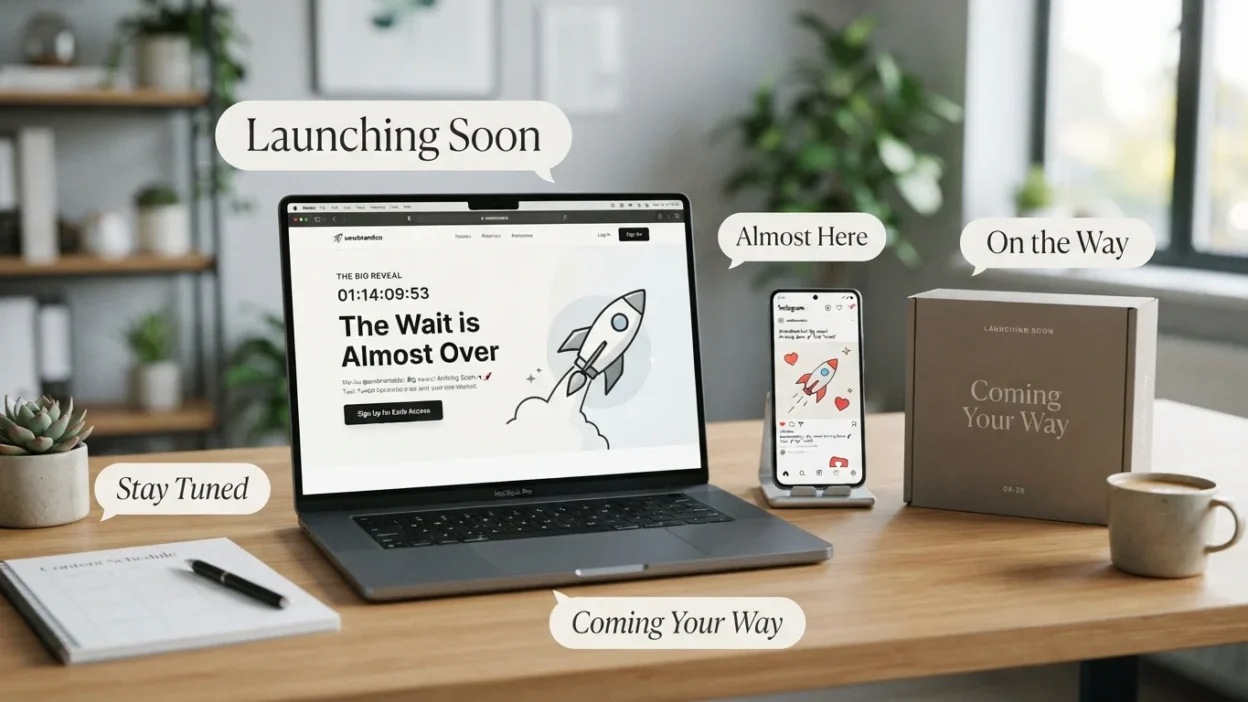
Finding other ways to say coming soon helps businesses create anticipation with clear, engaging language that feels fresh, polished, and trustworthy. Coming soon is one of the most commonly used phrases in marketing, business, content creation, and everyday communication. It appears on websites, product pages, social media posts, movie posters, and app updates because it creates anticipation and tells people something new is on the way. However, using the phrase repeatedly can make a message feel bland, generic, or overused, especially in professional or creative settings. In 2026, using clear, engaging, and trustworthy language can make a noticeable difference to branding and user experience.
When exploring alternative ways to say “coming soon,” the aim is to sound original, polished, and confident while building excitement. A useful guide should include natural, human-sounding alternatives and explain their meaning so readers can understand which expression suits each situation. From practical writing experience, adding clear usage tips and real-life examples makes these alternatives easier to understand and use right away. This approach helps you choose language that fits your audience while keeping announcements engaging and purposeful.
Quick Answer
Popular alternatives include “Launching Soon,” “Arriving Soon,” “Available Shortly,” “On the Way,” “Coming Your Way,” “Stay Tuned,” “Releasing Soon,” “Almost Here,” and “Coming Up.” Choose the phrase according to whether you want to communicate a launch, arrival, availability, event, or general anticipation.
1. Professional Alternatives to “Coming Soon”
Launching Soon
Definition: “Launching soon” means a new product, service, website, or project will officially become available in the near future.
Usage rule: Use it when there will be a clear launch or public release.
Practical example: “Our new productivity app is launching soon.”
Tips: This is one of the strongest choices for businesses because it sounds confident and action-oriented.
Available Shortly
Definition: “Available shortly” means something will become accessible after a short period.
Usage rule: Use it when availability is more important than the launch itself.
Practical example: “The updated report will be available shortly.”
Tips: This phrase has a polished, professional tone and works well on websites and business communications.
Arriving Soon
Definition: “Arriving soon” tells an audience that something is expected to appear or become available in the near future.
Usage rule: Use it for products, services, entertainment, deliveries, or announcements.
Practical example: “Our newest collection is arriving soon.”
Tips: It creates anticipation without sounding overly promotional.
Releasing Soon
Definition: “Releasing soon” means a product, film, book, game, software update, or other item will be released shortly.
Usage rule: Use it when a formal release is planned.
Practical example: “The next software update is releasing soon.”
Tips: It is especially natural for digital products and entertainment.
Launching Shortly
Definition: “Launching shortly” communicates that a launch is expected in the near future.
Usage rule: Use it when you want a more formal variation of “launching soon.”
Practical example: “Our new service will be launching shortly.”
Tips: This phrase works well in professional announcements and landing pages.
Coming Up
Definition: “Coming up” means something is scheduled or expected to happen soon.
Usage rule: Use it for events, announcements, programs, or upcoming activities.
Practical example: “We have several exciting updates coming up.”
Tips: It is more conversational than “available shortly.”
On the Way
Definition: “On the way” indicates that something is being prepared or is expected to arrive.
Usage rule: Use it for products, updates, features, or informal announcements.
Practical example: “A major website update is on the way.”
Tips: It sounds friendly and creates anticipation without making a precise promise.
2. Marketing Alternatives to “Coming Soon”
Stay Tuned
Definition: “Stay tuned” encourages people to watch for future information or an announcement.
Usage rule: Use it when you want to build curiosity rather than provide a specific release date.
Practical example: “A major announcement is coming. Stay tuned!”
Tips: It works particularly well for social media and promotional campaigns.
Coming Your Way
Definition: “Coming your way” means that something new will soon reach the audience.
Usage rule: Use it for friendly marketing announcements.
Practical example: “Fresh designs are coming your way this summer.”
Tips: This phrase has a warm, conversational feel.
Get Ready
Definition: “Get ready” prepares the audience for something that will happen soon.
Usage rule: Use it when you want to create excitement and anticipation.
Practical example: “Get ready for our biggest sale of the year.”
Tips: It is energetic and works especially well in advertising.
Something Exciting Is Coming
Definition: This phrase tells the audience that an exciting development is approaching.
Usage rule: Use it when you want to create curiosity without revealing details.
Practical example: “Something exciting is coming to our store.”
Tips: It is useful for teaser campaigns.
The Wait Is Almost Over
Definition: This phrase suggests that an anticipated release or announcement is very close.
Usage rule: Use it when your audience has already been waiting for something.
Practical example: “The wait is almost over—the new collection arrives Friday.”
Tips: It creates stronger emotional anticipation than a basic “coming soon.”
Almost Here
Definition: “Almost here” means that something is very close to arriving or becoming available.
Usage rule: Use it when the launch or arrival is approaching.
Practical example: “Our new website is almost here.”
Tips: It is short, friendly, and effective for visual marketing.
Get Ready for What’s Next
Definition: This phrase prepares an audience for an upcoming change, launch, or announcement.
Usage rule: Use it when you want to create curiosity about future developments.
Practical example: “Get ready for what’s next in our product line.”
Tips: It works well for brands that want a modern, forward-looking tone.
3. Creative and Exciting Ways to Say “Coming Soon”
Just Around the Corner
Definition: “Just around the corner” is an idiom meaning something is expected very soon.
Usage rule: Use it for informal, creative, or promotional communication.
Practical example: “Our grand opening is just around the corner.”
Tips: This phrase creates a friendly sense of anticipation.
On the Horizon
Definition: “On the horizon” means something is expected or planned for the near future.
Usage rule: Use it for developments, opportunities, changes, or announcements.
Practical example: “Several exciting updates are on the horizon.”
Tips: It has a polished and slightly sophisticated tone.
In the Works
Definition: “In the works” means something is currently being developed or prepared.
Usage rule: Use it when the project is being created rather than necessarily launching immediately.
Practical example: “A redesigned website is in the works.”
Tips: Do not use it when you need to promise a specific launch date.
In the Making
Definition: “In the making” suggests that something is currently being created or developed.
Usage rule: Use it for projects, products, stories, or creative work.
Practical example: “A new chapter is in the making.”
Tips: This phrase sounds more creative than commercial.
Around the Corner
Definition: “Around the corner” means that something is approaching soon.
Usage rule: Use it in informal or promotional settings.
Practical example: “The holiday season is around the corner.”
Tips: It is easy to understand and works well in headlines.
The Countdown Begins
Definition: This phrase suggests that an important launch or event is approaching and anticipation is increasing.
Usage rule: Use it when a specific date or event is approaching.
Practical example: “The countdown begins: our new collection launches Friday.”
Tips: It is excellent for social media campaigns and event promotions.
The Big Reveal Is Coming
Definition: This phrase announces that important information or a new product will soon be revealed.
Usage rule: Use it when you intentionally want to keep details secret.
Practical example: “The big reveal is coming next week.”
Tips: It is ideal for teaser campaigns where mystery is part of the marketing strategy.
4. Alternatives for Products, Services, and Websites
New Product Coming Soon
Definition: This directly tells customers that a new product will become available soon.
Usage rule: Use it on product pages, catalogs, advertisements, and store announcements.
Practical example: “New product coming soon—sign up for updates.”
Tips: Adding a clear action such as “sign up” can make the announcement more useful.
New Collection Arriving Soon
Definition: This tells shoppers that a new group of products will soon be available.
Usage rule: Use it for fashion, retail, beauty, home goods, or similar businesses.
Practical example: “Our spring collection is arriving soon.”
Tips: This phrase combines information with anticipation.
New Feature on the Way
Definition: This means a new function or improvement will soon be added to a product or service.
Usage rule: Use it for software, apps, websites, and digital platforms.
Practical example: “A powerful search feature is on the way.”
Tips: This is clearer than simply saying “coming soon” because it tells users what type of change to expect.
Website Launching Soon
Definition: This announces that a website is currently being developed and will become public in the future.
Usage rule: Use it on a temporary landing page before launch.
Practical example: “Our new website is launching soon.”
Tips: Consider adding a newsletter signup or expected launch date if available.
New Service Coming Your Way
Definition: This tells customers that a new service will soon be offered.
Usage rule: Use it for friendly business or marketing announcements.
Practical example: “A faster delivery service is coming your way.”
Tips: This works well when the brand wants a warm, customer-focused voice.
Update Coming Shortly
Definition: This means a software, website, document, or service update will be available soon.
Usage rule: Use it when the update is relatively close.
Practical example: “A security update is coming shortly.”
Tips: It is concise and suitable for professional communication.
More Details to Follow
Definition: This means additional information will be provided later.
Usage rule: Use it when the announcement is confirmed but the details are not ready yet.
Practical example: “The event date has been confirmed. More details to follow.”
Tips: This is particularly useful when you do not want to imply that a product itself is launching immediately.
5. Everyday and Friendly Alternatives
It Won’t Be Long
Definition: “It won’t be long” means something is expected to happen relatively soon.
Usage rule: Use it in casual communication when an exact date is unnecessary.
Practical example: “The new version will be ready soon—it won’t be long.”
Tips: Avoid it when you need to provide a precise timeline.
It’s On Its Way
Definition: “It’s on its way” means something is being prepared or is expected to arrive.
Usage rule: Use it casually for products, updates, news, or plans.
Practical example: “Your order is on its way.”
Tips: It can describe something already in progress, so it may communicate more certainty than “coming soon.”
You’ll See It Soon
Definition: This phrase directly tells someone that they will encounter or receive something in the near future.
Usage rule: Use it when speaking directly to an audience or individual.
Practical example: “The new design is nearly finished, and you’ll see it soon.”
Tips: It sounds personal and conversational.
We’re Almost Ready
Definition: “We’re almost ready” means preparation is nearly complete.
Usage rule: Use it when a person or organization is preparing to launch or announce something.
Practical example: “We’re almost ready to open our new store.”
Tips: This phrase emphasizes preparation rather than arrival.
We’ll Be There Soon
Definition: This means a person, service, or item will arrive shortly.
Usage rule: Use it for actual arrivals rather than general future launches.
Practical example: “The delivery team will be there soon.”
Tips: It is more appropriate for physical arrival than product announcements.
Keep an Eye Out
Definition: “Keep an eye out” asks someone to watch for something that will appear soon.
Usage rule: Use it in friendly or informal announcements.
Practical example: “Keep an eye out for our new collection.”
Tips: It is engaging and works well in social media posts.
Watch for Updates
Definition: This phrase asks people to look for future information.
Usage rule: Use it when you expect to provide additional details later.
Practical example: “We’ll announce the launch date soon, so watch for updates.”
Tips: It is clear and useful when a specific release date has not been announced.
Comparison Table: Which Alternative Should You Use?
| Alternative | Best for | Tone | Main purpose |
| Launching Soon | Products and businesses | Professional | Announces a launch |
| Available Shortly | Services and content | Formal | Communicates availability |
| Arriving Soon | Products and collections | Neutral | Builds anticipation |
| Releasing Soon | Movies, apps, books, software | Professional | Announces a release |
| Stay Tuned | Social media and marketing | Friendly | Builds curiosity |
| Almost Here | Products and events | Friendly | Creates excitement |
| On the Horizon | Future developments | Polished | Suggests future arrival |
| Opening Soon | Stores and physical locations | Clear | Announces opening |
| Premiering Soon | Films and shows | Professional | Announces first release |
| The Countdown Begins | Events and launches | Exciting | Builds anticipation |
| More Details to Follow | Business announcements | Formal | Promises further information |
| Watch This Space | Updates and announcements | Casual | Encourages attention |
| Save the Date | Events | Neutral | Encourages planning |
| Next Up | Content and media | Casual | Signals what comes next |
Placement & Grammar Rules Table
| Synonym or phrase | Sentence position / placement | Tone / formality | Example sentence |
| Launching soon | Usually after the subject or as a headline | Professional | Our new app is launching soon. |
| Available shortly | Usually after the subject | Formal | The updated report will be available shortly. |
| Arriving soon | After the subject or as a headline | Neutral | The new collection is arriving soon. |
| Releasing soon | After the subject | Neutral / professional | The next update is releasing soon. |
| Stay tuned | Usually at the end or as a standalone phrase | Friendly | More information is coming, so stay tuned. |
| Coming your way | After the subject | Friendly | New features are coming your way. |
| Almost here | Usually after the subject | Casual / promotional | Our new website is almost here. |
| On the horizon | Usually after “is/are” | Polished | Several changes are on the horizon. |
| In the works | Usually after “is/are” | Casual / professional | A new design is in the works. |
| Opening soon | After the business or location | Clear / neutral | Our new store is opening soon. |
| Premiering soon | Usually after the subject | Formal / entertainment | The new series is premiering soon. |
| More details to follow | Usually at the end | Formal | More details to follow next week. |
| Watch this space | Usually at the end | Casual | More news is coming, so watch this space. |
| Save the date | Usually at the beginning | Neutral | Save the date for our annual event. |
| The countdown begins | Usually as a standalone sentence or headline | Exciting | The countdown begins for our biggest launch. |
Common Mistakes When Using Alternatives to “Coming Soon”
One common mistake is using a phrase that promises more certainty than you actually have. “Launching Friday” gives a specific promise, while “On the horizon” is much less specific. If the date is not confirmed, avoid making a precise claim simply to create excitement.
Another mistake is choosing a phrase that does not match the situation. “Opening soon” works for a store or restaurant, while “premiering soon” is appropriate for a film or television program. Similarly, “Save the date” requires a confirmed date, so it should not be used when the schedule is still uncertain.
Overusing vague teaser language can also frustrate users. Phrases such as “Something exciting is coming” can create curiosity, but audiences may lose interest if they see the same message for months without useful information. Whenever possible, provide a timeframe, signup option, update, or other helpful detail.
Practical Examples
1: Product Launch
Our new productivity tool is launching soon, and we are working carefully to make the first version useful and reliable. Stay tuned for the official release announcement, feature details, and early-access information.
2: Website Announcement
A redesigned website is on the way. We are almost ready to introduce a cleaner experience, faster navigation, and improved mobile support. Watch this space for the official launch date.
3: Social Media Marketing
Something exciting is coming! Our newest collection is arriving soon, and we cannot wait to show you what we have prepared. Keep an eye out for previews and the official release announcement.
4: Event Promotion
The annual conference is just around the corner. Save the date for June 15, and stay tuned because registration information and the full schedule will be announced shortly.
5: Entertainment
The wait is almost over. A brand-new series is premiering soon, bringing a fresh story and exciting new characters to the screen. The countdown begins now.
FAQs
What is another way to say “coming soon”?
Popular alternatives include “launching soon,” “arriving soon,” “available shortly,” “on the way,” “almost here,” “stay tuned,” and “more to come.” The best choice depends on what you are announcing.
What is a professional way to say “coming soon”?
Professional alternatives include “launching shortly,” “available shortly,” “releasing soon,” “more details to follow,” and “scheduled for release.” These phrases work well in business announcements and professional websites.
What can I say instead of “coming soon” on a website?
For a website, you can use “Launching Soon,” “We’re Almost Ready,” “Our New Website
Is Almost Here,” “Coming Your Way,” or “Watch This Space.” Adding an email signup or launch date can make the page more useful.
What is a creative way to say “coming soon”?
Creative choices include “The Wait Is Almost Over,” “The Countdown Begins,” “Something Exciting Is Coming,” “Just Around the Corner,” and “The Big Reveal Is Coming.”
What is a good alternative to “coming soon” for a product?
“Launching Soon,” “Arriving Soon,” “New Product Coming Soon,” “Available Shortly,” and “Coming Your Way” are useful product-launch phrases. Choose one based on whether you want a professional, friendly, or promotional tone.
How do you say “coming soon” without giving a date?
You can say “On the Horizon,” “In the Works,” “Stay Tuned,” “More to Come,” “Watch This Space,” or “Coming Your Way.” These phrases create anticipation without promising a specific date.
Is “stay tuned” the same as “coming soon”?
Not exactly. “Coming soon” tells people that something is expected in the near future, while “stay tuned” asks them to keep watching for more information or an announcement.
How can I make a “coming soon” announcement more effective?
Give your audience useful information whenever possible. Include a timeframe, expected launch date, product benefit, preview, signup form, or clear call to action instead of relying only on vague teaser language.
Final Thoughts
Knowing other ways to say coming soon gives you more control over tone, branding, and audience expectations. A strong alternative can make a launch, event, product, or announcement feel more polished and memorable.
Use “launching soon” for products, “opening soon” for businesses, “premiering soon” for entertainment, and “stay tuned” for teaser campaigns. The most effective wording is the phrase that accurately communicates what is happening while creating genuine anticipation.