Knowing other ways to say enjoy yourself can make your conversations sound warmer, more natural, and less repetitive. Although “enjoy yourself” is friendly and positive, different situations may call for a more casual, cheerful, professional, or personal expression.
The right phrase depends on who you are speaking to, where they are going, and the feeling you want to express. Whether you are wishing someone well before a party, trip, vacation, event, dinner, or special occasion, choosing the right words can make your message feel more genuine.
This guide covers natural alternatives to “enjoy yourself,” along with meanings, usage rules, practical examples, and tone differences. These phrases can help you communicate your good wishes clearly while keeping your language engaging and human.
Quick Answer: What Are Other Ways to Say Enjoy Yourself?
Common alternatives include have fun, have a great time, enjoy your time, make the most of it, have a blast, have a wonderful time, and have a good one. The best option depends on whether you want your message to sound casual, warm, enthusiastic, or professional.
1. Casual Ways to Say Enjoy Yourself
Have Fun
Definition: “Have fun” is a simple way to wish someone an enjoyable experience.
Usage rule: Use it with friends, family, classmates, or people you know well.
Practical example: “You’re heading to the concert tonight? Have fun!”
Tips: This is one of the most natural everyday alternatives to “enjoy yourself.”
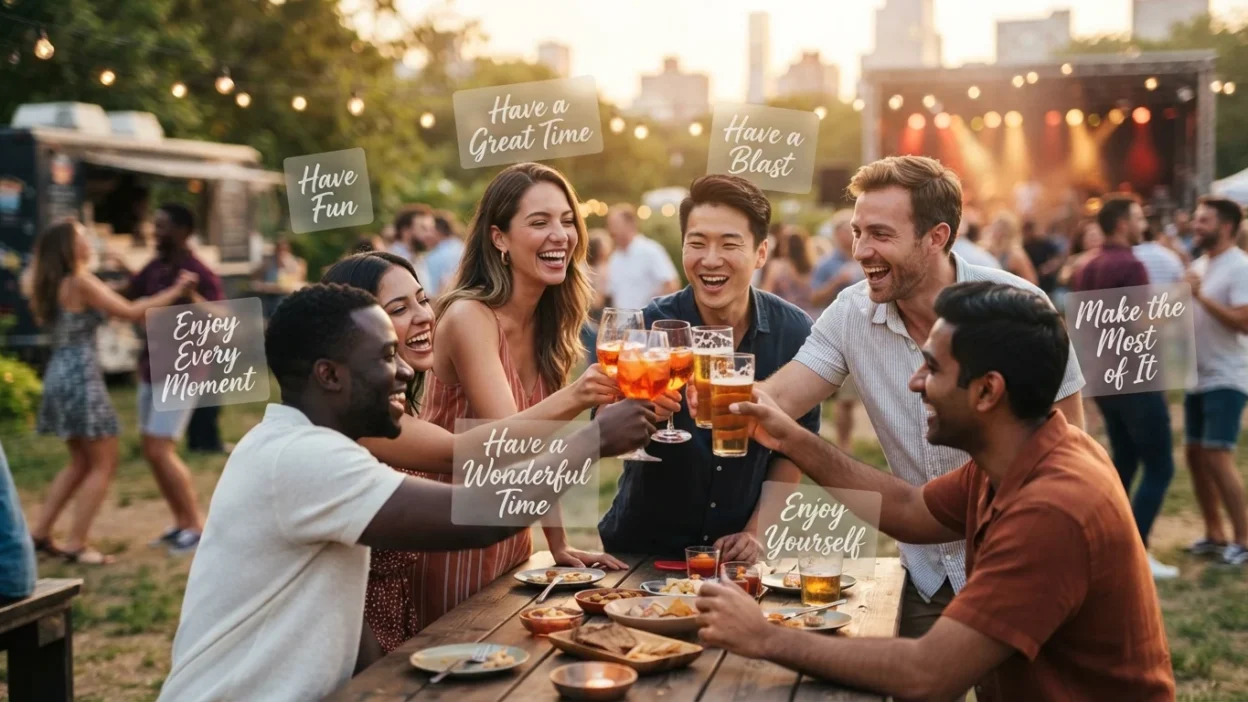
Have a Great Time
Definition: “Have a great time” expresses a warm wish that someone enjoys an upcoming activity.
Usage rule: Use it before parties, trips, events, dinners, or outings.
Practical example: “Have a great time at the wedding this weekend!”
Tips: It is friendly enough for casual conversations but still appropriate in many other settings.
Enjoy
Definition: “Enjoy” is a short and direct way to wish someone pleasure from an activity or experience.
Usage rule: Use it when the activity is already clear from the conversation.
Practical example: “Here’s your coffee. Enjoy!”
Tips: Its short form makes it especially natural in spoken English.
Have a Good One
Definition: “Have a good one” is a relaxed way to wish someone a pleasant experience.
Usage rule: Use it in casual conversations when saying goodbye.
Practical example: “I’ll see you tomorrow. Have a good one!”
Tips: It is informal and works best with people you already have a comfortable relationship with.
Have a Blast
Definition: “Have a blast” means to have a very enjoyable or exciting time.
Usage rule: Use it for parties, concerts, celebrations, trips, and other fun activities.
Practical example: “You’re going to the festival tonight? Have a blast!”
Tips: This phrase sounds energetic and enthusiastic.
Have a Great Day
Definition: “Have a great day” is a positive wish for someone’s day to go well.
Usage rule: Use it when someone is leaving or beginning an activity.
Practical example: “Thanks for stopping by. Have a great day!”
Tips: It is polite, friendly, and suitable for many everyday situations.
Enjoy Your Time
Definition: “Enjoy your time” encourages someone to appreciate the time they spend somewhere or doing something.
Usage rule: Use it when someone is visiting a place, taking a break, or spending time away.
Practical example: “Enjoy your time in the city and explore as much as you can.”
Tips: It sounds thoughtful without being overly enthusiastic.
2. Warm and Friendly Alternatives
Have a Wonderful Time
Definition: “Have a wonderful time” expresses a sincere wish for a memorable and pleasant experience.
Usage rule: Use it for vacations, weddings, celebrations, dinners, and special occasions.
Practical example: “Have a wonderful time on your vacation!”
Tips: It sounds warmer than the simple “have fun.”
Have an Amazing Time
Definition: “Have an amazing time” wishes someone an especially enjoyable experience.
Usage rule: Use it when you want to show extra enthusiasm.
Practical example: “Have an amazing time at the concert!”
Tips: It works particularly well in texts and social media messages.
Make the Most of It
Definition: “Make the most of it” encourages someone to enjoy an opportunity fully.
Usage rule: Use it when someone has a limited amount of time or a special opportunity.
Practical example: “You only have two days in Paris, so make the most of it.”
Tips: This phrase adds encouragement as well as good wishes.
Enjoy Every Moment
Definition: “Enjoy every moment” encourages someone to appreciate an experience as it happens.
Usage rule: Use it for meaningful events, vacations, celebrations, or milestones.
Practical example: “It’s your graduation day, so enjoy every moment!”
Tips: It has a warm and sentimental tone.
Have a Lovely Time
Definition: “Have a lovely time” is a gentle and pleasant way to wish someone well.
Usage rule: Use it before dinners, visits, trips, or social events.
Practical example: “Have a lovely time with your family tonight.”
Tips: It sounds especially warm and polite.
Enjoy Every Second
Definition: “Enjoy every second” emphasizes appreciating an experience completely.
Usage rule: Use it for exciting or memorable occasions.
Practical example: “You’ve worked hard for this vacation. Enjoy every second!”
Tips: It adds emotional energy to a simple good wish.
Hope You Have a Great Time
Definition: This phrase expresses a friendly hope that someone enjoys an upcoming experience.
Usage rule: Use it when you want your message to sound personal and caring.
Practical example: “I hope you have a great time at the party tonight.”
Tips: It works naturally in texts, emails, and spoken conversations.
3. Enthusiastic Ways to Say Enjoy Yourself
Have an Incredible Time
Definition: “Have an incredible time” expresses strong enthusiasm about someone’s upcoming experience.
Usage rule: Use it for exciting trips, events, celebrations, or adventures.
Practical example: “Have an incredible time on your European tour!”
Tips: It sounds energetic without being too informal.
Have the Time of Your Life
Definition: This phrase means to enjoy an experience extremely well.
Usage rule: Use it for major celebrations, vacations, parties, or exciting adventures.
Practical example: “You’re finally going to the festival—have the time of your life!”
Tips: It is expressive and highly enthusiastic.
Go Have Some Fun
Definition: “Go have some fun” encourages someone to relax and enjoy themselves.
Usage rule: Use it mainly in friendly and casual conversations.
Practical example: “You’ve finished all your work. Go have some fun!”
Tips: It sounds encouraging and playful.
Have Loads of Fun
Definition: This phrase wishes someone a very enjoyable experience.
Usage rule: Use it in informal conversations, especially with friends or family.
Practical example: “Have loads of fun at the beach!”
Tips: “Loads of” is informal and more common in conversational English.
Enjoy Yourself to the Fullest
Definition: This phrase encourages someone to get as much enjoyment as possible from an experience.
Usage rule: Use it for special trips, celebrations, or meaningful opportunities.
Practical example: “You’ve been waiting for this vacation for months, so enjoy yourself to the fullest.”
Tips: It is enthusiastic but slightly more elaborate than “have fun.”
Have a Fantastic Time
Definition: “Have a fantastic time” expresses strong positive wishes.
Usage rule: Use it before exciting events or enjoyable experiences.
Practical example: “Have a fantastic time at the festival!”
Tips: It is cheerful and suitable for both speech and messages.
Have an Unforgettable Time
Definition: This phrase wishes someone an experience they will remember positively.
Usage rule: Use it for important events, vacations, weddings, and celebrations.
Practical example: “Have an unforgettable time on your honeymoon.”
Tips: It sounds especially thoughtful for significant occasions.
4. Polite and Professional Alternatives
Enjoy Your Evening
Definition: “Enjoy your evening” is a polite wish for someone to have a pleasant evening.
Usage rule: Use it when ending a professional or social interaction later in the day.
Practical example: “Thank you for meeting with us. Enjoy your evening.”
Tips: It is polite, neutral, and professional.
Have a Pleasant Time
Definition: “Have a pleasant time” expresses a courteous wish for an enjoyable experience.
Usage rule: Use it in formal or customer-service situations.
Practical example: “We hope you have a pleasant time during your stay.”
Tips: It is more formal than “have fun.”
Enjoy Your Stay
Definition: “Enjoy your stay” wishes someone a pleasant experience while visiting a place.
Usage rule: Use it for hotels, accommodations, offices, or other temporary visits.
Practical example: “Welcome to the hotel. We hope you enjoy your stay.”
Tips: This is especially common in hospitality and customer service.
Enjoy Your Visit
Definition: “Enjoy your visit” wishes someone a pleasant experience during a visit.
Usage rule: Use it when someone is visiting a location, organization, or person.
Practical example: “Thank you for coming. Enjoy your visit!”
Tips: It is polite and neutral.
Have a Pleasant Evening
Definition: This phrase is a courteous way to wish someone a good evening.
Usage rule: Use it in professional, formal, or customer-facing communication.
Practical example: “Thank you for your time. Have a pleasant evening.”
Tips: It sounds polished and respectful.
Enjoy the Occasion
Definition: “Enjoy the occasion” encourages someone to appreciate a special event.
Usage rule: Use it for formal celebrations, ceremonies, or important gatherings.
Practical example: “Congratulations on your achievement, and enjoy the occasion.”
Tips: It is appropriate when “have fun” feels too casual.
Wishing You a Pleasant Experience
Definition: This phrase expresses a formal good wish for someone’s experience.
Usage rule: Use it in professional, customer-service, or written communication.
Practical example: “Thank you for choosing our service. We are wishing you a pleasant experience.”
Tips: It sounds formal and customer-focused.
5. Alternatives for Specific Situations
Enjoy Your Vacation
Definition: “Enjoy your vacation” directly wishes someone a pleasant holiday or break.
Usage rule: Use it when someone is traveling or taking time away from work.
Practical example: “You’ve earned the break. Enjoy your vacation!”
Tips: Add a personal detail to make the message warmer.
Enjoy Your Trip
Definition: “Enjoy your trip” wishes someone a pleasant travel experience.
Usage rule: Use it before someone leaves for a journey.
Practical example: “Safe travels, and enjoy your trip!”
Tips: It pairs naturally with “safe travels.”
Have Fun at the Party
Definition: This phrase specifically wishes someone an enjoyable party experience.
Usage rule: Use it before a social gathering.
Practical example: “I can’t make it tonight, but have fun at the party!”
Tips: It is casual and friendly.
Enjoy the Celebration
Definition: “Enjoy the celebration” encourages someone to appreciate a special event.
Usage rule: Use it for birthdays, anniversaries, graduations, and other celebrations.
Practical example: “Congratulations! Enjoy the celebration with your family.”
Tips: It sounds warm and appropriate for meaningful occasions.
Enjoy Your Dinner
Definition: “Enjoy your dinner” wishes someone pleasure while eating.
Usage rule: Use it before or while someone is having dinner.
Practical example: “Here’s your meal. Enjoy your dinner!”
Tips: “Enjoy your meal” is also a very common alternative.
Enjoy the Show
Definition: “Enjoy the show” wishes someone a good experience while watching a performance or presentation.
Usage rule: Use it before a movie, concert, theater performance, or similar event.
Practical example: “Your seats are ready. Enjoy the show!”
Tips: It is short, natural, and easy to use.
Enjoy Your Weekend
Definition: “Enjoy your weekend” wishes someone a relaxing and pleasant weekend.
Usage rule: Use it when saying goodbye near the end of the workweek.
Practical example: “Thanks for your help today. Enjoy your weekend!”
Tips: It works equally well in professional and casual conversations.
Placement & Grammar Rules Table
| Synonym or phrase | Sentence position / placement | Tone / formality | Example sentence |
| Have fun | Beginning or standalone | Casual | Have fun at the party! |
| Have a great time | Beginning or standalone | Friendly / neutral | Have a great time on your trip. |
| Enjoy | Beginning or standalone | Casual / neutral | Enjoy the concert! |
| Have a blast | Beginning or standalone | Casual / enthusiastic | Have a blast tonight! |
| Make the most of it | Usually after context | Friendly / encouraging | You have one day here, so make the most of it. |
| Enjoy every moment | Beginning or standalone | Warm / emotional | Enjoy every moment of your special day. |
| Have a wonderful time | Beginning or standalone | Warm / polite | Have a wonderful time at the wedding. |
| Have the time of your life | Beginning or standalone | Casual / enthusiastic | Have the time of your life on vacation. |
| Enjoy your stay | Beginning or standalone | Professional / polite | We hope you enjoy your stay. |
| Enjoy your visit | Beginning or standalone | Polite / neutral | We hope you enjoy your visit. |
| Enjoy your evening | Beginning or standalone | Professional / polite | Thank you for coming. Enjoy your evening. |
| Have a pleasant time | Beginning or standalone | Formal | We hope you have a pleasant time. |
| Enjoy the occasion | Beginning or standalone | Formal / warm | Please enjoy the occasion with your family. |
| Enjoy your trip | Beginning or standalone | Friendly | Have a safe journey and enjoy your trip. |
Common Mistakes When Saying “Enjoy Yourself”
Using the Wrong Tone
“Have a blast” is energetic and casual, while “have a pleasant time” is more formal. Choose the phrase according to your relationship with the listener.
Sounding Too Formal With Friends
A phrase such as “Wishing you a pleasant experience” may sound unnatural in a casual text. With friends, have fun, have a blast, or have a great time usually feels more natural.
Using “Enjoy” Without Context
“Enjoy!” works when the activity is obvious. If someone is leaving for a vacation, “Enjoy your vacation!” is clearer.
Forgetting the Situation
Different occasions call for different phrases. “Enjoy the show” fits a performance, while “enjoy your stay” fits a hotel or temporary visit.
Overusing “Have Fun”
Although “have fun” is natural, repeating it in every message can make your communication predictable. Use alternatives such as enjoy every moment, make the most of it, or have a wonderful time when appropriate.
Using an Overly Emotional Phrase
“Have the time of your life” may be too enthusiastic for a routine business meeting. Use a neutral expression such as have a pleasant time or enjoy your evening.
Forgetting Personal Connection
A small personal detail can make your message more meaningful. Instead of simply saying “Have fun,” try “Have fun at the concert—you’ve been waiting for it all month!”
Practical Example Paragraphs
Friendly Text Message
“My friend, you’ve been working nonstop lately. You finally have a free weekend, so make the most of it! Have a great time with everyone, enjoy every moment, and don’t worry about work until Monday.”
Vacation Message
“You’ve been planning this trip for months, so enjoy your vacation and have an amazing time. Explore new places, try different foods, and enjoy every second of the experience.”
Professional Message
“Thank you for joining us for the annual event. We hope you enjoy the occasion and have an opportunity to connect with other guests. Have a pleasant evening, and we appreciate your time.”
Birthday Message
“Happy birthday! I hope you have a wonderful time celebrating with your family and friends. Enjoy every moment, make great memories, and have the time of your life!”
Travel Message
“Your trip is finally here! Have a fantastic time, explore everything you can, and make the most of it. Safe travels, and I hope you have an unforgettable time.”
FAQs
What is another way to say “enjoy yourself”?
You can say have fun, have a great time, enjoy your time, make the most of it, have a blast, enjoy every moment, or have a wonderful time.
What is a casual way to say “enjoy yourself”?
Have fun, have a blast, have a good one, and go have some fun are natural casual alternatives.
What is a polite way to say “enjoy yourself”?
Try have a pleasant time, enjoy your evening, enjoy your visit, enjoy your stay, or have a wonderful time.
How do you say “enjoy yourself” professionally?
In professional settings, use phrases such as enjoy your stay, enjoy your visit, have a pleasant evening, or enjoy the occasion, depending on the situation.
What can I say instead of “have fun”?
You can say have a great time, have a blast, enjoy yourself, make the most of it, enjoy every moment, or have a wonderful time.
Is “enjoy yourself” polite?
Yes. “Enjoy yourself” is generally polite and friendly. However, the best alternative depends on the context and relationship between the speakers.
Is “have a blast” appropriate for professional situations?
Usually, no. “Have a blast” is casual and enthusiastic. For professional communication, have a pleasant time or enjoy your evening is generally more suitable.
What is a good alternative to “enjoy yourself” in a text?
For a friendly text, try have fun, have a great time, have an amazing time, or enjoy every moment.
What should I say to someone going on vacation?
You can say enjoy your vacation, have an amazing time, have a fantastic trip, make the most of it, or enjoy every moment.
Final Thoughts
Learning other ways to say enjoy yourself gives you more flexibility when expressing positive wishes.
Use casual phrases like have fun with friends and warmer options like have a wonderful time for special occasions.
For professional settings, enjoy your stay or have a pleasant time can sound more polished.
The best phrase is always the one that matches the occasion, relationship, and tone.
With a little variety, even a simple good wish can sound more personal and thoughtful. Choosing natural expressions helps your conversations feel genuine rather than repetitive.