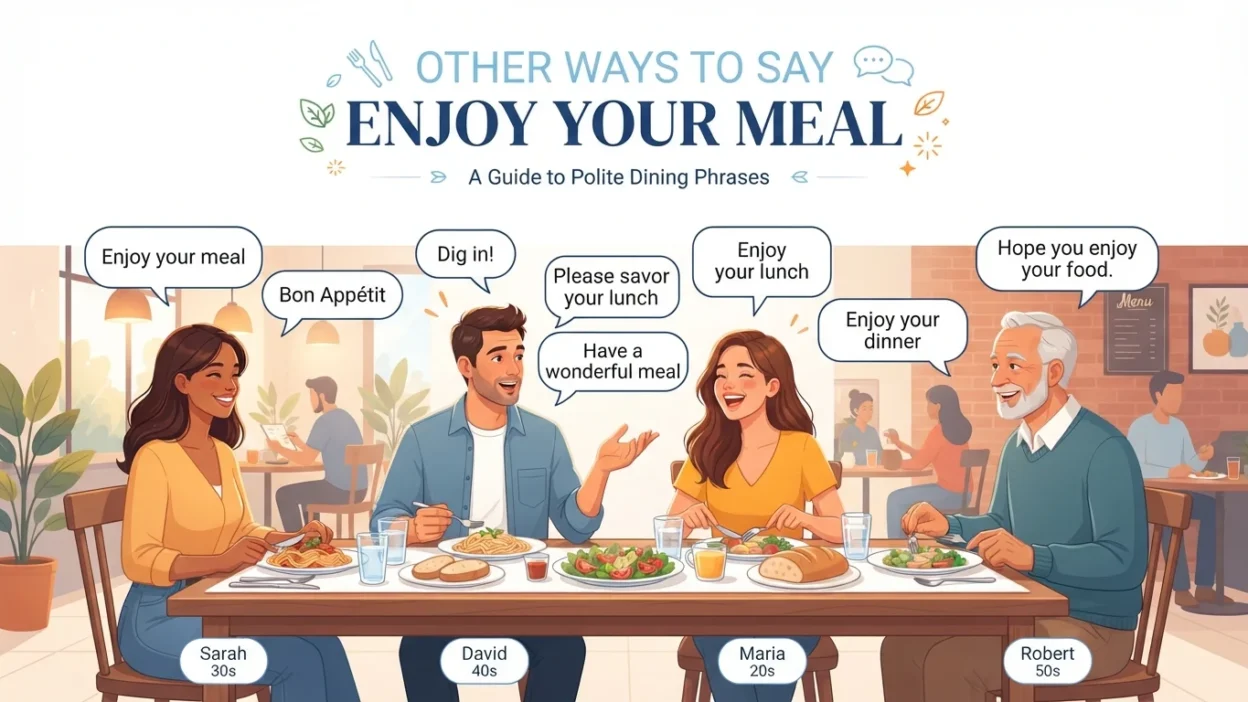
Learning other ways to say enjoy your meal helps you sound natural, warm, and confident in every conversation while matching each dining situation perfectly. Other ways to say enjoy your meal include every alternative, phrase, and expression that lets you express the same wish with the right tone for each situation. The familiar enjoy your meal greeting still conveys goodwill, politeness, friendliness, warmth, attentiveness, and the hope that every meal brings pleasure during dining and eating. In my experience, using fresh expressions instead of repeated or repeatedly relying on one expression prevents speech from sounding robotic or limited and makes every moment feel more personal.
The best wording depends on different contexts. A formal event may require a professional style that reflects professionalism, while a casual gathering with friends works well with dig in. For example, please savor your lunch is a polished choice because savor and lunch naturally fit respectful communication. Whether you write an email, send emails, speak in the workplace, or join social interactions, skilled speakers tailor every phrase so it fits the audience, maintain clarity, and improve every exchange.
For English learners and business professionals, mastering these expressions can elevate everyday communication across different settings. A simple but powerful choice creates a friendly impression, strengthens relationships, and shows respect with the right level of social awareness and confidence.
Quick Answer
There are many other ways to say enjoy your meal, including Bon Appétit, Dig in!, Enjoy your food, Have a wonderful meal, and Please savor your lunch. The best choice depends on the setting, your relationship with the listener, and the level of formality you want to express.
Formal and Professional Alternatives
1. Bon Appétit
Meaning
Bon Appétit is a French expression that literally means “good appetite.” In English, it is commonly used to politely wish someone an enjoyable meal before they begin eating.
When to Use It
Use this phrase during formal dinners, business lunches, restaurants, weddings, or any elegant dining occasion. It works well when you want to sound refined without being overly formal.
Example
- Bon Appétit! I hope you enjoy the chef’s special today.
- Everyone has been served. Bon Appétit!
Tips
Although French in origin, this phrase is widely understood by English speakers and adds a sophisticated touch to your conversation.
2. Please Savor Your Lunch
Meaning
This expression encourages someone to enjoy their food slowly and appreciate every bite rather than rushing through the meal.
When to Use It
Ideal for business lunches, hospitality settings, customer service, or professional emails inviting someone to lunch.
Example
- Please savor your lunch while we prepare the next session.
- We hope you’ll savor your lunch and enjoy your break.
Tips
The word savor creates a warm and thoughtful tone, making this expression sound more personal than simply saying “Enjoy your meal.”
3. Have a Wonderful Meal
Meaning
This phrase politely wishes someone a pleasant dining experience.
When to Use It
Suitable for restaurants, hotels, catered events, formal gatherings, and customer service interactions.
Example
- Thank you for joining us today. Have a wonderful meal.
- We wish you a wonderful meal and an enjoyable evening.
Tips
This expression sounds warm, professional, and welcoming without being overly casual.
4. Enjoy Your Lunch
Meaning
A direct but slightly more specific version of “Enjoy your meal.”
When to Use It
Perfect during office lunches, business meetings, school cafeterias, and workplace conversations.
Example
- Enjoy your lunch. I’ll see you after the meeting.
- Everyone, enjoy your lunch before the afternoon session begins.
Tips
Using the specific meal instead of the general word “meal” makes your greeting feel more natural.
5. Wishing You an Enjoyable Dining Experience
Meaning
A polished expression that focuses on the overall dining experience rather than only the food.
When to Use It
Restaurants, hotels, luxury events, hospitality businesses, and premium customer service.
Example
- We wish you an enjoyable dining experience with us today.
- Thank you for visiting. Wishing you an enjoyable dining experience.
Tips
This phrase is especially useful for businesses that want to create a premium customer experience.
6. Have a Pleasant Lunch
Meaning
A respectful way to wish someone both a relaxing break and an enjoyable meal.
When to Use It
Professional workplaces, conferences, networking events, and formal gatherings.
Example
- Have a pleasant lunch. We’ll continue the presentation shortly.
- Enjoy the break and have a pleasant lunch.
Tips
This expression combines professionalism with genuine kindness.
7. We Hope You Enjoy Every Bite
Meaning
A friendly and welcoming phrase that expresses confidence in the quality of the food.
When to Use It
Restaurants, cafés, food blogs, catering services, and hospitality businesses.
Example
- We hope you enjoy every bite of today’s special.
- Thank you for dining with us. We hope you enjoy every bite.
Tips
This expression works particularly well in customer-facing businesses because it feels warm, sincere, and memorable.
Casual and Friendly Alternatives
1. Dig In!
Meaning
A relaxed invitation encouraging people to start eating immediately.
When to Use It
Family dinners, barbecues, picnics, parties, and meals with close friends.
Example
- Everything’s ready. Dig in!
- Don’t wait for me—dig in while it’s hot.
Tips
Avoid using this phrase in highly formal or professional settings because it sounds very casual.
2. Enjoy Your Food
Meaning
A simple and friendly alternative that everyone understands.
When to Use It
Everyday conversations, family meals, cafés, and informal restaurants.
Example
- Enjoy your food!
- I hope you enjoy your food today.
Tips
This is one of the easiest alternatives for English learners because it is clear and natural.
3. Hope You Love It
Meaning
This expression shows enthusiasm and confidence about the meal being served.
When to Use It
Home cooking, restaurants, food deliveries, and gatherings with friends.
Example
- I tried a new recipe today. Hope you love it!
- Here’s your order. Hope you love it.
Tips
It sounds especially warm when you’ve personally prepared or recommended the food.
4. Have a Great Meal
Meaning
This phrase is a cheerful and versatile way to wish someone an enjoyable dining experience. It sounds natural in everyday English and works in almost any informal setting.
When to Use It
Use it with friends, family members, classmates, neighbors, or colleagues during casual lunches or dinners.
Example
- Have a great meal! I’ll catch up with you later.
- Thanks for coming over. Have a great meal!
Tips
Because it is simple and friendly, this phrase is an excellent replacement for “Enjoy your meal” when you want to sound relaxed without using slang.
5. Hope You Enjoy Your Food
Meaning
This expression politely tells someone that you hope they like what they are about to eat.
When to Use It
Perfect for home-cooked meals, takeout orders, cafés, restaurants, or whenever you serve food to guests.
Example
- I spent all afternoon cooking this. Hope you enjoy your food.
- Here’s your order. Hope you enjoy your food.
Tips
This phrase feels sincere because it focuses on the listener’s experience rather than simply following tradition.
6. Eat Well
Meaning
A short but meaningful phrase encouraging someone to enjoy their meal while eating enough to feel satisfied.
When to Use It
Family gatherings, friendly conversations, travel situations, and casual hospitality.
Example
- Eat well and get some rest afterward.
- Everyone, eat well before we head out.
Tips
Many cultures use similar expressions, making this an excellent choice when speaking with international guests.
7. Enjoy Every Bite
Meaning
This expression encourages someone to appreciate every part of the meal instead of rushing through it.
When to Use It
Restaurants, dinner parties, celebrations, birthdays, or whenever you’ve prepared something special.
Example
- I hope you enjoy every bite of the dessert.
- Enjoy every bite—it’s made from a family recipe.
Tips
This phrase adds warmth and appreciation, making guests feel genuinely welcomed.
Workplace, Business, and Customer Service Alternatives
1. We Hope You Enjoy Your Lunch
Meaning
A courteous and professional greeting commonly used by businesses and organizations.
When to Use It
Corporate events, seminars, conferences, office cafeterias, and company lunches.
Example
- We hope you enjoy your lunch during today’s workshop.
- Thank you for attending. We hope you enjoy your lunch.
Tips
This expression sounds polished while remaining warm and approachable.
2. Please Enjoy the Refreshments
Meaning
Instead of focusing only on the meal, this phrase invites guests to enjoy everything being served.
When to Use It
Business meetings, networking events, receptions, conferences, and exhibitions.
Example
- Please enjoy the refreshments before the presentation begins.
- Feel free to enjoy the refreshments throughout the event.
Tips
Use this phrase when snacks, drinks, and desserts are available rather than a full meal.
3. Thank You and Enjoy
Meaning
A short customer-service phrase that combines gratitude with a polite dining wish.
When to Use It
Restaurants, cafés, bakeries, food trucks, delivery services, and takeout counters.
Example
- Thank you, and enjoy!
- Here’s your order. Thank you, and enjoy.
Tips
Employees often use this expression because it sounds friendly while keeping conversations brief.
4. We Hope You Have a Pleasant Dining Experience
Meaning
A professional statement wishing customers an enjoyable overall experience.
When to Use It
Hotels, luxury restaurants, resorts, cruise ships, and fine-dining establishments.
Example
- We hope you have a pleasant dining experience with us.
- Welcome. We hope you have a pleasant dining experience this evening.
Tips
This phrase emphasizes service quality as much as the food itself.
5. Enjoy the Chef’s Special
Meaning
A personalized dining wish that highlights a featured dish.
When to Use It
Restaurants, cafés, hotels, and food festivals.
Example
- Enjoy the chef’s special—it is our most popular dish.
- We hope you enjoy the chef’s special today.
Tips
Using personalized recommendations creates a better customer experience.
6. We Appreciate Your Visit
Meaning
Although not a direct replacement for “Enjoy your meal,” it naturally accompanies a dining greeting.
When to Use It
Restaurants, cafés, hotels, and hospitality businesses.
Example
- We appreciate your visit. Have a wonderful meal.
- Thank you for dining with us. We appreciate your visit.
Tips
Pair this phrase with another dining wish for a complete and professional message.
7. Thank You for Dining With Us
Meaning
A courteous phrase expressing appreciation to guests before or after their meal.
When to Use It
Restaurants, hotels, banquet halls, and catering services.
Example
- Thank you for dining with us. We hope to see you again.
- Thank you for dining with us. Enjoy your evening.
Tips
This expression strengthens customer relationships and leaves a positive final impression.
International Expressions and Creative Alternatives
1. Bon Appétit (French)
Meaning
One of the world’s most recognized dining expressions, Bon Appétit wishes someone an enjoyable meal before they begin eating.
When to Use It
Perfect for restaurants, dinner parties, weddings, business dinners, and formal occasions.
Example
- Bon Appétit! I hope you enjoy every bite.
- Everyone is served. Bon Appétit!
Tips
Although French, this phrase is widely accepted in English-speaking countries and adds a touch of elegance.
2. Buon Appetito (Italian)
Meaning
The Italian equivalent of “Enjoy your meal.”
When to Use It
Italian restaurants, cultural gatherings, travel conversations, or themed dinners.
Example
- Buon Appetito! Everything is freshly prepared.
- Our chef wishes everyone Buon Appetito.
Tips
Pronouncing it correctly shows appreciation for Italian culture.
3. Itadakimasu (Japanese)
Meaning
A traditional Japanese expression is said before eating to show gratitude for the food and everyone involved in preparing it.
When to Use It
Japanese meals, cultural learning, or respectful conversations about Japanese traditions.
Example
- Before we begin, Itadakimasu.
- In Japan, many families say Itadakimasu before eating.
Tips
This phrase reflects gratitude rather than simply wishing others to enjoy their meal.
4. Guten Appetit (German)
Meaning
A common German expression meaning “Enjoy your meal.”
When to Use It
German restaurants, travel, cultural events, and language practice.
Example
- Guten Appetit!
- Everyone smiled as the waiter said, “Guten Appetit.”
Tips
Native speakers use this phrase in both casual and formal situations.
5. Have a Delicious Meal
Meaning
A warm expression focusing on the quality and taste of the food.
When to Use It
Home dinners, restaurants, celebrations, and family gatherings.
Example
- Have a delicious meal!
- We hope you have a delicious meal with us.
Tips
This phrase works especially well when you’ve prepared the food yourself.
6. Hope It Tastes Amazing
Meaning
A modern and enthusiastic alternative that highlights flavor.
When to Use It
Friends, family, cafés, social media captions, and food blogs.
Example
- I hope it tastes amazing!
- I made this recipe from scratch. I hope it tastes amazing.
Tips
This expression feels natural in conversational English.
7. Enjoy Every Moment of Your Meal
Meaning
A thoughtful phrase encouraging people to appreciate both the food and the experience.
When to Use It
Special occasions, celebrations, anniversaries, and holiday dinners.
Example
- Enjoy every moment of your meal with your family.
- We hope you enjoy every moment of your meal tonight.
Tips
Ideal when the dining experience is just as important as the food.
Placement & Grammar Rules Table
| Alternative Phrase | Best Placement | Tone | Example Sentence |
| Enjoy your meal | Before eating | Neutral | Enjoy your meal, everyone. |
| Bon Appétit | Before eating | Formal | Bon Appétit! |
| Dig in! | Before eating | Casual | Dig in while it’s hot! |
| Enjoy your food | Before eating | Friendly | Enjoy your food. |
| Have a wonderful meal | Before eating | Professional | Have a wonderful meal. |
| Please savor your lunch | Before lunch | Professional | Please savor your lunch during the break. |
| Eat well | Before eating | Friendly | Eat well and stay healthy. |
| Enjoy every bite | Before eating | Warm | Enjoy every bite of the dessert. |
| Hope you love it | While serving | Casual | Hope you love it! |
| Thank you and enjoy | While handing food | Customer Service | Thank you, and enjoy! |
Comparison Table
| Phrase | Formality | Best Used For |
| Enjoy your meal | Neutral | Everyday conversations |
| Bon Appétit | High | Fine dining, formal dinners |
| Dig in! | Casual | Friends and family |
| Eat well | Casual | Everyday use |
| Please savor your lunch | Professional | Workplace, business lunches |
| Have a wonderful meal | Professional | Restaurants and events |
| Enjoy your food | Friendly | General conversations |
| Hope you enjoy your food | Friendly | Home-cooked meals |
| Thank you and enjoy | Professional | Restaurants and cafés |
| Enjoy every bite | Warm | Special meals and celebrations |
Common Mistakes to Avoid
1. Using Very Casual Expressions in Formal Settings
Avoid saying “Dig in!” during business meetings or formal dinners. Choose “Have a wonderful meal” instead.
2. Repeating the Same Phrase Every Time
Using only “Enjoy your meal” can sound repetitive. Mix different alternatives naturally.
3. Ignoring the Situation
Always match your words to the audience. Friends, customers, and business clients expect different levels of formality.
4. Using Direct Translations
Not every expression translates naturally into English. Choose phrases that native speakers commonly use.
5. Forgetting Tone
The same words can sound warm or cold depending on how they’re delivered. Smile, maintain eye contact, and speak naturally.
Practical Examples
Example 1: Business Lunch
“Thank you for attending today’s meeting. Lunch has been served, and we hope you have a wonderful meal. Please savor your lunch, and we’ll begin the next session in thirty minutes.”
Example 2: Family Dinner
“Dinner is finally ready! Dig in while everything is hot. I hope you enjoy every bite because I tried a new recipe today.”
Example 3: Restaurant
“Welcome to our restaurant. Thank you for dining with us. Bon Appétit, and we hope you have an unforgettable dining experience.”
FAQs
1. What is the best alternative to “Enjoy your meal”?
Bon Appétit, Have a wonderful meal, and Enjoy your food are among the most popular alternatives. The best choice depends on the situation.
2. Is “Bon Appétit” still commonly used?
Yes. It remains widely recognized and is commonly used in restaurants, hotels, and formal dining events.
3. Can I say “Dig in!” at work?
Yes, but only in relaxed workplaces or informal team lunches. Avoid it in highly professional environments.
4. Which expression is best for customer service?
Thank you and enjoy, Have a wonderful meal, and We hope you enjoy your dining experience sound professional and welcoming.
5. Why should I learn different ways to say “Enjoy your meal”?
Using different expressions improves communication, avoids repetition, sounds more natural, and helps you match the tone to different situations.
Final Thoughts
Knowing other ways to say enjoy your meal makes your communication more natural, engaging, and appropriate for different situations. Whether you’re speaking with family, serving customers, or attending a business lunch, choosing the right expression creates a positive impression and shows genuine thoughtfulness.
Instead of repeating the same phrase every time, build a small collection of alternatives and use them naturally. A simple change in wording can make conversations warmer, improve professional communication, and leave people with a memorable dining experience.