In everyday communication, other ways to say have fun can make simple phrases feel fresh when writing, speaking, and choosing words in English. The expression “have fun” remains one of the most common expressions for parties, trips, work events, and emails, but repeating the same phrase may sometimes sound flat, childish, or less suitable for the situation. A friendly message to a friend before an event can feel warmer when you use creative alternatives that sound natural, polite, and caring. In my experience, the right wording can show respect, warmth, and confidence without creating unnecessary distance.
This becomes especially useful in professional settings, academic settings, business emails, presentations, and essays, where tone, clarity, and impact matter. At the same time, daily conversations often allow more relaxed and personal language. Instead of repeating “have fun,” you can choose a meaningful and engaging message that better fit[s] the moment. A thoughtful expression can stand out while showing care and joy in a thoughtful way. Whether you want to sound professional, personal, or genuine, natural alternatives can make your communication feel more effective.
Quick Answer
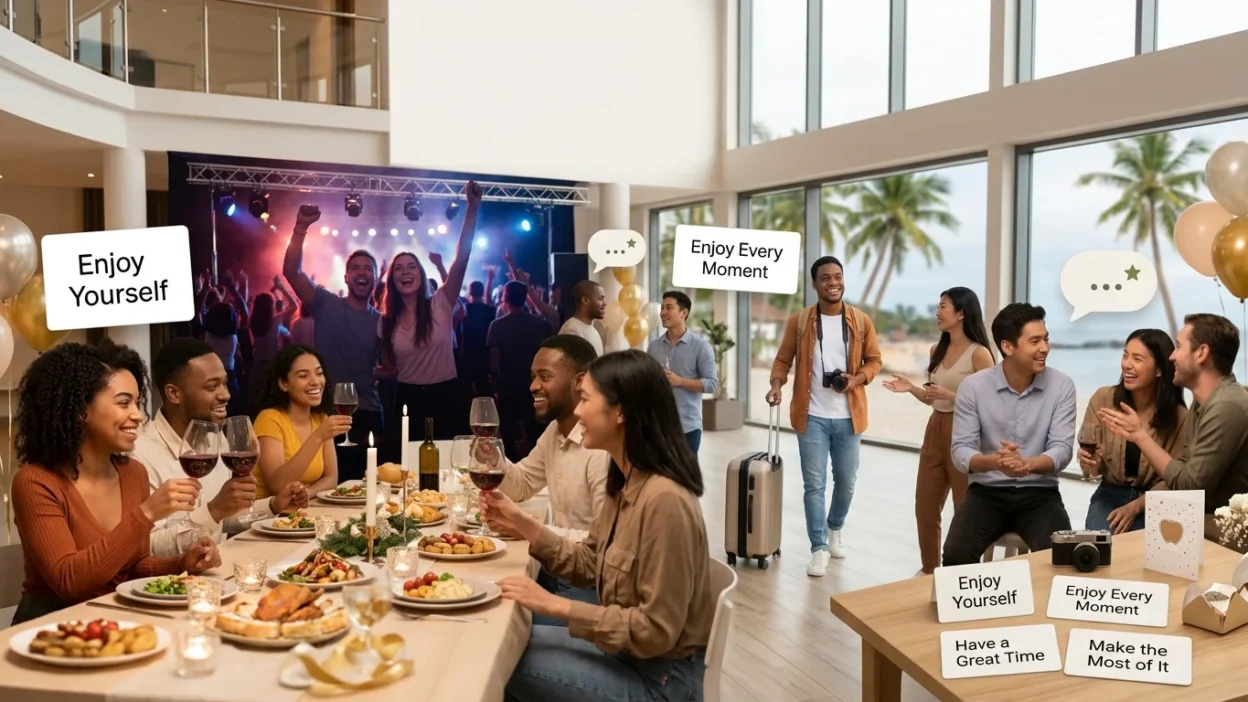
Common other ways to say have fun include enjoy yourself, enjoy the time, have a great time, enjoy every moment, make the most of it, have a wonderful time, and enjoy the experience. The right choice depends on the situation, relationship, and level of formality.
Friendly and Casual Alternatives to “Have Fun”
1. Enjoy Yourself
Definition: “Enjoy yourself” is a natural and friendly way to tell someone to have an enjoyable time.
Usage rule: Use it when speaking to friends, family members, classmates, or people you know reasonably well. It works especially well before social activities, parties, trips, or celebrations.
Practical example: “You’re going to the concert tonight? Enjoy yourself!”
Tips: This phrase sounds warm without being overly casual. It is also useful when you want an alternative to repeating “have fun.”
2. Have a Great Time
Definition: “Have a great time” expresses a friendly wish that someone will enjoy an upcoming activity or event.
Usage rule: Use it before parties, vacations, dinners, concerts, gatherings, or other enjoyable occasions.
Practical example: “I hope you have a great time at the wedding.”
Tips: This is one of the safest everyday alternatives because it sounds natural in both spoken and written English.
3. Enjoy the Time
Definition: “Enjoy the time” encourages someone to appreciate the period they are about to spend somewhere or with other people.
Usage rule: Use it when the focus is on spending quality time rather than one specific activity.
Practical example: “You’ve been looking forward to your holiday, so enjoy the time with your family.”
Tips: Add a context such as “with your family” or “with your friends” when you want the message to sound more personal.
4. Have a Wonderful Time
Definition: “Have a wonderful time” is a warm expression used to wish someone an especially pleasant experience.
Usage rule: Use it for celebrations, vacations, special events, dinners, and meaningful occasions.
Practical example: “Have a wonderful time on your anniversary trip!”
Tips: “Wonderful” gives the sentence a warmer feeling than the simpler “great,” making it useful for heartfelt messages.
5. Enjoy Every Moment
Definition: “Enjoy every moment” encourages someone to appreciate the entire experience rather than focusing only on one activity.
Usage rule: Use it for holidays, celebrations, special occasions, graduation events, and memorable experiences.
Practical example: “Congratulations on your graduation! Enjoy every moment of the celebration.”
Tips: This expression works particularly well when you want your message to sound thoughtful rather than casual.
6. Have an Amazing Time
Definition: “Have an amazing time” is an enthusiastic way to wish someone an enjoyable experience.
Usage rule: Use it with friends, relatives, or people you know well, especially before exciting plans.
Practical example: “You’re finally visiting Paris! Have an amazing time.”
Tips: “Amazing” adds enthusiasm, so it works best when the event or activity genuinely feels exciting.
7. Make the Most of It
Definition: “Make the most of it” encourages someone to take full advantage of an opportunity or experience.
Usage rule: Use it when someone has limited time or a special opportunity they should appreciate.
Practical example: “You only have two days at the beach, so make the most of it.”
Tips: This phrase is more purposeful than “have fun” because it suggests enjoying the experience while making good use of the opportunity.
Alternatives for Parties, Events, and Celebrations
1. Enjoy the Celebration
Definition: “Enjoy the celebration” is a direct way to encourage someone to appreciate a special event.
Usage rule: Use it for birthdays, weddings, anniversaries, graduations, festivals, and other celebrations.
Practical example: “Congratulations on your promotion. Enjoy the celebration tonight!”
Tips: This phrase works well when you know exactly what event the person is attending.
2. Have a Great Evening
Definition: “Have a great evening” is a polite expression wishing someone an enjoyable evening.
Usage rule: Use it before dinners, parties, social events, or evening activities.
Practical example: “Thanks for stopping by. Have a great evening!”
Tips: It can also be used as a polite closing in casual or semi-professional conversations.
3. Enjoy the Party
Definition: “Enjoy the party” directly tells someone to appreciate the social event they are attending.
Usage rule: Use it when the person is going to a birthday party, celebration, office gathering, or similar event.
Practical example: “I wish I could join you tonight. Enjoy the party!”
Tips: Because it mentions the activity directly, this phrase sounds personal and natural.
4. Celebrate and Enjoy
Definition: “Celebrate and enjoy” combines encouragement to participate in the occasion with a wish for enjoyment.
Usage rule: Use it for positive milestones such as birthdays, promotions, graduations, and achievements.
Practical example: “You worked hard for this achievement, so celebrate and enjoy!”
Tips: This phrase is useful when you want your message to recognize both the achievement and the celebration.
5. Enjoy the Festivities
Definition: “Enjoy the festivities” is a slightly more polished expression for enjoying a celebration or series of events.
Usage rule: Use it for festivals, holidays, formal celebrations, community events, or larger gatherings.
Practical example: “Welcome to the festival, and enjoy the festivities.”
Tips: This expression sounds more formal than “have fun,” so it can work well in announcements and event messages.
6. Have a Fantastic Evening
Definition: “Have a fantastic evening” expresses strong enthusiasm for someone’s evening plans.
Usage rule: Use it in friendly conversations, social messages, and informal invitations.
Practical example: “Thanks for inviting me. Have a fantastic evening with everyone!”
Tips: Use “fantastic” when you want the message to feel energetic and cheerful.
7. Enjoy the Occasion
Definition: “Enjoy the occasion” encourages someone to appreciate a particular special event.
Usage rule: Use it for formal celebrations, ceremonies, dinners, weddings, awards, or milestone events.
Practical example: “Congratulations to everyone involved. Please enjoy the occasion.”
Tips: This phrase is especially useful when “have fun” would sound too casual for the event.
Professional and Polite Ways to Say “Have Fun”
1. Enjoy the Event
Definition: “Enjoy the event” is a polite and professional alternative that wishes someone a pleasant experience at an organized occasion.
Usage rule: Use it in workplace conversations, professional emails, conferences, seminars, and networking situations.
Practical example: “Thank you for letting me know. I hope you enjoy the event.”
Tips: This is a safe choice when you want to sound friendly without becoming overly informal.
2. Have a Pleasant Time
Definition: “Have a pleasant time” is a polite expression that wishes someone an enjoyable experience.
Usage rule: Use it in professional or semi-formal communication when you want a courteous tone.
Practical example: “I hope you have a pleasant time at the conference.”
Tips: It is more formal than “have fun,” so it may be better suited to professional communication.
3. Enjoy the Experience
Definition: “Enjoy the experience” encourages someone to appreciate an activity, event, opportunity, or new situation.
Usage rule: Use it when the experience itself is more important than simply having entertainment.
Practical example: “I hope you enjoy the experience and learn something useful from the workshop.”
Tips: This works especially well in professional, educational, and travel-related contexts.
4. Wishing You a Great Time
Definition: “Wishing you a great time” is a warm but polished expression commonly used in written communication.
Usage rule: Use it in emails, cards, messages, and professional conversations when someone is leaving for an event or trip.
Practical example: “Wishing you a great time at the annual conference.”
Tips: This phrase sounds considerate without being too formal or distant.
5. Enjoy Your Time There
Definition: “Enjoy your time there” wishes someone a pleasant experience at a particular location.
Usage rule: Use it when someone is visiting another city, attending an event, traveling, or spending time somewhere away from you.
Practical example: “I hope the conference goes well. Enjoy your time there.”
Tips: Mentioning “there” makes the expression feel connected to the person’s specific plans.
6. I Hope You Enjoy the Experience
Definition: This expression communicates a polite and thoughtful wish that someone will benefit from and appreciate an experience.
Usage rule: Use it for workshops, conferences, travel, educational activities, and professional events.
Practical example: “I hope you enjoy the experience and find the sessions helpful.”
Tips: This is a good choice when you want to sound supportive while maintaining a professional tone.
7. Best Wishes for a Wonderful Time
Definition: “Best wishes for a wonderful time” is a courteous expression combining good wishes with encouragement to enjoy an occasion.
Usage rule: Use it in formal messages, cards, professional correspondence, or situations where a warmer tone is appropriate.
Practical example: “Best wishes for a wonderful time during your stay.”
Tips: Because it sounds polished and considerate, it works well when a simple “have fun” feels too casual.
Alternatives for Trips, Travel, and Vacations
1. Enjoy Your Trip
Definition: “Enjoy your trip” is one of the most natural alternatives to “have fun” when someone is traveling.
Usage rule: Use it before someone leaves for a vacation, business trip, family visit, or short journey.
Practical example: “Have a safe flight and enjoy your trip!”
Tips: This phrase focuses directly on the travel experience and works in both casual and polite communication.
2. Have a Great Trip
Definition: “Have a great trip” is a friendly expression wishing someone an enjoyable journey and destination experience.
Usage rule: Use it with friends, relatives, colleagues, or acquaintances before they travel.
Practical example: “I hope everything goes smoothly. Have a great trip!”
Tips: It is simple, natural, and suitable for text messages, emails, and face-to-face conversations.
3. Enjoy Your Vacation
Definition: “Enjoy your vacation” tells someone to make the most of their holiday or time away from work.
Usage rule: Use it when someone is taking time off for relaxation, sightseeing, family activities, or travel.
Practical example: “You’ve earned some time away from work. Enjoy your vacation!”
Tips: This phrase feels warmer when you mention something the person has been looking forward to.
4. Make the Most of Your Trip
Definition: “Make the most of your trip” encourages someone to fully appreciate their travel experience.
Usage rule: Use it when someone has an exciting destination, limited time, or several opportunities to explore.
Practical example: “You have a week in Rome, so make the most of your trip.”
Tips: This expression suggests active enjoyment rather than simply wishing someone a good time.
5. Enjoy Your Adventure
Definition: “Enjoy your adventure” is an enthusiastic expression for someone beginning an exciting or unfamiliar journey.
Usage rule: Use it for vacations, road trips, outdoor activities, new experiences, or major life journeys.
Practical example: “You’re finally starting your road trip. Enjoy your adventure!”
Tips: It works especially well when the journey involves exploration or something outside the person’s usual routine.
6. Have a Memorable Trip
Definition: “Have a memorable trip” expresses the hope that someone will create meaningful and lasting memories while traveling.
Usage rule: Use it for vacations, special journeys, honeymoons, family trips, or important travel experiences.
Practical example: “I hope you have a memorable trip with your family.”
Tips: Choose this phrase when you want your message to sound more thoughtful than a basic “have fun.”
7. Enjoy Every Part of Your Journey
Definition: “Enjoy every part of your journey” encourages someone to appreciate both the travel process and the experiences along the way.
Usage rule: Use it for longer trips, personal journeys, major adventures, or meaningful travel plans.
Practical example: “You’ve planned this trip for months, so enjoy every part of your journey.”
Tips: This expression has a warm and reflective quality, making it suitable for heartfelt messages.
Thoughtful and Warm Alternatives to “Have Fun”
1. Enjoy Every Moment
Definition: “Enjoy every moment” encourages someone to appreciate the present and value their experience.
Usage rule: Use it for celebrations, trips, reunions, milestones, and memorable occasions.
Practical example: “Your family is finally together again. Enjoy every moment.”
Tips: This phrase is especially effective when you want to express care and emotional warmth.
2. Have a Beautiful Time
Definition: “Have a beautiful time” is a gentle and warm way to wish someone a meaningful and enjoyable experience.
Usage rule: Use it in personal messages, celebrations, family occasions, and heartfelt conversations.
Practical example: “I hope you have a beautiful time with your loved ones.”
Tips: This expression feels more emotional than “have fun,” so use it when warmth matters.
3. Enjoy the Little Moments
Definition: “Enjoy the little moments” encourages someone to appreciate small, meaningful parts of an experience.
Usage rule: Use it for holidays, family gatherings, celebrations, vacations, and personal occasions.
Practical example: “Take lots of pictures and enjoy the little moments with your children.”
Tips: This phrase is useful when you want your message to sound personal and sincere.
4. Create Some Wonderful Memories
Definition: “Create some wonderful memories” wishes someone an enjoyable experience that they will remember positively.
Usage rule: Use it before vacations, celebrations, reunions, weddings, and special family events.
Practical example: “Have a wonderful vacation and create some wonderful memories together.”
Tips: This is a thoughtful alternative when you want to focus on lasting value rather than temporary entertainment.
5. Enjoy Yourself to the Fullest
Definition: “Enjoy yourself to the fullest” strongly encourages someone to get as much enjoyment as possible from an experience.
Usage rule: Use it mainly in friendly and enthusiastic conversations.
Practical example: “It’s your weekend off, so enjoy yourself to the fullest!”
Tips: Because it is highly enthusiastic, it is better for casual communication than formal business writing.
6. Take Time to Enjoy Yourself
Definition: “Take time to enjoy yourself” encourages someone to relax and appreciate their free time.
Usage rule: Use it when someone has been working hard, dealing with responsibilities, or deserves a break.
Practical example: “You’ve been working all week, so take time to enjoy yourself this weekend.”
Tips: This phrase adds a caring element and can sound more considerate than simply saying “have fun.”
7. Hope You Have a Wonderful Experience
Definition: “Hope you have a wonderful experience” expresses a warm wish that someone will enjoy and value an upcoming activity.
Usage rule: Use it for travel, events, classes, workshops, celebrations, and new opportunities.
Practical example: “I hope you have a wonderful experience at the festival.”
Tips: This is flexible enough for personal communication while still sounding polished and thoughtful.
Placement & Grammar Rules Table
| Synonym or phrase | Sentence position / placement | Tone / formality | Example sentence |
| Enjoy yourself | Usually at the beginning or end | Friendly / casual | Enjoy yourself at the party! |
| Have a great time | Beginning or end | Friendly / neutral | Have a great time at the concert. |
| Enjoy the event | Beginning or end | Polite / professional | I hope you enjoy the event. |
| Enjoy the experience | Beginning or end | Professional / neutral | Enjoy the experience and learn as much as you can. |
| Enjoy your trip | Usually at the end | Friendly / neutral | Have a safe flight and enjoy your trip. |
| Make the most of it | Usually after a context-setting sentence | Friendly / motivational | You only have one day there, so make the most of it. |
| Enjoy every moment | Beginning or end | Warm / thoughtful | Enjoy every moment of your special day. |
| Wishing you a great time | Usually at the beginning of a written message | Polite / professional | Wishing you a great time at the conference. |
| Enjoy your vacation | Usually at the end | Friendly / neutral | Take some time to relax and enjoy your vacation. |
| Have a wonderful time | Beginning or end | Warm / friendly | Have a wonderful time with your family. |
| Enjoy the celebration | Beginning or end | Polite / neutral | Enjoy the celebration with everyone tonight. |
| Have a pleasant time | Beginning or end | Formal / polite | I hope you have a pleasant time at the event. |
Common Mistakes When Using Alternatives to “Have Fun”
1. Using a Very Casual Phrase in a Formal Email
A phrase such as “Go have a blast!” may sound friendly among close friends but can feel too informal in a formal business email.
Better approach: Choose expressions such as enjoy the event, enjoy the experience, or wishing you a great time when professional tone matters.
2. Choosing an Expression That Does Not Match the Activity
“Enjoy your vacation” makes sense for travel, but it may sound strange when someone is attending a short business meeting.
Better approach: Match the expression to the situation. Use “enjoy the event” for an event, “enjoy your trip” for travel, and “enjoy the celebration” for a celebration.
3. Repeating the Same Alternative
Replacing “have fun” with “have a great time” is useful, but repeating “have a great time” in every message creates the same problem.
Better approach: Rotate expressions naturally according to context. You can use “enjoy yourself,” “enjoy every moment,” “make the most of it,” or “enjoy the experience.”
4. Making a Simple Message Too Complicated
Not every situation requires an elaborate expression. A short message to a close friend does not need formal wording.
Better approach: Keep the language proportional to the relationship and situation. “Have a great time!” may be better than a long sentence.
5. Ignoring Tone
Words carry different emotional levels. “Have fun!” sounds casual, while “best wishes for a wonderful time” sounds more polished.
Better approach: Think about the relationship, purpose, audience, and setting before choosing your phrase.
6. Using “Make the Most of It” in the Wrong Context
“Make the most of it” can sometimes sound like advice rather than a simple good wish.
Better approach: Use it when someone has a special opportunity, limited time, or an experience worth appreciating.
7. Forgetting the Main Purpose of the Message
The goal is not simply to replace words. The goal is to communicate a genuine wish for someone to enjoy their experience.
Better approach: Choose wording that expresses the feeling you actually want to communicate, whether that is warmth, excitement, encouragement, politeness, or care.
Practical Example Paragraphs
1: Message to a Friend
Your friend is going to a concert, so instead of sending the same “have fun” message, you could write: “I hope you have a great time tonight! Enjoy the music, take lots of pictures, and make the most of it.” This sounds natural, friendly, and enthusiastic without feeling forced.
2: Travel Message
When someone is leaving for vacation, a thoughtful message could be: “Have a safe flight and enjoy your trip! I hope you have a wonderful experience, discover some beautiful places, and create some wonderful memories with your family.” This combines encouragement with genuine warmth.
3: Professional Email
For a colleague attending a conference, you could write: “I hope you enjoy the event and find the sessions useful. Wishing you a great time at the conference, and I hope you have a valuable experience.” This keeps the tone professional while still sounding friendly.
4: Birthday Celebration
For a birthday message, you might say: “Happy birthday! Have an amazing time with your family and friends, enjoy every moment, and create some wonderful memories.” The wording feels more personal than simply saying “have fun.”
5: Family Gathering
If a family member is attending a reunion, you could write: “I’m glad everyone will finally be together. Enjoy every moment, enjoy the little moments, and take time to enjoy yourself. I hope you have a beautiful time with everyone.”
FAQs
What is another way to say “have fun”?
Common alternatives include enjoy yourself, have a great time, enjoy every moment, have a wonderful time, enjoy the experience, and make the most of it.
What is a professional way to say “have fun”?
Professional options include enjoy the event, enjoy the experience, have a pleasant time, enjoy your time there, and wishing you a great time.
What can I say instead of “have fun” to a friend?
You can say have a great time, enjoy yourself, have an amazing time, enjoy the party, enjoy every moment, or make the most of it.
What should I say instead of “have fun” before a trip?
Natural travel expressions include enjoy your trip, have a great trip, enjoy your vacation, make the most of your trip, enjoy your adventure, and have a memorable trip.
Is “enjoy yourself” grammatically correct?
Yes. “Enjoy yourself” is a common and grammatically correct expression. It is generally used when you want someone to have an enjoyable experience.
Is “have a great time” better than “have fun”?
Neither expression is universally better. “Have fun” is simple and casual, while “have a great time” can sound slightly warmer or more versatile depending on the situation.
How can I say “have fun” in an email?
Choose an expression based on the tone of the email. For a professional message, try to enjoy the event, enjoy the experience, or wishing you a great time. For a casual email, having a great time works naturally.
What is a thoughtful way to say “have fun”?
For a warmer message, try to enjoy every moment, create some wonderful memories, enjoy the little moments, or hope you have a wonderful experience.
Final Thoughts
Finding other ways to say have fun gives you more control over your tone and helps your communication feel natural rather than repetitive. The best expression depends on the person, activity, relationship, and setting.
For casual situations, use friendly phrases such as “enjoy yourself” or “have a great time.” For professional communication, choose polished options such as “enjoy the event” or “enjoy the experience.” With the right wording, even a short message can communicate genuine warmth, encouragement, and care.