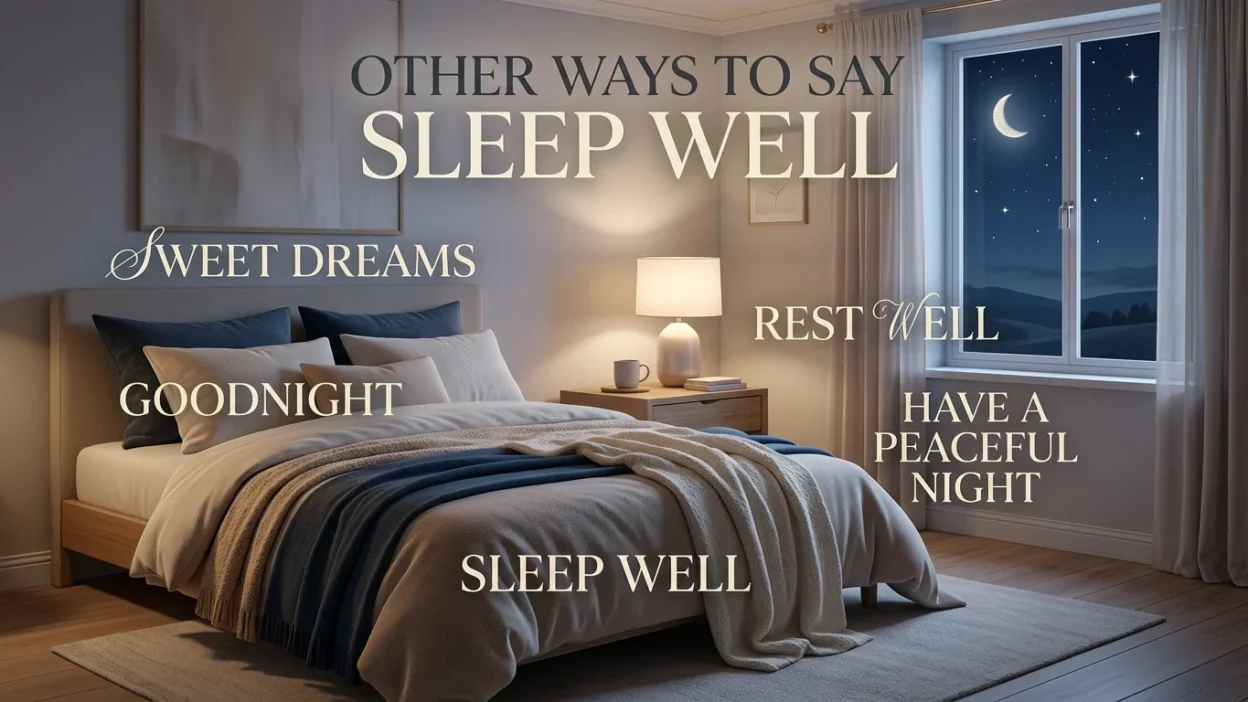
Knowing other ways to say sleep well helps you choose a simple, caring expression that fits the person, tone, and situation in natural English. When saying goodnight to someone, you can use different ways to express the same message while showing warmth, concern, and kindness. Choosing the right phrase can change the tone, making your words sound friendly, casual, formal, or professional depending on who you are speaking to.
For English learners, learning a varied language makes communication more natural and confident. Word choices can shape how others feel, whether you are talking with friends, a colleague, or someone in business. This is useful in emails, social media posts, and everyday conversation. A formal goodnight message may help a colleague respond better, while a warm phrase can feel more personal and caring.
Quick Answer
Common alternatives to “sleep well” include rest well, sleep tight, have a good night, sweet dreams, rest easy, get some good rest, have a peaceful night, and hope you sleep well. The right choice depends on your relationship and the level of warmth or formality you want to show.
Friendly and Casual Ways to Say Sleep Well
These phrases work well with friends, classmates, family members, and people you know comfortably.
1. Rest Well
Definition: “Rest well” is a warm way to wish someone a comfortable and relaxing night.
Usage rule: Use it when someone needs rest after a busy or tiring day.
Practical example: “You’ve had a long day, so rest well tonight.”
Tips: It sounds caring without being overly personal.
2. Sleep Tight
Definition: “Sleep tight” is a traditional and playful way to wish someone a good night.
Usage rule: Use it mainly in casual conversations with friends, family, or children.
Practical example: “Goodnight! Sleep tight and see you tomorrow.”
Tips: Avoid it in formal business communication because it has a playful tone.
3. Have a Good Night
Definition: “Have a good night” is a common and natural goodnight expression.
Usage rule: Use it in both everyday conversations and short messages.
Practical example: “Thanks for talking with me. Have a good night!”
Tips: It is one of the safest alternatives when you are unsure what to say.
4. Sweet Dreams
Definition: “Sweet dreams” expresses a warm wish for pleasant dreams.
Usage rule: Use it with people you have a friendly, close, or affectionate relationship with.
Practical example: “Goodnight, everyone. Sweet dreams!”
Tips: It can sound affectionate, so consider your relationship before using it.
5. Rest Easy
Definition: “Rest easy” means to relax and enjoy a peaceful period of rest.
Usage rule: Use it when you want your message to sound reassuring or comforting.
Practical example: “Everything is taken care of, so rest easy tonight.”
Tips: This phrase can also mean that someone does not need to worry.
6. Get Some Good Rest
Definition: “Get some good rest” is a caring expression that encourages someone to recover their energy.
Usage rule: Use it when someone has been working hard, traveling, or feeling tired.
Practical example: “You’ve been busy all week. Get some good rest tonight.”
Tips: It feels natural in everyday speech and text messages.
7. Have a Peaceful Night
Definition: “Have a peaceful night” wishes someone a calm and relaxing evening.
Usage rule: Use it when you want a gentle and thoughtful tone.
Practical example: “Take care and have a peaceful night.”
Tips: It works particularly well in supportive or caring messages.
Polite and Warm Alternatives
These expressions are useful when you want to sound considerate without becoming overly casual.
1. I Hope You Sleep Well
Definition: “I hope you sleep well” is a polite and caring variation of the original expression.
Usage rule: Use it when you want to express genuine concern for someone’s rest.
Practical example: “You’ve had a stressful day. I hope you sleep well tonight.”
Tips: Adding “tonight” makes the message feel more natural and specific.
2. Have a Restful Night
Definition: “Have a restful night” wishes someone a night that helps them recover and relax.
Usage rule: Use it in polite personal messages and supportive conversations.
Practical example: “Thank you for your help today. Have a restful night.”
Tips: This sounds slightly more polished than “sleep well.”
3. Wishing You a Good Night
Definition: “Wishing you a good night” is a warm expression suitable for written communication.
Usage rule: Use it in messages, notes, cards, and friendly conversations.
Practical example: “It was lovely speaking with you. Wishing you a good night.”
Tips: It sounds thoughtful without being too intimate.
4. Take Care and Rest Well
Definition: This phrase combines a caring farewell with a wish for good rest.
Usage rule: Use it when ending a conversation with someone you care about.
Practical example: “Take care and rest well. We’ll talk tomorrow.”
Tips: It works naturally in texts and spoken conversations.
5. Enjoy a Quiet Night
Definition: “Enjoy a quiet night” wishes someone a calm evening with little stress or activity.
Usage rule: Use it when someone has finished a busy schedule.
Practical example: “You’ve finished everything for today. Enjoy a quiet night.”
Tips: It emphasizes relaxation rather than sleep itself.
6. Get Plenty of Rest
Definition: “Get plenty of rest” encourages someone to give their body enough time to recover.
Usage rule: Use it with someone who is tired, busy, or preparing for another demanding day.
Practical example: “You have an early start tomorrow, so get plenty of rest.”
Tips: This phrase is caring and practical rather than romantic.
7. Sleep Peacefully
Definition: “Sleep peacefully” is a gentle wish for calm, uninterrupted sleep.
Usage rule: Use it in thoughtful personal messages.
Practical example: “Goodnight, and sleep peacefully.”
Tips: It creates a softer tone than the direct phrase “sleep well.”
Professional Ways to Say Sleep Well
Professional communication usually benefits from simple, respectful wording rather than overly affectionate expressions.
1. Have a Good Evening
Definition: “Have a good evening” is a polite closing that does not directly mention sleep.
Usage rule: Use it when ending a professional conversation later in the day.
Practical example: “Thank you for your time. Have a good evening.”
Tips: It is safer for workplace emails than phrases such as “sweet dreams.”
2. Have a Restful Evening
Definition: “Have a restful evening” politely wishes someone a relaxing end to the day.
Usage rule: Use it in professional or semi-formal conversations when appropriate.
Practical example: “Thank you for the update. Have a restful evening.”
Tips: It sounds courteous while remaining professional.
3. Enjoy Your Evening
Definition: “Enjoy your evening” is a friendly but professional closing.
Usage rule: Use it when concluding an email, meeting, or conversation outside working hours.
Practical example: “I’ll send the revised document tomorrow. Enjoy your evening.”
Tips: It works especially well when you do not want to mention sleep directly.
4. Have a Pleasant Evening
Definition: “Have a pleasant evening” is a formal and courteous farewell.
Usage rule: Use it with clients, customers, professional contacts, or unfamiliar people.
Practical example: “Thank you for contacting our team. Have a pleasant evening.”
Tips: It is more formal than “have a good night.”
5. Wishing You a Restful Night
Definition: This phrase offers a respectful wish for a comfortable night.
Usage rule: Use it in formal messages where a warm but restrained tone is suitable.
Practical example: “Thank you for your cooperation. Wishing you a restful night.”
Tips: Keep the rest of the message professional and concise.
6. I Hope You Have a Restful Night
Definition: This expression combines politeness with a personal but respectful wish.
Usage rule: Use it when the context allows a slightly warmer professional tone.
Practical example: “I know today was demanding. I hope you have a restful night.”
Tips: It is more personal than “have a good evening,” so use it selectively.
7. Until Tomorrow
Definition: “Until tomorrow” is a concise farewell that suggests the conversation or work will continue the next day.
Usage rule: Use it when you expect to communicate with the person again soon.
Practical example: “That covers everything for today. Until tomorrow.”
Tips: Pair it with “have a good evening” when you want a warmer closing.
Affectionate Ways to Say Sleep Well
These expressions are better suited to partners, close family members, or people with whom you share a warm relationship.
1. Sweet Dreams, My Dear
Definition: This phrase combines a goodnight wish with an affectionate form of address.
Usage rule: Use it only when the relationship is close enough for affectionate language.
Practical example: “Goodnight, my dear. Sweet dreams.”
Tips: Avoid it in professional or unfamiliar relationships.
2. Sleep Peacefully, Love
Definition: This is a tender goodnight message for a romantic or very close relationship.
Usage rule: Use it with a partner or someone who is comfortable with affectionate language.
Practical example: “You’ve done enough for today. Sleep peacefully, love.”
Tips: The word “love” makes the expression strongly personal.
3. Goodnight, My Love
Definition: “Goodnight, my love” is a direct romantic farewell.
Usage rule: Use it with a romantic partner.
Practical example: “Goodnight, my love. I’ll talk to you in the morning.”
Tips: Its meaning depends heavily on the relationship.
4. Dream Sweetly
Definition: “Dream sweetly” is a creative and affectionate wish for pleasant dreams.
Usage rule: Use it mainly in personal messages rather than formal communication.
Practical example: “Rest now and dream sweetly tonight.”
Tips: Because it is less common, it works best when a gentle or poetic tone is intended.
5. Sleep Cozy
Definition: “Sleep cozy” is an informal and playful expression suggesting comfort at bedtime.
Usage rule: Use it with close friends, family, or a romantic partner.
Practical example: “Get comfortable and sleep cozy tonight.”
Tips: It is casual and should not be used in formal settings.
6. Rest Up, Darling
Definition: “Rest up, darling” encourages someone to recover while adding an affectionate form of address.
Usage rule: Use it only with someone who is comfortable with personal language.
Practical example: “You’ve had a busy day, so rest up, darling.”
Tips: The affectionate word makes the phrase unsuitable for workplace communication.
7. Sleep Well, Beautiful
Definition: This expression combines a goodnight wish with a personal compliment.
Usage rule: Use it only when the relationship makes such language appropriate.
Practical example: “Goodnight, beautiful. Sleep well.”
Tips: Consider the relationship carefully before using appearance-based terms.
Creative and Natural Alternatives
Sometimes you want your message to sound less repetitive while still keeping the meaning clear.
1. Time to Recharge
Definition: “Time to recharge” compares sleep with recharging energy.
Usage rule: Use it casually with friends, family, or coworkers you know well.
Practical example: “You’ve been going all day. Time to recharge!”
Tips: It is modern, conversational, and less direct than “sleep well.”
2. Get Some Shut-Eye
Definition: “Get some shut-eye” is an informal expression meaning to sleep.
Usage rule: Use it in relaxed conversations with people familiar with casual English.
Practical example: “I’m exhausted, so I’m going to get some shut-eye.”
Tips: Avoid this idiom in formal emails or professional messages.
3. Catch Some Zs
Definition: “Catch some Zs” is playful slang for getting some sleep.
Usage rule: Use it in casual speech, texts, and friendly conversations.
Practical example: “I need to catch some Zs before tomorrow’s meeting.”
Tips: It is informal and may not suit every English learner’s communication style.
4. Call It a Night
Definition: “Call it a night” means to stop an activity and go to bed or end the evening.
Usage rule: Use it when you are ending a late-night activity.
Practical example: “It’s getting late. Let’s call it a night.”
Tips: This phrase focuses on ending the evening rather than wishing someone good sleep.
5. Get Some Rest
Definition: “Get some rest” is a simple expression encouraging relaxation or sleep.
Usage rule: Use it with someone who appears tired or has had a demanding day.
Practical example: “You’ve worked hard today. Get some rest.”
Tips: It is flexible enough for friends, family, and many everyday situations.
6. Rest Up
Definition: “Rest up” means to relax and recover your energy.
Usage rule: Use it casually when someone needs a break or good sleep.
Practical example: “Rest up tonight because tomorrow will be busy.”
Tips: It sounds natural in spoken English and text messages.
7. Recharge and Rest
Definition: “Recharge and rest” combines two ideas: recovering energy and relaxing.
Usage rule: Use it when you want to encourage someone to take a proper break.
Practical example: “Forget about work for tonight and recharge and rest.”
Tips: This is a useful modern phrase for casual conversations.
Choosing the Right Phrase for the Situation
The same basic message can sound very different depending on your relationship and communication setting.
1. For Friends
Definition: Friendly goodnight phrases create a relaxed and comfortable tone.
Usage rule: Choose casual expressions that match your usual way of speaking.
Practical example: “I’m heading to bed. Sleep tight!”
Tips: “Sleep tight,” “rest up,” and “have a good night” are easy choices.
2. For Family
Definition: Family goodnight messages can be warm, supportive, or affectionate.
Usage rule: Choose language that feels natural within your family relationship.
Practical example: “Goodnight! Get some good rest.”
Tips: A simple phrase often feels more genuine than an overly elaborate message.
3. For a Romantic Partner
Definition: Romantic goodnight messages often include affection and emotional warmth.
Usage rule: Use personal expressions that fit the relationship.
Practical example: “Goodnight, my love. Sweet dreams.”
Tips: Avoid using romantic language if the relationship has not reached that level.
4. For a Colleague
Definition: A colleague usually needs a polite and professional closing.
Usage rule: Prefer neutral expressions that do not sound overly personal.
Practical example: “Thanks for your help today. Have a good evening.”
Tips: “Have a good evening” is generally safer than “sweet dreams.”
5. For a Client
Definition: Client communication benefits from respectful and professional wording.
Usage rule: Keep the message courteous and focused on the business relationship.
Practical example: “Thank you for your time today. Have a pleasant evening.”
Tips: Avoid slang, jokes, and intimate expressions.
6. In a Text Message
Definition: Text messages allow shorter and more conversational goodnight phrases.
Usage rule: Match the wording to your relationship and usual texting style.
Practical example: “Goodnight! Rest well 😊”
Tips: Emojis can add warmth when they fit the conversation.
7. In an Email
Definition: Email goodnight wording should usually function as a polite closing rather than a personal bedtime wish.
Usage rule: Use professional phrases such as “have a good evening” when appropriate.
Practical example: “Thank you for reviewing the proposal. Have a good evening.”
Tips: Keep the closing concise and consistent with the overall formality of the email.
Placement & Grammar Rules Table
The placement of a goodnight phrase affects how natural and appropriate the sentence sounds.
| Synonym or phrase | Sentence position / placement | Tone / formality | Example sentence |
| Sleep well | Usually at the end | Friendly / neutral | “Goodnight, sleep well.” |
| Rest well | End of a sentence or standalone | Warm / neutral | “Take care and rest well.” |
| Sleep tight | Usually at the end | Casual / playful | “Goodnight, sleep tight!” |
| Sweet dreams | Usually standalone or at the end | Warm / affectionate | “Goodnight, sweet dreams.” |
| Have a good night | Beginning or end of a farewell | Neutral / friendly | “Have a good night!” |
| Get some rest | End or standalone | Caring / casual | “You’ve worked hard, so get some rest.” |
| Have a peaceful night | Usually at the end | Warm / polite | “Take care and have a peaceful night.” |
| Have a good evening | Usually at the end of a professional conversation | Professional / polite | “Thank you for your time. Have a good evening.” |
| Enjoy your evening | Usually at the end | Friendly / professional | “Thanks for the update. Enjoy your evening.” |
| Rest up | Usually standalone or at the end | Casual | “You have a busy day tomorrow, so rest up.” |
Common Mistakes When Saying Sleep Well
A goodnight expression can sound awkward when the phrase does not match the situation.
Using overly casual language at work:
Expressions such as “catch some Zs” or “sleep tight” may feel too informal in a professional email. Choose “have a good evening” or another neutral closing instead.
Using affectionate phrases with the wrong person:
“Goodnight, my love” or “sleep well, beautiful” can sound inappropriate outside a close relationship. Match the warmth of your language to the relationship.
Repeating the same phrase too often:
Saying “sleep well” every night is not grammatically wrong, but varied language can make messages feel more natural. Try “rest well,” “have a peaceful night,” or “get some good rest.”
Ignoring the purpose of the message:
Sometimes you are not actually wishing someone sleep. If you are ending a professional conversation at 7 p.m., “have a good evening” may fit better than “sleep well.”
Practical Example Paragraphs
When writing to a friend after a long day, you might say: “You’ve been working since early morning, so forget about everything for tonight. Get some good rest and recharge. Goodnight, and sleep tight!” This sounds supportive without being overly formal.
For a colleague, a more suitable message would be: “Thank you for helping me finish the report today. I appreciate your time and support. I’ll review the remaining details tomorrow. Have a good evening.” This keeps the closing professional while still sounding friendly.
For a romantic partner, the wording can be warmer: “You’ve had such a busy day, so now it’s time to relax. Put everything aside and get comfortable. Goodnight, my love. Sweet dreams, and I hope you sleep peacefully.”
FAQs
1. What is another way to say “sleep well”?
Common alternatives include “rest well,” “sleep tight,” “have a good night,” “sweet dreams,” “rest easy,” and “get some good rest.”
2. What is a professional way to say “sleep well”?
For professional situations, “have a good evening,” “have a pleasant evening,” or “have a restful evening” can work better than an intimate goodnight phrase.
3. How do I say “sleep well” to a friend?
You can say “sleep tight,” “rest up,” “get some rest,” “have a good night,” or “sweet dreams,” depending on your usual friendship style.
4. What is a romantic way to say “sleep well”?
Romantic options include “goodnight, my love,” “sweet dreams, love,” and “sleep peacefully, love.” Use affectionate phrases only when they fit the relationship.
5. Is “sleep tight” another way to say “sleep well”?
Yes. “Sleep tight” is a common informal goodnight expression, although it has a more playful tone than “sleep well.”
6. Can I say “sleep well” in an email?
Yes, but the context matters. In a personal email it can sound natural, while a professional email may be better served by “have a good evening” or “have a pleasant evening.”
7. How can I say “sleep well” without sounding repetitive?
Rotate between natural expressions such as “rest well,” “get some good rest,” “have a peaceful night,” “sleep peacefully,” and “have a good night.”
Final Thoughts
Finding other ways to say sleep well helps you adjust your language to different people, relationships, and situations. The strongest choice is usually the one that sounds natural for the conversation rather than the most creative phrase.
For everyday communication, keep your wording simple and genuine. Use warm expressions with people close to you and neutral phrases in professional settings. This small change can make your goodnight messages clearer, more thoughtful, and more appropriate.