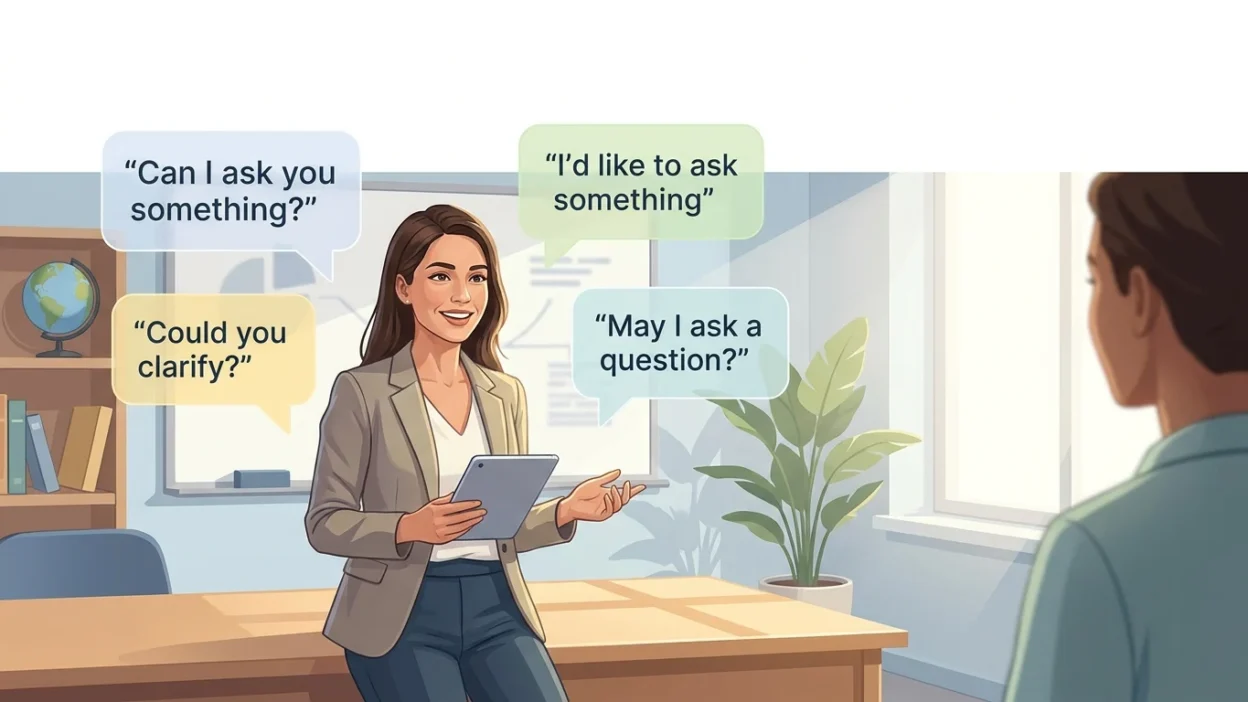
Exploring other ways to say I have a question can improve communication by making questions sound clearer, warmer, and more natural in different interactions. Whether you are in a classroom, workplace, casual conversation, or focused on learning and professional growth, the phrase I have a question is direct, but thoughtful alternatives can help you convey curiosity, respect, and enthusiasm. Choosing the right words also shows that you value another person’s time and attention, while your intention, tone, and approach can make the conversation feel more comfortable. For example, Could you clarify something for me? is useful when seeking information, while I’d like your thoughts on this works naturally when asking for an opinion. These options can sound more polite, respectful, approachable, formal, or friendly, depending on the situation. In my experience, paying attention to grammar and vocabulary makes spoken and written questions feel more natural, especially when you want to begin a meaningful conversation without sounding demanding. Showing care through a collaborative style can also encourage people to feel respected and respond patiently and thoughtfully, often leading to detailed answers that help others explain clearly. This approach is especially valuable when you want to engage in meaningful discussions and create an encouraging space for questions, whether you are seeking clarification, sharing an opinion, or continuing a discussion that matches the situation.
Quick Answer
Some useful alternatives to “I have a question” include Could you clarify something for me?, I’d like to ask something, May I ask a question?, Could I get your thoughts on this?, and I’d like some clarification. The best choice depends on your tone, relationship, and situation.
Polite Ways to Ask a Question
1. Could You Clarify Something for Me?
Definition: This phrase politely asks someone to explain or make something clearer.
Usage rule: Use it when you are confused about information or need additional details.
Practical example: “Could you clarify something for me about the new project requirements?”
Tips: This is one of the safest choices for professional and academic communication because it sounds respectful without being overly formal.
2. May I Ask a Question?
Definition: This phrase politely asks for permission before asking something.
Usage rule: Use it in formal, professional, classroom, or respectful situations.
Practical example: “May I ask a question about the presentation?”
Tips: It is especially useful when speaking to someone senior or when you want to sound courteous.
3. Could I Ask You Something?
Definition: This expression politely introduces a question or request for information.
Usage rule: Use it when you want to sound friendly while still being respectful.
Practical example: “Could I ask you something about tomorrow’s schedule?”
Tips: It works well with coworkers, teachers, acquaintances, and people you know reasonably well.
4. I’d Like to Ask Something
Definition: This phrase directly but politely tells someone that you want to ask a question.
Usage rule: Use it in both professional and everyday communication.
Practical example: “I’d like to ask something before we begin the meeting.”
Tips: It sounds natural and avoids the repetition of saying “I have a question.”
5. Would You Mind If I Asked Something?
Definition: This is a polite way to request permission to ask a question.
Usage rule: Use it when you want to show extra consideration for another person.
Practical example: “Would you mind if I asked something about your experience?”
Tips: It is warmer than a very direct question and is useful when speaking with someone you do not know well.
6. Could You Help Me Understand Something?
Definition: This phrase asks someone to provide an explanation or guidance.
Usage rule: Use it when your question involves confusion or requires explanation.
Practical example: “Could you help me understand something about this report?”
Tips: It creates a cooperative tone and works particularly well in workplaces and classrooms.
7. I’d Appreciate Some Clarification
Definition: This expression politely states that you need more information or explanation.
Usage rule: Use it mainly in formal emails, workplace discussions, and academic communication.
Practical example: “I’d appreciate some clarification regarding the updated deadline.”
Tips: This phrase sounds professional and considerate, especially in written communication.
Professional Alternatives for Work
8. I Have a Quick Question
Definition: This phrase tells someone that you need a small amount of their time for a question.
Usage rule: Use it when your question is simple and should not take long to answer.
Practical example: “I have a quick question about the client’s request.”
Tips: It is common in workplace conversations, chats, and meetings.
9. Could You Give Me Some Guidance?
Definition: This phrase asks someone for advice, direction, or professional help.
Usage rule: Use it when you need more than a simple factual answer.
Practical example: “Could you give me some guidance on how to handle this situation?”
Tips: It sounds professional and is particularly useful when speaking with an experienced colleague or manager.
10. I’d Like Your Input on Something
Definition: This phrase asks another person to share their opinion or expertise.
Usage rule: Use it when you value someone’s knowledge or perspective.
Practical example: “I’d like your input on something before we finalize the plan.”
Tips: This expression sounds collaborative rather than demanding.
11. Could I Get Your Thoughts on This?
Definition: This phrase politely asks for another person’s opinion.
Usage rule: Use it when there is no single correct answer and you want feedback.
Practical example: “Could I get your thoughts on this proposal?”
Tips: It is friendly enough for coworkers but professional enough for meetings and emails.
12. I’d Like to Discuss Something
Definition: This phrase introduces a topic that you want to talk about.
Usage rule: Use it when your question may lead to a longer conversation.
Practical example: “I’d like to discuss something about the upcoming campaign.”
Tips: Choose this instead of a simple question opener when the subject needs context.
13. Could You Help Me With Something?
Definition: This expression politely asks another person for assistance.
Usage rule: Use it when your question is connected to a task or problem.
Practical example: “Could you help me with something related to the new software?”
Tips: It sounds approachable and encourages cooperation.
14. I’d Like to Get Your Advice
Definition: This phrase asks someone for a recommendation or professional opinion.
Usage rule: Use it when the person has useful experience or expertise.
Practical example: “I’d like to get your advice before responding to the customer.”
Tips: It communicates respect for the other person’s knowledge.
Classroom and Learning Alternatives
15. Could You Explain This to Me?
Definition: This phrase asks someone to make a concept easier to understand.
Usage rule: Use it when you do not fully understand a lesson, instruction, or idea.
Practical example: “Could you explain this formula to me?”
Tips: It is natural for students and can also be used in workplace training.
16. Could You Explain What You Mean?
Definition: This expression asks for clarification about someone’s statement.
Usage rule: Use it when a particular comment or explanation is unclear.
Practical example: “Could you explain what you mean by the final step?”
Tips: Use a calm tone because the wording can sound demanding if spoken abruptly.
17. I’m Not Sure I Understand
Definition: This phrase politely signals that you need more explanation.
Usage rule: Use it before asking someone to clarify a difficult point.
Practical example: “I’m not sure I understand how these two examples are connected.”
Tips: It is softer than saying “I don’t understand.”
18. Could You Go Over That Again?
Definition: This phrase asks someone to repeat or explain information once more.
Usage rule: Use it when you missed something or need another explanation.
Practical example: “Could you go over that again? I missed the last step.”
Tips: It is friendly and natural in classrooms, training sessions, and meetings.
19. Can I Check Something With You?
Definition: This phrase introduces a question when you want to confirm information.
Usage rule: Use it when you want to make sure your understanding is correct.
Practical example: “Can I check something with you about the assignment?”
Tips: It sounds collaborative and is useful when you want confirmation rather than a lengthy explanation.
20. I’d Like Some More Information
Definition: This phrase politely requests additional details.
Usage rule: Use it when the information already provided is not enough.
Practical example: “I’d like some more information about the research project.”
Tips: It works well in academic, professional, and customer-service contexts.
21. What Does This Mean?
Definition: This is a direct question asking for the meaning of something.
Usage rule: Use it when you need a word, sentence, instruction, or concept explained.
Practical example: “What does this term mean in this context?”
Tips: It is simple and clear, although more polite wording may be preferable in formal situations.
Friendly and Casual Alternatives
22. Can I Ask You Something?
Definition: This is a friendly way to introduce a question.
Usage rule: Use it with friends, family, coworkers, and people you know.
Practical example: “Can I ask you something about your weekend?”
Tips: It sounds natural in everyday conversation and does not feel overly formal.
23. Do You Mind If I Ask Something?
Definition: This phrase politely checks whether someone is comfortable answering a question.
Usage rule: Use it when the question may be personal, sensitive, or unexpected.
Practical example: “Do you mind if I ask something about your experience?”
Tips: It shows consideration and can make a conversation feel more respectful.
24. Can I Run Something by You?
Definition: This informal expression means that you want someone’s opinion or feedback.
Usage rule: Use it mainly in casual or workplace conversations.
Practical example: “Can I run something by you before I send this email?”
Tips: It is conversational and should generally be avoided in highly formal writing.
25. What Do You Think About This?
Definition: This phrase directly asks for someone’s opinion.
Usage rule: Use it when you want feedback rather than a factual answer.
Practical example: “What do you think about this idea for the event?”
Tips: It is simple, friendly, and useful for encouraging discussion.
26. Can You Help Me Figure Something Out?
Definition: This expression asks someone to help solve a problem or understand an issue.
Usage rule: Use it in friendly conversations or informal workplace settings.
Practical example: “Can you help me figure something out with this spreadsheet?”
Tips: It creates a cooperative feeling and is less formal than “Could you provide guidance?”
27. There’s Something I Wanted to Ask
Definition: This phrase naturally introduces a question that has been on your mind.
Usage rule: Use it in casual or semi-formal conversations.
Practical example: “There’s something I wanted to ask about your new project.”
Tips: It sounds relaxed and conversational without being too informal.
28. I Was Wondering About Something
Definition: This phrase introduces a question in a soft and indirect way.
Usage rule: Use it when you want to sound gentle rather than demanding.
Practical example: “I was wondering about something related to the event.”
Tips: It is especially useful when making a request or asking for information politely.
Email and Formal Communication Alternatives
29. I’m Writing to Ask About
Definition: This phrase clearly introduces the purpose of a professional email.
Usage rule: Use it when your email is specifically written to request information.
Practical example: “I’m writing to ask about the status of my application.”
Tips: It is clear, professional, and immediately tells the reader why you are contacting them.
30. I’d Like to Clarify
Definition: This phrase means that you want to make sure you understand something correctly.
Usage rule: Use it before asking about details, instructions, dates, or decisions.
Practical example: “I’d like to clarify the deadline for submitting the documents.”
Tips: It is concise and highly suitable for formal workplace communication.
31. I’m Seeking Clarification Regarding
Definition: This formal expression states that you need clarification about a particular matter.
Usage rule: Use it in formal emails, official communication, or business correspondence.
Practical example: “I’m seeking clarification regarding the revised payment terms.”
Tips: It is more formal than everyday alternatives, so avoid using it with close friends.
32. I’d Like to Inquire About
Definition: This phrase formally introduces a request for information.
Usage rule: Use it when contacting an organization, professional, or service provider.
Practical example: “I’d like to inquire about the available training programs.”
Tips: It is polite and professional, especially in formal written communication.
33. Could You Please Clarify?
Definition: This concise phrase politely asks someone to make information clearer.
Usage rule: Use it when responding to instructions, emails, reports, or statements that are unclear.
Practical example: “Could you please clarify which documents are required?”
Tips: Adding “please” makes the request sound courteous and professional.
34. I Would Appreciate Your Guidance
Definition: This phrase respectfully asks someone for help, advice, or direction.
Usage rule: Use it when addressing someone whose experience or position makes their guidance valuable.
Practical example: “I would appreciate your guidance on the next steps.”
Tips: This is a strong choice for formal emails because it sounds respectful without being overly complicated.
35. I’d Like to Raise a Question
Definition: This formal expression means that you want to bring a question or issue to someone’s attention.
Usage rule: Use it in meetings, presentations, academic discussions, or formal communication.
Practical example: “I’d like to raise a question about the proposed changes.”
Tips: It works especially well when speaking in an organized discussion or professional setting.
Placement & Grammar Rules Table
| Synonym or phrase | Sentence position / placement | Tone / formality | Example sentence |
| I have a question | Beginning | Neutral | “I have a question about the schedule.” |
| Could you clarify something for me? | Beginning | Polite / professional | “Could you clarify something for me about this policy?” |
| May I ask a question? | Beginning | Formal / respectful | “May I ask a question about the procedure?” |
| I’d like to ask something | Beginning | Neutral / polite | “I’d like to ask something before we continue.” |
| Could I get your thoughts on this? | Beginning | Professional / collaborative | “Could I get your thoughts on this proposal?” |
| Can I ask you something? | Beginning | Casual / friendly | “Can I ask you something about your plans?” |
| I’d like to clarify | Beginning | Professional | “I’d like to clarify one point.” |
| I’m writing to ask about | Beginning of email | Formal | “I’m writing to ask about my application.” |
| I’d like to inquire about | Beginning of email | Formal | “I’d like to inquire about your services.” |
| Can I run something by you? | Beginning | Casual / workplace-friendly | “Can I run something by you before the meeting?” |
Common Mistakes When Asking Questions
One common mistake is using the same phrase in every situation. I have a question is grammatically correct, but it may not always be the most natural option. For example, a formal email may benefit from “I’d like to inquire about,” while a conversation with a coworker may sound better with “Can I ask you something?”
Another mistake is choosing a phrase that is too formal for the relationship. Expressions such as I’m seeking clarification regarding are appropriate in official communication but may sound stiff with a close friend. Similarly, very casual expressions such as Can I run something by you? may not be suitable for formal business correspondence.
Tone is another important factor. A direct question can sometimes sound demanding if the listener is busy or if the subject is sensitive. Using phrases such as “Could you clarify,” “Would you mind,” or “I’d appreciate your guidance” can make your request more respectful.
Finally, avoid unnecessary words. Good communication does not require complicated English. The strongest alternative is usually the one that clearly communicates your purpose while matching the situation, relationship, and level of formality.
Practical Examples
In a classroom, a student might say, “I’m not sure I understand this part. Could you explain this to me?” This sounds more helpful and specific than simply saying I have a question. If the student only needs to confirm information, “Can I check something with you?” may be more appropriate. These expressions encourage the teacher to understand exactly what kind of help is needed.
In a workplace, an employee might write, “I’d like to clarify the deadline for the report. Could you please clarify whether Friday or Monday is the final submission date?” This approach is professional, direct, and respectful. It also gives the recipient enough context to provide a useful answer instead of forcing them to guess what the question is about.
In a casual conversation, a friend might say, “Can I ask you something? I was wondering how you decided to change careers.” This sounds natural and friendly. In this situation, a highly formal phrase such as “I’m seeking clarification regarding” would feel unnatural because the relationship and setting call for a relaxed tone.
FAQs
What are the best other ways to say I have a question?
Some of the best choices are Could you clarify something for me?, I’d like to ask something, May I ask a question?, and Can I ask you something? Choose according to the level of formality.
What is a professional way to say I have a question?
For professional communication, I’d like to clarify, Could you please clarify?, I’d like your input on something, or I’d appreciate some clarification. These expressions work well in emails, meetings, and workplace discussions.
How can I say I have a question politely?
Use phrases such as May I ask a question?, Would you mind if I asked something?, or Could you help me understand something? These expressions make the request sound considerate.
What is a casual way to say I have a question?
Can I ask you something?, Can I run something by you?, or There’s something I wanted to ask. These alternatives are natural in conversations with friends and familiar coworkers.
How do I say I have a question in an email?
For an email, you can write what I’m writing to ask about, I’d like to inquire about, or I’d like to clarify. These phrases immediately communicate the purpose of your message.
Is “I have a question” grammatically correct?
Yes. I have a question is completely grammatical and natural. There is no need to replace it every time; alternatives are useful mainly when you want to adjust your tone or avoid repetition.
Is “Could you clarify something for me?” polite?
Yes. It is a polite and professional way to ask for an explanation. It is particularly useful when you need someone to make instructions, information, or a statement clearer.
What is the difference between “I have a question” and “I’d like to clarify”?
“I have a question” simply announces that you want to ask something. “I’d like to clarify” specifically suggests that you want to confirm or better understand information that has already been discussed.
Final Thoughts
Learning other ways to say I have a question gives you more control over your English communication.
The best expression depends on your audience, relationship, purpose, and level of formality.
For professional settings, choose clear and respectful phrases such as “I’d like to clarify.”
For casual conversations, “Can I ask you something?” sounds natural and friendly.
Using the right alternative can make your questions clearer, warmer, and more effective.