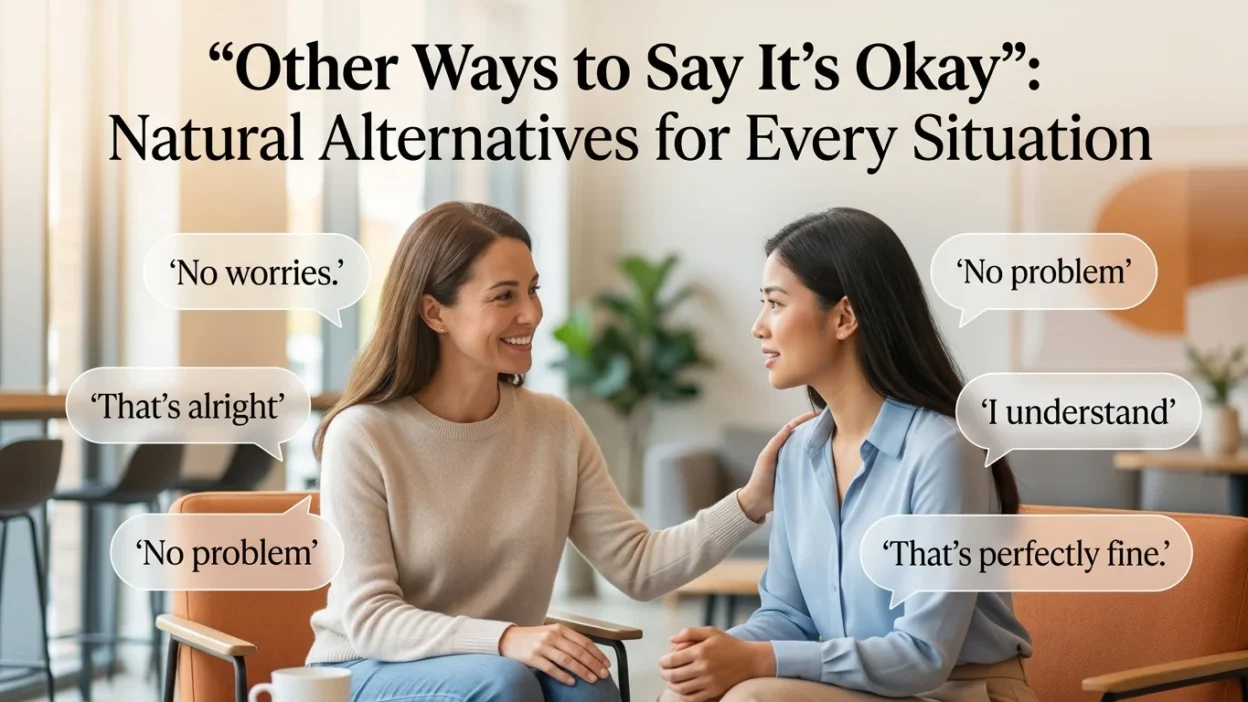
When someone feels worried, guilty, or upset, knowing other ways to say it’s okay can help you choose the right words that make your message feel warmer, caring, and meaningful. The tone of a conversation matters because different expressions can communicate empathy, reassurance, patience, and emotional support more clearly than a simple and kind “it’s okay”. In everyday situations, these alternatives can sound more human, gentle, and thoughtful, whether you are comforting a friend, replying at work, or calming someone you love.
When someone makes a mistake, feels anxious, or apologises, a thoughtful response can be more helpful than repeating a plain, impersonal phrase. A meaningful, empathetic, and comforting choice of words can strengthen relationships, show care, and build trust. In my experience, small changes in phrasing can improve everyday interactions, because a warm, personal approach makes communication feel less like exchanging words and more like connecting with others emotionally. There are a variety of ways to reassure someone, depending on whether you want to understand someone’s feelings, accept their mistakes, or provide support without judgement.
Using alternative phrases can also make conversations feel less repetitive and more genuine, especially when someone is sensitive and needs extra kindness. Empathy and kindness can appear through both actions and the words we choose every day. A careful response does not need to be complicated; it simply needs to match the person’s feelings and situation while remaining respectful and supportive.
Quick Answer
Some natural alternatives to “it’s okay” include no worries, don’t worry about it, that’s alright, no problem, it’s completely fine, I understand, you’re forgiven, and there’s no need to apologise. The best choice depends on whether you want to sound reassuring, professional, casual, empathetic, or comforting.
1. Friendly and Casual Ways to Say It’s Okay
1. No Worries
Definition: “No worries” is a relaxed way to reassure someone that a problem or mistake is not serious.
Usage rule: Use it in friendly conversations, casual messages, and everyday situations.
Practical examples: “No worries, you can send it tomorrow.” “No worries about being late.”
Tips: This phrase sounds warm and easy-going, but it may be too informal for some formal business situations.
2. No Problem
Definition: “No problem” tells someone that you do not consider their mistake, request, or inconvenience troublesome.
Usage rule: Use it when accepting an apology, responding to a request, or reassuring someone.
Practical examples: “No problem, I can help you with that.” “No problem about the delay.”
Tips: It is one of the most versatile alternatives and works well in both speech and casual writing.
3. That’s Alright
Definition: “That’s alright” communicates acceptance and reassurance without sounding overly emotional.
Usage rule: Use it when someone apologises or worries that they have caused inconvenience.
Practical examples: “That’s alright; these things happen.” “That’s alright, I understand.”
Tips: It sounds natural in British English and can be slightly warmer than a short “okay”.
4. It’s Fine
Definition: “It’s fine” indicates that a situation is acceptable and does not require further concern.
Usage rule: Use it for minor problems, mistakes, delays, or misunderstandings.
Practical examples: “It’s fine, honestly.” “It’s fine if you need more time.”
Tips: Your tone matters. Said warmly, it reassures; said sharply, it can sound irritated or dismissive.
5. Don’t Worry
Definition: “Don’t worry” directly reassures someone that they do not need to feel concerned.
Usage rule: Use it when someone feels anxious, guilty, or embarrassed.
Practical examples: “Don’t worry, everyone makes mistakes.” “Don’t worry about the missed call.”
Tips: Add a supportive sentence when someone is genuinely upset.
6. All Good
Definition: “All good” is a very casual expression meaning that everything is fine.
Usage rule: Use it with friends, colleagues you know well, or in informal digital communication.
Practical examples: “All good! We can sort it out tomorrow.” “All good, thanks for letting me know.”
Tips: Avoid it in highly formal emails or official correspondence.
7. You’re Fine
Definition: “You’re fine” reassures someone that their behaviour or mistake has not caused a serious problem.
Usage rule: Use it when someone is worried that they have done something wrong.
Practical examples: “You’re fine; there’s nothing to worry about.” “You’re fine, honestly.”
Tips: Use a gentle tone because the phrase can sound dismissive if spoken abruptly.
2. Polite Alternatives for Apologies
8. There’s No Need to Apologise
Definition: This phrase tells someone that their apology is unnecessary because their action did not cause significant harm.
Usage rule: Use it when someone apologises for a minor issue.
Practical examples: “There’s no need to apologise; it wasn’t your fault.” “There’s no need to apologise for asking.”
Tips: It works particularly well when you want to remove someone’s sense of guilt.
9. Please Don’t Worry About It
Definition: This is a gentle reassurance that encourages someone to stop feeling concerned about an issue.
Usage rule: Use it when someone is repeatedly apologising or worrying about a small mistake.
Practical examples: “Please don’t worry about it. We can fix everything tomorrow.”
Tips: The word “please” makes this version sound softer and more considerate.
10. You Don’t Have to Apologise
Definition: This phrase reassures someone that their actions did not require an apology.
Usage rule: Use it when an apology seems unnecessary or when you want to reduce embarrassment.
Practical examples: “You don’t have to apologise for being honest.” “You don’t have to apologise; I understand.”
Tips: Follow it with a reason when appropriate so the reassurance feels sincere.
11. It Wasn’t a Big Deal
Definition: “It wasn’t a big deal” means that the situation was minor and did not cause serious inconvenience.
Usage rule: Use it for small mistakes, delays, or misunderstandings.
Practical examples: “It wasn’t a big deal, so please don’t feel bad.” “It wasn’t a big deal at all.”
Tips: This is informal and should be avoided when someone is discussing a serious emotional issue.
12. You Haven’t Done Anything Wrong
Definition: This phrase directly reassures someone that they have not behaved improperly.
Usage rule: Use it when a person feels guilty or believes they should apologise.
Practical examples: “You haven’t done anything wrong, so please relax.”
Tips: It is especially useful when someone is unnecessarily blaming themselves.
13. I Understand
Definition: “I understand” acknowledges another person’s situation and can communicate acceptance without judgement.
Usage rule: Use it when someone explains why they made a mistake, cancelled a plan, or acted differently.
Practical examples: “I understand; you had a lot going on.” “I understand why you needed more time.”
Tips: Add a supportive sentence if the person needs emotional reassurance.
14. That’s Completely Understandable
Definition: This phrase recognises that someone’s feelings or actions make sense in the circumstances.
Usage rule: Use it when you want to reassure someone without minimising what happened.
Practical examples: “That’s completely understandable given what happened.”
Tips: It is particularly suitable for empathetic conversations and professional communication.
3. Professional Ways to Say It’s Okay
15. That’s Perfectly Fine
Definition: “That’s perfectly fine” communicates acceptance in a polite and professional way.
Usage rule: Use it when approving a change, delay, request, or minor issue.
Practical examples: “That’s perfectly fine; Friday works for me.”
Tips: It is a useful choice for workplace emails because it sounds reassuring without being overly casual.
16. That’s Absolutely Fine
Definition: This phrase strongly confirms that a situation is acceptable.
Usage rule: Use it when someone asks whether a change or arrangement is acceptable.
Practical examples: “That’s absolutely fine. Please send the document when convenient.”
Tips: It can make professional communication sound friendly while remaining respectful.
17. I Understand Completely
Definition: “I understand completely” shows that you recognise the other person’s circumstances.
Usage rule: Use it when responding to an explanation, delay, cancellation, or concern.
Practical examples: “I understand completely, and we can reschedule the meeting.”
Tips: It is more empathetic than simply saying “okay”.
18. That’s Quite Alright
Definition: “That’s quite alright” is a polite expression of acceptance and reassurance.
Usage rule: Use it in formal or semi-formal conversations, especially after an apology.
Practical examples: “That’s quite alright; thank you for letting me know.”
Tips: This phrase has a slightly more traditional tone and works naturally in British English.
19. Please Consider It Resolved
Definition: This phrase indicates that an issue has been dealt with and no further action is required.
Usage rule: Use it mainly in professional or administrative communication.
Practical examples: “Thank you for explaining the issue. Please consider it resolved.”
Tips: Use this only when you genuinely have authority to close the matter.
20. There’s No Issue
Definition: “There’s no issue” tells someone that you do not consider their action or request problematic.
Usage rule: Use it in professional conversations when responding to a concern or minor mistake.
Practical examples: “There’s no issue with moving the meeting to Thursday.”
Tips: It sounds neutral and businesslike, making it useful for workplace communication.
21. We Can Work With That
Definition: This phrase shows that a proposed change or situation is acceptable and manageable.
Usage rule: Use it when discussing schedules, plans, deadlines, or workplace arrangements.
Practical examples: “Thursday is later than planned, but we can work with that.”
Tips: It is a collaborative alternative that avoids sounding dismissive.
4. Comforting Ways to Say It’s Okay
22. Everything Will Be Alright
Definition: “Everything will be alright” offers emotional reassurance during uncertainty or worry.
Usage rule: Use it when someone is anxious and needs encouragement rather than a simple acceptance of a mistake.
Practical examples: “Take a breath. Everything will be alright.”
Tips: Use this sincerely and avoid making promises about outcomes you cannot know.
23. You’re Not Alone
Definition: “You’re not alone” reminds someone that they have support and do not have to face a difficult situation by themselves.
Usage rule: Use it during emotionally difficult conversations.
Practical examples: “You’re not alone in this. I’m here if you need me.”
Tips: This is more emotionally supportive than a direct “it’s okay”.
24. I’m Here for You
Definition: This phrase expresses emotional availability and support.
Usage rule: Use it when someone is upset, worried, overwhelmed, or going through a difficult experience.
Practical examples: “I’m here for you, so you don’t have to deal with this alone.”
Tips: Only use it when you genuinely intend to offer support.
25. Take Your Time
Definition: “Take your time” tells someone they do not need to rush.
Usage rule: Use it when a person feels pressured, apologises for being slow, or needs space.
Practical examples: “Take your time; there’s no rush.”
Tips: This can be reassuring when the real problem is pressure rather than the mistake itself.
26. Be Kind to Yourself
Definition: This phrase encourages someone to avoid excessive self-criticism after making a mistake.
Usage rule: Use it when someone is blaming themselves unnecessarily.
Practical examples: “You did your best, so be kind to yourself.”
Tips: It is especially appropriate in supportive personal conversations.
27. Everyone Makes Mistakes
Definition: This expression normalises mistakes and reduces unnecessary guilt.
Usage rule: Use it when someone feels embarrassed or ashamed about an error.
Practical examples: “Everyone makes mistakes. What matters is that you learned from it.”
Tips: Pair it with empathy rather than using it to dismiss serious concerns.
28. You Can Let It Go
Definition: “You can let it go” encourages someone to stop dwelling on a minor issue.
Usage rule: Use it when someone continues to feel guilty about something that has already been resolved.
Practical examples: “We’ve sorted everything out, so you can let it go.”
Tips: Use a gentle tone because this phrase can sound dismissive if someone is still genuinely hurt.
5. Ways to Reassure Someone After a Mistake
29. Mistakes Happen
Definition: “Mistakes happen” reminds someone that errors are a normal part of life and work.
Usage rule: Use it for minor errors that can be corrected.
Practical examples: “Mistakes happen, so let’s focus on fixing them.”
Tips: Follow the reassurance with a practical solution when possible.
30. We All Make Mistakes
Definition: This phrase creates a sense of shared humanity rather than placing blame.
Usage rule: Use it when someone feels embarrassed about making an error.
Practical examples: “We all make mistakes; the important thing is learning from them.”
Tips: It sounds more personal than simply saying “mistakes happen”.
31. It Happens
Definition: “It happens” acknowledges that an unwanted event can occur without making the person feel guilty.
Usage rule: Use it for everyday mishaps, delays, or small misunderstandings.
Practical examples: “You forgot the attachment? It happens.”
Tips: Keep your tone warm because a flat delivery may sound uninterested.
32. Don’t Beat Yourself Up
Definition: This informal phrase tells someone not to be excessively critical of themselves.
Usage rule: Use it with people you know well when they feel guilty about a mistake.
Practical examples: “Don’t beat yourself up over one missed deadline.”
Tips: Avoid this expression in formal workplace writing.
33. We’ll Sort It Out
Definition: “We’ll sort it out” reassures someone that a problem can be addressed together.
Usage rule: Use it when there is a practical issue that still needs attention.
Practical examples: “Don’t worry about the error; we’ll sort it out.”
Tips: This is especially useful when reassurance needs to be combined with action.
34. It Can Be Fixed
Definition: This phrase focuses attention on the possibility of correcting a problem.
Usage rule: Use it when an error is repairable or manageable.
Practical examples: “The formatting is wrong, but it can be fixed.”
Tips: It can make reassurance more practical and solution-focused.
35. Let’s Move Forward
Definition: “Let’s move forward” encourages people to focus on what can be done next instead of remaining stuck on the past.
Usage rule: Use it after a problem has been acknowledged or resolved.
Practical examples: “We’ve discussed what happened, so let’s move forward.”
Tips: This works well in professional settings when used respectfully.
Placement & Grammar Rules Table
| Synonym or phrase | Sentence position / placement | Tone / formality | Example sentence |
| No worries | Usually at the beginning or as a complete response | Casual, friendly | “No worries, I can handle it.” |
| No problem | Beginning or standalone response | Casual, neutral | “No problem, I’ll send it today.” |
| That’s alright | Beginning or standalone | Polite, warm | “That’s alright; these things happen.” |
| I understand | Beginning or standalone | Neutral, empathetic | “I understand why you needed more time.” |
| That’s perfectly fine | Usually as a complete response | Professional, polite | “That’s perfectly fine with me.” |
| There’s no need to apologise | Beginning or standalone | Reassuring, polite | “There’s no need to apologise.” |
| Don’t worry about it | Beginning or standalone | Casual, reassuring | “Don’t worry about it; we can fix it.” |
| We’ll sort it out | Usually after acknowledging the problem | Practical, reassuring | “It’s a small error, and we’ll sort it out.” |
| That works for me | Usually a complete response | Neutral, professional | “Thursday afternoon works for me.” |
| I’m here for you | Usually as a complete supportive statement | Warm, personal | “I’m here for you if you want to talk.” |
| Your feelings are valid | Usually as a complete statement | Empathetic, sensitive | “Your feelings are valid.” |
| That’s fine by me | Usually after a proposal | Casual, conversational | “If you prefer Friday, that’s fine by me.” |
Common Mistakes When Saying It’s Okay
Using the Same Phrase Every Time
Repeating “it’s okay” in every situation can make your communication sound automatic. Choose alternatives based on the person’s feelings and the seriousness of the situation.
Sounding Dismissive
A phrase such as “it’s fine” can sometimes sound like you do not care. Use a warmer expression such as “I understand” or “please don’t worry about it” when someone is genuinely upset.
Using Casual Language in Formal Settings
Expressions such as “all good” and “don’t beat yourself up” are friendly but may not suit formal emails. In professional communication, consider “that’s perfectly fine” or “there’s no issue”.
Minimising Serious Feelings
Saying “it’s no big deal” may be inappropriate when someone is dealing with a significant emotional problem. Listen first and acknowledge their feelings before offering reassurance.
Promising What You Cannot Know
“Everything will be alright” can be comforting, but avoid making absolute promises about outcomes you cannot control. Honest reassurance is usually more helpful.
Forgiving Too Quickly
“I forgive you” carries more emotional weight than “no worries”. Use it only when you genuinely feel ready to forgive someone.
Ignoring the Context
The best alternative depends on whether you are responding to an apology, accepting a request, comforting someone, or agreeing to a plan. Context should guide your choice.
Practical Examples
When a friend apologises for forgetting your plans, you might say, “No worries. It wasn’t a big deal, and I understand that you had a lot going on.” This sounds warmer than simply saying “it’s okay” because it acknowledges the situation while reducing unnecessary guilt.
In a workplace email, a more professional response could be: “That’s perfectly fine. Thank you for letting me know. We’ll sort it out and continue with the updated schedule.” This approach reassures the recipient while keeping the communication clear and professional.
When someone is emotionally upset, a short reassurance may not be enough. You could say, “I hear you, and your feelings are valid. I’m here for you, so take your time and tell me what happened.” Here, the goal is not to dismiss the problem but to provide genuine emotional support.
If someone makes a small mistake at work, you could respond: “Mistakes happen, so please don’t worry about it. It can be fixed, and we can review the document together.” This combines reassurance with a practical next step.
FAQs
What is a better way to say “it’s okay”?
Useful alternatives include “no worries”, “that’s alright”, “no problem”, “I understand”, “that’s perfectly fine”, and “please don’t worry about it”. The best option depends on the context and tone you need.
What is a professional way to say “it’s okay”?
For professional communication, try “that’s perfectly fine”, “that’s absolutely fine”, “there’s no issue”, “I understand completely”, or “we can work with that”.
How can I say “it’s okay” when someone apologises?
You can say “no worries”, “there’s no need to apologise”, “please don’t worry about it”, “that’s alright”, or “you haven’t done anything wrong”.
What can I say instead of “it’s okay” to comfort someone?
For emotional support, consider “I’m here for you”, “you’re not alone”, “I hear you”, “your feelings are valid”, or “be kind to yourself”.
Is “no worries” a good alternative to “it’s okay”?
Yes. “No worries” is natural and friendly for casual conversations, messages, and everyday situations. It is less suitable for highly formal communication.
What is a polite way to reassure someone after a mistake?
You could say, “That’s alright”, “please don’t worry about it”, “mistakes happen”, “we’ll sort it out”, or “there’s no need to apologise”.
Can “it’s fine” sound rude?
Yes, depending on tone and context. A short “it’s fine” can sometimes sound dismissive, especially when someone is discussing genuine emotional concerns.
How do I say “it’s okay” without dismissing someone’s feelings?
Acknowledge the person’s feelings first. For example, say, “I understand why you feel that way,” or “I hear you,” before offering reassurance.
Final Thoughts
Knowing other ways to say it’s okay gives you more control over the tone of your communication. You can sound casual with “no worries”, professional with “that’s perfectly fine”, or empathetic with “I hear you”.
The most effective phrase is the one that matches the situation and the person’s feelings. Instead of relying on one expression, choose language that genuinely reassures, acknowledges, and supports the person you’re speaking with.