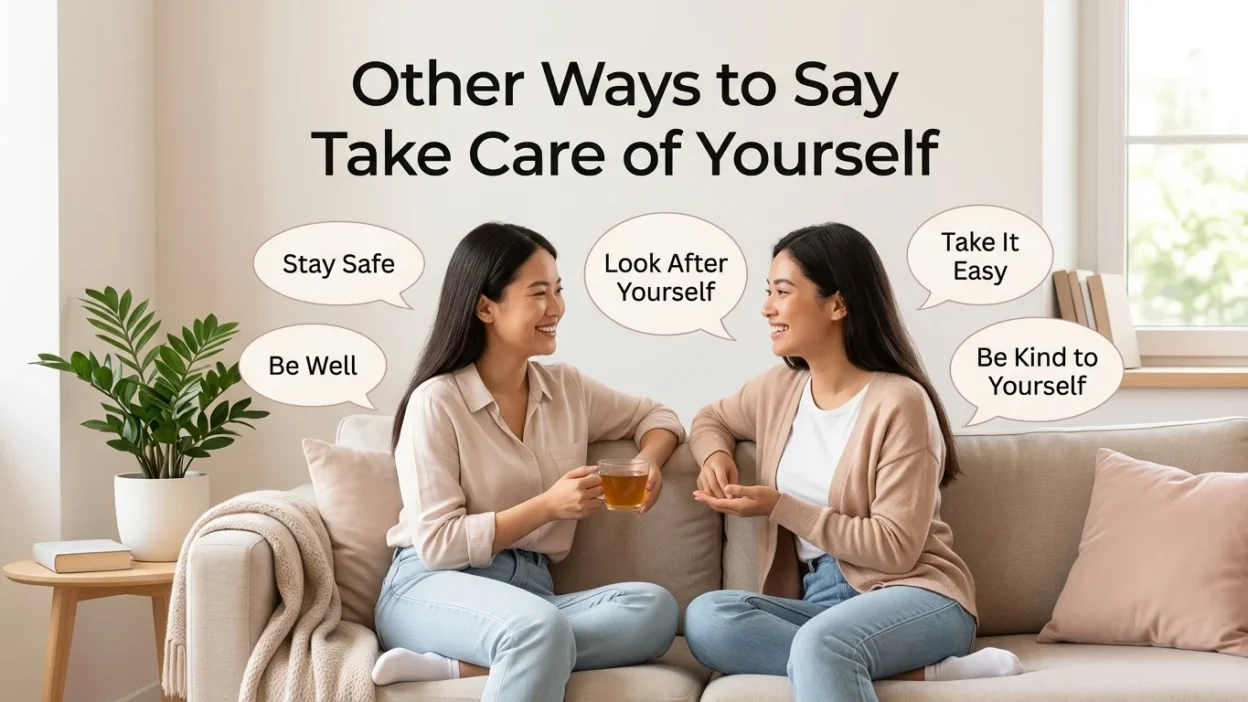
Learning other ways to say take care of yourself can help you choose warmer words when you want someone to feel valued, safe, and supported. In our busy daily lives, the right words can show care, warmth, and genuine concern, and they can deeply change how someone feels after a conversation. “Take Care of Yourself” may appear simple, but it can communicate safety, health, and a sincere wish that the other person will feel valued, protected, and emotionally supported. When we truly want to support friends, family, coworkers, or loved ones, thoughtful alternatives can make a message more personal, kinder, and heartfelt.
This guide presents 25 meaningful ways to express this idea, with clear explanations, real-life examples, and tone guidance for the best situations. The best choice depends on the meaning of each phrase and how naturally it fits your relationship or situation. Different words can work naturally and confidently, whether you need a polite way to end a conversation or a warmer way to show concern. From my experience with everyday communication, small changes in wording can make care feel less routine and less automatic.
Even simple words can carry much more meaning than they seem to have when you tell someone you care. To take care is more than a casual phrase; it can mean expressing genuine concern for a person’s well-being, health, safety, and happiness, while showing that you value them. Choosing the right phrase can help your message feel warm and thoughtful, and the power of language often comes from making someone feel remembered and supported.
Quick Answer
Some natural alternatives to “Take Care of Yourself” include “Stay safe,” “Look after yourself,” “Take good care,” “Be well,” “Stay healthy,” and “Take it easy.” Choose the phrase based on the situation, relationship, and level of concern.
Warm and Caring Alternatives
These expressions work well when you want your words to sound sincere and supportive.
1. Look After Yourself
Definition: “Look after yourself” means to care for your own health, safety, and well-being.
Usage rule: Use it when you want to sound caring without being overly emotional.
Practical examples: “You have been working hard lately, so look after yourself.”
Tips: This is a natural choice for friends, family, and coworkers.
2. Take Good Care
Definition: “Take good care” is a warmer version of “Take care.”
Usage rule: Use it when ending a conversation with genuine concern.
Practical examples: “It was lovely talking with you. Take good care.”
Tips: It works especially well in friendly messages and goodbyes.
3. Stay Well
Definition: “Stay well” expresses a wish for someone’s continued health and well-being.
Usage rule: Use it when you want a simple but thoughtful closing.
Practical examples: “Thank you for your help today. Stay well.”
Tips: It sounds slightly more polished than “Take care.”
4. Be Well
Definition: “Be well” is a brief expression wishing someone good health and peace.
Usage rule: Use it in both personal and professional communication when a calm tone is appropriate.
Practical examples: “Thank you for everything. Be well.”
Tips: Keep it short when using it as a closing phrase.
5. Stay Safe
Definition: “Stay safe” focuses mainly on a person’s physical safety.
Usage rule: Use it when someone is traveling, working in a risky environment, or facing an uncertain situation.
Practical examples: “The weather is getting worse, so stay safe on your way home.”
Tips: Choose this phrase when safety is more important than general wellness.
6. Take It Easy
Definition: “Take it easy” encourages someone to relax and avoid unnecessary stress.
Usage rule: Use it in casual conversations rather than highly formal situations.
Practical examples: “You have done enough for today. Take it easy tonight.”
Tips: It sounds friendly, relaxed, and conversational.
7. Mind Yourself
Definition: “Mind yourself” means to look after yourself and be careful.
Usage rule: Use it mainly in informal or regional varieties of English where the expression sounds natural.
Practical examples: “Have a safe trip, and mind yourself.”
Tips: Consider your audience because this phrase is less common in some varieties of English.
Alternatives for Friends and Family
Close relationships often allow for warmer and more personal expressions.
1. Take Care of Yourself, Okay?
Definition: This version adds emotional warmth to the standard phrase.
Usage rule: Use it when you genuinely want someone to pay attention to their well-being.
Practical examples: “You have been through a lot lately. Take care of yourself, okay?”
Tips: The added “okay?” can make the sentence sound more personal.
2. Make Sure You’re Taking Care of Yourself
Definition: This phrase gently reminds someone not to neglect their own needs.
Usage rule: Use it when someone has been busy, stressed, or focused on others.
Practical examples: “You are helping everyone else, so make sure you’re taking care of yourself too.”
Tips: It works particularly well with close friends and family.
3. Get Some Rest
Definition: “Get some rest” encourages someone to pause and recover.
Usage rule: Use it when tiredness, stress, or a busy schedule is the main concern.
Practical examples: “You have had a long day. Get some rest.”
Tips: This phrase is more specific than “Take care of yourself.”
4. Take Some Time for Yourself
Definition: This means giving yourself time to relax, recharge, or focus on personal needs.
Usage rule: Use it when someone has been overwhelmed or constantly helping others.
Practical examples: “You have been doing so much for everyone. Take some time for yourself.”
Tips: It can communicate emotional support without sounding dramatic.
5. Be Kind to Yourself
Definition: “Be kind to yourself” encourages self-compassion and patience.
Usage rule: Use it when someone is disappointed, worried, stressed, or being too hard on themselves.
Practical examples: “You made a mistake, but be kind to yourself and learn from it.”
Tips: This is especially useful in supportive and emotional conversations.
6. Keep Yourself Healthy
Definition: This phrase focuses directly on maintaining good health.
Usage rule: Use it when health and healthy habits are relevant to the conversation.
Practical examples: “Keep yourself healthy while you are traveling.”
Tips: It sounds more specific than a general goodbye.
7. Don’t Forget to Rest
Definition: This is a gentle reminder to make time for recovery.
Usage rule: Use it when someone has been working or studying for long hours.
Practical examples: “Good luck with the project, and don’t forget to rest.”
Tips: It sounds caring without being too formal.
Professional Ways to Say Take Care of Yourself
Professional communication requires warmth without becoming overly personal.
1. Please Take Care
Definition: “Please take care” adds polite concern to a simple closing.
Usage rule: Use it when you want a professional but friendly tone.
Practical examples: “Thank you for your time today. Please take care.”
Tips: It works well in emails, meetings, and professional conversations.
2. Wishing You Well
Definition: “Wishing you well” expresses a sincere hope that things go well for someone.
Usage rule: Use it when ending a professional message or conversation respectfully.
Practical examples: “Thank you for your contributions. Wishing you well in your next role.”
Tips: This is useful when saying goodbye in a professional setting.
3. Stay Healthy
Definition: “Stay healthy” expresses concern for someone’s physical well-being.
Usage rule: Use it when health is relevant but you still want a simple expression.
Practical examples: “Enjoy your time away, and stay healthy.”
Tips: It is straightforward and easy to understand.
4. Take Time to Recharge
Definition: This phrase encourages someone to rest and restore their energy.
Usage rule: Use it when speaking about work pressure, deadlines, or a busy schedule.
Practical examples: “You have completed a demanding project, so take time to recharge.”
Tips: It fits workplace conversations particularly well.
5. Have a Safe Trip
Definition: This phrase specifically wishes someone safety while traveling.
Usage rule: Use it before someone leaves for a journey.
Practical examples: “Thanks for visiting us. Have a safe trip home.”
Tips: Use this instead of a general wellness phrase when travel is the main concern.
6. Take Some Time to Rest
Definition: This expression encourages someone to pause and recover.
Usage rule: Use it when a colleague or client has mentioned being tired or overwhelmed.
Practical examples: “You have had a demanding week, so take some time to rest.”
Tips: It sounds considerate without becoming too personal.
7. All the Best
Definition: “All the best” expresses good wishes for someone’s future or next step.
Usage rule: Use it as a professional email or conversation closing.
Practical examples: “Thank you for your support. All the best.”
Tips: It is a flexible closing that works in many professional situations.
Ways to Show Concern for Health and Well-Being
When health or personal well-being is central to the conversation, more specific expressions can be useful.
1. Stay Healthy and Strong
Definition: This phrase expresses a wish for continued physical well-being.
Usage rule: Use it when talking to someone recovering from a difficult period or making lifestyle changes.
Practical examples: “Keep following your routine and stay healthy and strong.”
Tips: Use it when you want to emphasize ongoing wellness.
2. Put Your Health First
Definition: “Put your health first” encourages someone to prioritize their physical well-being.
Usage rule: Use it when someone is neglecting their health because of work or other responsibilities.
Practical examples: “The deadline can wait. Put your health first.”
Tips: This sounds more direct than “Take care of yourself.”
3. Get Plenty of Rest
Definition: This phrase encourages sufficient rest and recovery.
Usage rule: Use it when someone is tired, sick, or recovering from a demanding period.
Practical examples: “You have been exhausted lately. Get plenty of rest.”
Tips: It is caring but still simple and natural.
4. Take Care of Your Health
Definition: This directly tells someone to pay attention to their health.
Usage rule: Use it when health is specifically relevant.
Practical examples: “Please take care of your health while you are working so hard.”
Tips: Avoid using it casually if health has not been part of the conversation.
5. Listen to Your Body
Definition: “Listen to your body” encourages someone to notice signs of tiredness, discomfort, or the need for rest.
Usage rule: Use it in supportive conversations about general wellness.
Practical examples: “If you feel tired, listen to your body and slow down.”
Tips: Keep the advice general rather than presenting it as medical guidance.
6. Give Yourself a Break
Definition: This phrase encourages someone to stop working or worrying for a while.
Usage rule: Use it when someone is under pressure or being too demanding of themselves.
Practical examples: “You have been working all morning. Give yourself a break.”
Tips: It has a friendly and encouraging tone.
7. Look After Your Well-Being
Definition: This expression focuses on overall physical and emotional well-being.
Usage rule: Use it when you want a thoughtful and slightly more formal expression.
Practical examples: “Remember to look after your well-being during this busy period.”
Tips: This works particularly well in professional or supportive writing.
Casual and Everyday Alternatives
These phrases fit naturally into ordinary conversations, texts, and quick goodbyes.
1. Take Care
Definition: “Take care” is one of the most common short alternatives to “Take care of yourself.”
Usage rule: Use it when ending a casual conversation.
Practical examples: “I’ll talk to you tomorrow. Take care!”
Tips: It is simple, natural, and widely understood.
2. Stay Safe Out There
Definition: This phrase expresses concern about someone’s safety while they are away.
Usage rule: Use it when someone is going outside, traveling, or facing difficult conditions.
Practical examples: “It’s getting late, so stay safe out there.”
Tips: This is informal and friendly.
3. Have a Good One
Definition: “Have a good one” is a casual way to wish someone a good day or experience.
Usage rule: Use it mainly in relaxed conversations.
Practical examples: “Thanks for stopping by. Have a good one!”
Tips: Avoid it in highly formal correspondence.
4. Have a Good Day
Definition: This phrase wishes someone a pleasant day.
Usage rule: Use it when ending a conversation during the daytime.
Practical examples: “Thanks for your help. Have a good day.”
Tips: It is polite and appropriate for many everyday situations.
5. See You Soon
Definition: “See you soon” expresses a friendly expectation of meeting again.
Usage rule: Use it when you expect another interaction in the near future.
Practical examples: “Thanks for coming over. See you soon!”
Tips: It is better when you genuinely expect to meet again.
6. Keep Well
Definition: “Keep well” means to remain healthy and well.
Usage rule: Use it as a friendly or slightly formal closing.
Practical examples: “It was great catching up. Keep well.”
Tips: It can sound warmer than a simple goodbye.
7. Stay Positive
Definition: “Stay positive” encourages someone to maintain hope and a constructive attitude.
Usage rule: Use it when someone is facing a challenge or difficult period.
Practical examples: “Things may be difficult right now, but stay positive.”
Tips: Use it thoughtfully because positivity alone may not address someone’s deeper concerns.
Emotional and Heartfelt Expressions
These alternatives are useful when you want to communicate deeper emotional support.
1. Please Be Good to Yourself
Definition: This phrase encourages self-care and self-compassion.
Usage rule: Use it when someone has been dealing with stress, sadness, or pressure.
Practical examples: “You have done everything you can. Please be good to yourself.”
Tips: It sounds personal and genuinely caring.
2. Take Gentle Care of Yourself
Definition: This expression adds softness and emotional warmth to the idea of self-care.
Usage rule: Use it in heartfelt messages, especially during difficult moments.
Practical examples: “I know this is a hard time. Take gentle care of yourself.”
Tips: It is more emotional than a standard “Take care.”
3. I Hope You’re Taking Care of Yourself
Definition: This phrase expresses concern while allowing the other person to make their own choices.
Usage rule: Use it when you have not spoken to someone for a while or know they have been busy.
Practical examples: “I know things have been hectic lately. I hope you’re taking care of yourself.”
Tips: It works well in thoughtful texts and personal messages.
4. Don’t Be Too Hard on Yourself
Definition: This expression encourages someone to show themselves patience and understanding.
Usage rule: Use it when someone feels disappointed or blames themselves.
Practical examples: “The result was not what you expected, but don’t be too hard on yourself.”
Tips: It provides emotional reassurance rather than simply saying goodbye.
5. Give Yourself the Care You Deserve
Definition: This phrase reminds someone that their own needs matter.
Usage rule: Use it in deeply supportive and personal conversations.
Practical examples: “You spend so much time caring for others. Give yourself the care you deserve.”
Tips: Reserve this for situations where a more heartfelt tone is appropriate.
6. Remember to Look After Yourself
Definition: This phrase is a gentle reminder that personal well-being should not be forgotten.
Usage rule: Use it when someone is busy caring for others or managing many responsibilities.
Practical examples: “You have a lot on your plate, so remember to look after yourself.”
Tips: It sounds caring without being overly emotional.
7. I’m Thinking of You
Definition: “I’m thinking of you” communicates emotional support and reminds someone that they are not forgotten.
Usage rule: Use it during difficult, stressful, or emotional situations.
Practical examples: “I know this week has been difficult. I’m thinking of you.”
Tips: This phrase focuses more on emotional support than physical health.
More Thoughtful Ways to Say Take Care of Yourself
1. Take Care and Stay Strong
Definition: A warm way to show concern while encouraging someone to remain strong and positive.
Usage rule: Use it when someone is going through a difficult, tiring, or stressful time.
Practical examples: “You’ve been working so hard lately. Take care and stay strong.”
Tips: This phrase feels supportive and works well with friends, family, and people you care about.
2. Make Time for Yourself
Definition: A gentle reminder to give yourself time to relax, recharge, and enjoy personal space.
Usage rule: Use it when someone is busy, stressed, or spending too much time helping others.
Practical examples: “You’ve done enough for today. Make time for yourself.”
Tips: This phrase sounds caring without being too serious or formal.
3. Remember to Take Care
Definition: A friendly reminder that someone’s health and well-being are important.
Usage rule: Use it when saying goodbye or checking on someone you care about.
Practical examples: “It was great talking to you. Remember to take care.”
Tips: It is simple, natural, and suitable for everyday conversations.
4. Don’t Forget to Look After Yourself
Definition: A caring expression that reminds someone not to ignore their own needs.
Usage rule: Use it when someone is busy caring for others or dealing with a demanding situation.
Practical examples: “You’re always helping everyone else, so don’t forget to look after yourself.”
Tips: This sounds especially thoughtful when spoken to a close friend or family member.
5. Take Some Time to Relax
Definition: A gentle suggestion to stop working or worrying and spend some time resting.
Usage rule: Use it when someone seems tired, overwhelmed, or under pressure.
Practical examples: “You’ve had a long week. Take some time to relax this weekend.”
Tips: This phrase works well in both casual conversations and supportive messages.
6. Keep Taking Good Care of Yourself
Definition: A warm expression that encourages someone to continue caring for their health and well-being.
Usage rule: Use it when you want to offer ongoing encouragement rather than a one-time reminder.
Practical examples: “I’m glad you’re feeling better. Keep taking good care of yourself.”
Tips: It sounds positive, reassuring, and personal.
7. Give Yourself Time to Recharge
Definition: A thoughtful way to encourage someone to rest and regain their physical or emotional energy.
Usage rule: Use it when someone has been working hard, feeling drained, or dealing with a busy schedule.
Practical examples: “You’ve been doing so much lately. Give yourself time to recharge.”
Tips: This phrase is modern, supportive, and especially natural in messages to friends or coworkers.
Placement & Grammar Rules Table
| Synonym or phrase | Sentence position / placement | Tone / formality | Example sentence |
| Take care | Usually at the end | Casual, friendly | “Thanks for calling. Take care.” |
| Look after yourself | Usually at the end or after advice | Caring, natural | “You have been busy, so look after yourself.” |
| Stay safe | Usually at the end | Casual, concerned | “Have a safe journey and stay safe.” |
| Be well | Usually at the end | Polite, slightly formal | “Thank you for your time. Be well.” |
| Take it easy | Usually at the end | Casual | “You have worked hard today. Take it easy.” |
| Stay healthy | End or final sentence | Neutral, caring | “Enjoy your break and stay healthy.” |
| Wishing you well | Usually at the end | Professional, warm | “Wishing you well in your new position.” |
| Be kind to yourself | Usually after emotional support | Warm, supportive | “You did your best, so be kind to yourself.” |
| Have a safe trip | Usually before someone travels | Friendly, caring | “Have a safe trip home.” |
| All the best | Usually at the end | Professional, polite | “Thank you again. All the best.” |
Common Mistakes When Using Alternatives
Using different phrases does not automatically make communication better. The expression should match the situation.
1. Using overly emotional language with coworkers:
A phrase such as “Give yourself the care you deserve” may feel too personal in some professional relationships.
2. Using “stay safe” when health is the main concern:
“Stay safe” focuses on danger and physical safety, so another phrase may better match a health-related situation.
3. Giving unwanted advice:
“Put your health first” can sound commanding. If you do not know the person’s situation, a softer phrase may be more appropriate.
4. Using casual phrases in formal emails:
Expressions such as “Have a good one” or “Take it easy” may not fit every professional context.
5. Repeating the same phrase:
Even a kind expression can become routine when used in every conversation. Choose alternatives naturally rather than forcing variety.
6. Ignoring the relationship:
The best wording for a close friend may not be suitable for a manager, client, or coworker.
7. Making the phrase sound automatic:
A short message can still feel personal when you connect it to the person’s situation.
Practical Examples
When a friend has been working long hours, you could say: “You have been putting so much energy into this project. Make sure you get some rest and take some time for yourself. I hope you can slow down this weekend and recharge.” This sounds more personal than simply saying “Take care.”
For a coworker who is leaving for a vacation, a professional message could be: “You have worked hard over the past few weeks, so I hope you get plenty of rest during your break. Have a safe trip, enjoy your time away, and come back refreshed. Wishing you well.”
When supporting someone going through a difficult period, you might write: “I know things have been challenging lately, and I just want you to know that I’m thinking of you. Please be good to yourself, get the rest you need, and remember that you do not have to handle everything at once.”
FAQs
What is another way to say “Take Care of Yourself”?
Common alternatives include “Look after yourself,” “Stay well,” “Be well,” “Stay safe,” “Take good care,” and “Be kind to yourself.”
What is a professional way to say “Take Care of Yourself”?
In professional communication, you can say “Wishing you well,” “Please take care,” “Stay well,” “All the best,” or “Take some time to rest.”
How can I say “Take Care of Yourself” to a friend?
For a friend, try “Take it easy,” “Get some rest,” “Be kind to yourself,” “Look after yourself,” or “Don’t forget to rest.”
What is a heartfelt way to say “Take Care of Yourself”?
Heartfelt choices include “Please be good to yourself,” “Take gentle care of yourself,” “I’m thinking of you,” and “Give yourself the care you deserve.”
Can I say “Stay safe” instead of “Take Care of Yourself”?
Yes. “Stay safe” is appropriate when the main concern is someone’s physical safety, such as during travel or difficult conditions.
Is “Take care” too casual?
“Take care” is generally casual and friendly, but it is widely used in everyday communication. For more formal situations, “Wishing you well” or “All the best” may fit better.
What is the difference between “Take care” and “Look after yourself”?
“Take care” is shorter and more general. “Look after yourself” more clearly suggests paying attention to one’s personal health and well-being.
How do I choose the right alternative?
Consider your relationship with the person, the reason for your concern, and the tone you want. Choose a phrase that sounds natural rather than simply replacing the original words.
Final Thoughts
Learning other ways to say take care of yourself gives you more freedom to communicate genuine concern with the right tone. A short phrase can show warmth, support, friendship, or professional courtesy when chosen carefully.
The key is to match your words with the situation and relationship. Whether you choose “Stay safe,” “Look after yourself,” “Be well,” or a more heartfelt expression, natural wording makes your message feel more sincere and meaningful.