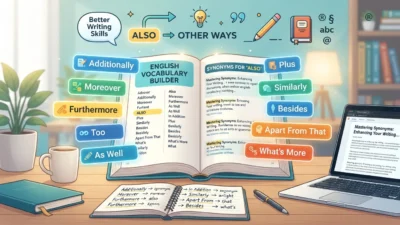
The phrase “please be advised” is commonly used in professional emails, business notices, official announcements, and workplace communication. It introduces important information, highlights changes, or draws attention to something the reader needs to know. Although the expression is grammatically correct, using it too frequently can make messages sound overly formal, distant, or unnecessarily complicated.
Choosing other ways to say please be advised can make your communication clearer, friendlier, and more natural. The right alternative depends on what you want to communicate, whether you are sharing an update, giving an instruction, announcing a change, or bringing an important matter to someone’s attention.
In this guide, you will discover 400+ professional, polite, direct, and customer-friendly alternatives. Each expression includes a definition, usage rule, practical example, and tips to help you choose the right wording for emails, notices, and everyday business communication.
Quick Answer
Some useful alternatives to “please be advised” include Please note, Kindly note, Please be aware, For your information, We would like to inform you, Please take note, and I would like to bring to your attention. Choose an expression that clearly communicates whether you are sharing information, highlighting an important detail, or requesting action.
1. Professional Ways to Say Please Be Advised
Professional alternatives are useful in workplace emails, business correspondence, formal announcements, and communication with clients or colleagues. These expressions help you share information while maintaining a respectful and business-appropriate tone.
1. Please Note
Definition: This expression draws the reader’s attention to specific information, an important detail, or an instruction.
Usage rule: Use it before presenting relevant updates, deadlines, policy changes, or details that the recipient should remember.
Practical example: Please note that the revised project deadline is 18 November.
Tips: This is one of the most versatile alternatives to “please be advised.” It is clear, concise, and suitable for most professional situations.
2. Kindly Note
Definition: This phrase politely asks the reader to pay attention to information or remember a particular detail.
Usage rule: Use it in professional emails, administrative notices, customer communication, and formal reminders.
Practical example: Kindly note that the office will remain closed on Monday due to scheduled maintenance.
Tips: This expression sounds courteous and professional. Use it when you want to soften a direct announcement without making the message unnecessarily long.
3. Please Be Aware
Definition: This expression alerts the reader to information, circumstances, or possible consequences they should understand.
Usage rule: Use it when communicating important conditions, potential delays, changes, or relevant risks.
Practical example: Please be aware that processing times may increase during the holiday period.
Tips: This phrase is particularly useful when the information may affect the recipient’s expectations or decisions.
4. We Would Like to Inform You
Definition: This expression introduces information that an organisation or professional wants to communicate to a recipient.
Usage rule: Use it in formal emails, company announcements, customer notices, and official correspondence.
Practical example: We would like to inform you that your application has moved to the next stage of review.
Tips: This phrase sounds formal and respectful. It works especially well when communicating on behalf of a company or organisation.
5. Please Take Note
Definition: This expression emphasises that particular information deserves the reader’s attention and should be remembered.
Usage rule: Use it when sharing important deadlines, instructions, requirements, or changes that recipients should not overlook.
Practical example: Please take note that all expense reports must be submitted before the end of the month.
Tips: This phrase is more emphatic than a simple “please note.” Use it when the information is especially important.
6. I Would Like to Bring to Your Attention
Definition: This phrase introduces a specific matter that the recipient should notice, consider, or review.
Usage rule: Use it in professional emails when raising an issue, highlighting a concern, or drawing attention to an important detail.
Practical example: I would like to bring to your attention that the latest report contains an updated set of figures.
Tips: This expression is suitable for detailed professional communication. Follow it with a clear explanation of the matter being highlighted.
7. Please Keep in Mind
Definition: This phrase reminds the reader to consider a particular fact, condition, or requirement when making a decision.
Usage rule: Use it when explaining deadlines, expectations, limitations, or circumstances that may affect future actions.
Practical example: Please keep in mind that the final presentation must include the updated financial figures.
Tips: This expression sounds professional but approachable. It is useful when you want to communicate a reminder without sounding too strict.
2. Polite and Courteous Alternatives to Please Be Advised
Polite expressions help you communicate important information without sounding demanding or overly authoritative. They are useful when writing to clients, customers, managers, colleagues, or people with whom you want to maintain a respectful relationship.
8. Kindly Be Informed
Definition: This expression formally communicates that the reader is being given information about a particular matter.
Usage rule: Use it in formal notices, administrative correspondence, and official messages where a traditional business tone is expected.
Practical example: Kindly be informed that the scheduled training session has been moved to Thursday.
Tips: This wording is formal and may sound somewhat traditional. For more natural everyday business communication, consider using “Please note” or “We would like to inform you.”
9. We Would Like to Bring to Your Attention
Definition: This phrase politely highlights information that the recipient should notice or consider.
Usage rule: Use it when introducing an important update, concern, policy change, or relevant detail in professional correspondence.
Practical example: We would like to bring to your attention that the updated service terms will take effect next month.
Tips: This expression is suitable for client-facing communication. Keep the explanation that follows specific and easy to understand.
10. We Kindly Ask You to Note
Definition: This phrase politely requests that the reader pay attention to and remember particular information.
Usage rule: Use it in formal announcements, business emails, and administrative messages involving important details.
Practical example: We kindly ask you to note that all registration documents must be received by Friday.
Tips: This wording is courteous but slightly formal. Use it when addressing recipients who need to remember a specific requirement.
11. We Wish to Inform You
Definition: This expression introduces information that a person or organisation wants to communicate formally.
Usage rule: Use it in official correspondence, company announcements, and formal customer updates.
Practical example: We wish to inform you that your membership renewal has been successfully processed.
Tips: This phrase creates a formal and respectful tone. It is particularly appropriate for written announcements rather than casual conversations.
12. May I Bring to Your Attention
Definition: This expression politely introduces a matter that the recipient may need to notice or consider.
Usage rule: Use it when raising a concern, highlighting an overlooked detail, or introducing relevant information during a professional discussion.
Practical example: May I bring to your attention that the attached document contains the latest project specifications?
Tips: This phrase sounds diplomatic and respectful. It is especially useful when discussing something that requires careful consideration.
13. I Would Like to Make You Aware
Definition: This expression communicates information that the recipient may not know but should understand.
Usage rule: Use it when sharing relevant changes, potential issues, or circumstances that may affect someone’s work or decisions.
Practical example: I would like to make you aware that the supplier has changed the expected delivery date.
Tips: This phrase is clear and considerate. Explain why the information matters whenever the recipient may need to take action.
14. Please Bear in Mind
Definition: This expression asks the reader to remember or consider a particular fact while making decisions or taking action.
Usage rule: Use it when explaining important conditions, limitations, expectations, or practical considerations.
Practical example: Please bear in mind that additional revisions may affect the final delivery date.
Tips: This expression is polite and natural. It works particularly well when giving guidance rather than simply announcing information.
3. Direct and Clear Ways to Say Please Be Advised
Sometimes, the best alternative is a straightforward expression that communicates information without unnecessary formal language. These phrases are useful for announcements, instructions, updates, and situations where clarity is more important than formality.
15. For Your Information
Definition: This phrase introduces information that the recipient may find useful or relevant.
Usage rule: Use it when sharing updates, documents, details, or background information that does not necessarily require an immediate response.
Practical example: For your information, the revised meeting schedule has been uploaded to the shared folder.
Tips: This phrase is commonly shortened to “FYI” in informal workplace messages. In formal communication, writing it in full often feels more polished.
16. Just a Reminder
Definition: This expression introduces information that the recipient has previously received or may need to remember.
Usage rule: Use it when following up on deadlines, appointments, meetings, instructions, or previously communicated requirements.
Practical example: Just a reminder that all team members must complete the training assessment by Friday.
Tips: This phrase is friendly and direct. It is especially useful when the purpose is to remind rather than announce something new.
17. Please Remember
Definition: This phrase asks the reader to keep a particular detail or instruction in mind.
Usage rule: Use it when communicating responsibilities, deadlines, requirements, or important steps.
Practical example: Please remember to attach the signed agreement before submitting your application.
Tips: This expression is straightforward and easy to understand. Use it when the recipient needs to remember or complete something specific.
18. It Is Important to Note
Definition: This expression highlights information that has particular importance or may influence the reader’s understanding.
Usage rule: Use it before explaining significant conditions, exceptions, changes, or facts.
Practical example: It is important to note that the quoted price does not include delivery charges.
Tips: This phrase is useful in reports, instructions, and professional emails. Make sure the information following it genuinely deserves emphasis.
19. Please Be Mindful That
Definition: This expression asks the reader to consider a particular situation, requirement, or possible effect.
Usage rule: Use it when communicating expectations, limitations, workplace considerations, or information requiring careful attention.
Practical example: Please be mindful that other departments depend on receiving these documents before the end of the day.
Tips: This phrase is more considerate than a direct command. It works well when you want to encourage awareness rather than demand immediate action.
20. Take Into Consideration
Definition: This expression asks the reader to include a particular fact or circumstance when evaluating an issue or making a decision.
Usage rule: Use it when discussing proposals, project plans, business decisions, or circumstances that may influence an outcome.
Practical example: Please take into consideration that the revised schedule may affect the availability of our technical team.
Tips: Use this phrase when you want someone to evaluate information rather than simply acknowledge it. Make the relevant consideration clear.
21. Here Is an Important Update
Definition: This expression introduces new information that may affect the recipient or the subject being discussed.
Usage rule: Use it at the beginning of emails, announcements, team messages, and project updates.
Practical example: Here is an important update: the product launch has been moved to the first week of December.
Tips: This phrase is direct and engaging. It works well when the main purpose of your message is to communicate a change.
4. Email and Business Announcement Alternatives to Please Be Advised
Professional emails and business announcements often need clear wording to communicate changes, decisions, deadlines, and important information. These alternatives help you introduce updates naturally while maintaining an appropriate business tone.
22. This Is to Inform You That
Definition: This phrase formally introduces information that the recipient needs to know.
Usage rule: Use it in official emails, administrative notices, business letters, and formal announcements.
Practical example: This is to inform you that the scheduled maintenance will take place on Saturday evening.
Tips: This expression is direct and formal. It is useful for official communication, although shorter alternatives may sound more natural in everyday emails.
23. We Are Writing to Let You Know
Definition: This phrase introduces information that a company, organisation, or individual wants to share with the recipient.
Usage rule: Use it in customer emails, service updates, business announcements, and professional correspondence.
Practical example: We are writing to let you know that your requested changes have been completed.
Tips: This expression sounds more conversational than “This is to inform you that.” It is particularly suitable for customer-facing emails.
24. Please Find the Details Below
Definition: This phrase directs the reader to information presented later in the message or document.
Usage rule: Use it when an email contains instructions, schedules, explanations, or important details listed below the introduction.
Practical example: Please find the details below regarding the revised payment schedule.
Tips: This phrase is useful for structured emails. Make sure the information is actually included below the sentence.
25. We Would Like to Highlight
Definition: This expression introduces a specific point that the sender considers particularly relevant or important.
Usage rule: Use it when highlighting policy updates, project changes, important requirements, or significant information in a business message.
Practical example: We would like to highlight that all invoices must include the updated company details.
Tips: This phrase is suitable for formal and semi-formal communication. Use it to emphasise one or two important points rather than every detail.
26. Please Refer to the Following Information
Definition: This phrase directs the reader to information provided in the same message or an accompanying document.
Usage rule: Use it before presenting instructions, explanations, schedules, or supporting details.
Practical example: Please refer to the following information for the updated registration process.
Tips: This expression works well in administrative emails and formal instructions. Keep the information that follows organised and easy to scan.
27. We Would Like to Draw Your Attention To
Definition: This phrase formally highlights a particular matter that requires the recipient’s attention.
Usage rule: Use it when introducing important changes, specific concerns, relevant documents, or business requirements.
Practical example: We would like to draw your attention to the updated terms and conditions attached to this email.
Tips: This expression is more formal than “Please note.” Use it when the information deserves particular emphasis.
28. Kindly Be Aware That
Definition: This expression politely alerts the recipient to a situation, condition, or change that may be relevant to them.
Usage rule: Use it in formal notices, client updates, administrative emails, and professional announcements.
Practical example: Kindly be aware that our customer support team will operate with reduced hours during the holiday period.
Tips: This phrase is courteous but formal. For a simpler and more natural tone, “Please be aware that” is often a good choice.
5. Important Notice and Action-Oriented Alternatives to Please Be Advised
When information requires attention or action, your wording should make the next step clear. These alternatives are useful for urgent announcements, compliance reminders, instructions, deadlines, and important workplace updates.
29. Please Ensure That
Definition: This expression asks the reader to make certain that a particular requirement or condition is fulfilled.
Usage rule: Use it when communicating responsibilities, instructions, deadlines, or mandatory requirements.
Practical example: Please ensure that all submitted documents include the required signatures.
Tips: This phrase communicates an expectation rather than simply sharing information. Use it when the recipient is responsible for completing a specific action.
30. Please Take Action Accordingly
Definition: This expression asks the reader to respond or act based on the information that has been communicated.
Usage rule: Use it after explaining a change, instruction, decision, or requirement that needs a response.
Practical example: The submission deadline has been moved to Friday; please take action accordingly.
Tips: This phrase is direct and formal. Whenever possible, specify the exact action required instead of leaving the recipient to guess.
31. Please Make a Note Of
Definition: This phrase asks the reader to record or remember a particular piece of information.
Usage rule: Use it when sharing dates, reference numbers, deadlines, contact details, or other information that may be needed later.
Practical example: Please make a note of the new support number for future enquiries.
Tips: This expression is practical and easy to understand. It is especially useful when the recipient may need to refer to the information again.
32. Please Give This Your Attention
Definition: This expression requests that the recipient focus on a particular matter or message.
Usage rule: Use it when an issue, document, or instruction requires careful review.
Practical example: Please give this your attention before approving the revised contract.
Tips: This phrase is more direct than “Please note.” Use it when you genuinely need the recipient to review or consider something.
33. Immediate Attention Is Required
Definition: This expression communicates that a matter is urgent and needs to be addressed without delay.
Usage rule: Use it in urgent workplace notices, operational updates, safety communications, or messages involving time-sensitive problems.
Practical example: Immediate attention is required to resolve the system issue affecting customer transactions.
Tips: This wording is strong and formal. Reserve it for genuinely urgent situations so that recipients understand the seriousness of the matter.
34. Please Act on This Information
Definition: This phrase asks the reader to use the information provided to take an appropriate action.
Usage rule: Use it when communicating instructions, procedural changes, workplace responsibilities, or decisions requiring follow-up.
Practical example: Please act on this information by updating the client records before the end of the day.
Tips: This expression is clear when the required response is already understood. If there is any uncertainty, explain the expected action directly.
35. Your Attention Is Requested
Definition: This formal expression indicates that the recipient’s attention is needed for a particular matter.
Usage rule: Use it in official notices, administrative communication, formal announcements, or messages involving important organisational information.
Practical example: Your attention is requested regarding the updated workplace safety procedures.
Tips: This phrase sounds formal and authoritative. Use it sparingly and explain why the matter requires attention.
Placement and Grammar Rules Table
Choosing the right alternative to “please be advised” is only part of effective communication. You should also understand where each expression belongs in a sentence and whether it introduces information, a reminder, or an action.
| Synonym or phrase | Sentence position / placement | Tone / formality | Example sentence |
| Please note | Before important information | Professional / neutral | Please note that the deadline is Friday. |
| Kindly note | Before an announcement or reminder | Polite / professional | Kindly note that the office will close early. |
| Please be aware | Before a condition or relevant fact | Professional | Please be aware that additional fees may apply. |
| We would like to inform you | Beginning of an announcement | Formal | We would like to inform you that your request was approved. |
| Please take note | Before an important detail | Formal / emphatic | Please take note of the revised schedule. |
| I would like to bring to your attention | Before highlighting an issue | Professional | I would like to bring to your attention a recent change. |
| Please keep in mind | Before a consideration or condition | Neutral / professional | Please keep in mind that the process takes several days. |
| Kindly be informed | Before formal information | Formal | Kindly be informed that the session has been postponed. |
| We would like to bring to your attention | Before a significant detail | Formal | We would like to bring to your attention the updated policy. |
| We kindly ask you to note | Before a requirement | Polite / formal | We kindly ask you to note the submission deadline. |
| We wish to inform you | Beginning of an official announcement | Formal | We wish to inform you that your account is active. |
| May I bring to your attention | Beginning of a polite request | Diplomatic | May I bring to your attention the attached report? |
| I would like to make you aware | Before relevant information | Professional | I would like to make you aware of the revised process. |
| Please bear in mind | Before a condition or reminder | Polite / neutral | Please bear in mind that availability is limited. |
| For your information | Beginning of a statement or message | Neutral / professional | For your information, the meeting starts at 10 a.m. |
| Just a reminder | Beginning of a reminder | Friendly / professional | Just a reminder that the form is due tomorrow. |
| Please remember | Before an instruction or reminder | Direct / neutral | Please remember to sign the document. |
| It is important to note | Before a significant fact | Formal / informative | It is important to note that prices may change. |
| Please be mindful that | Before a consideration | Polite / professional | Please be mindful that the team has limited availability. |
| Take into consideration | Before a relevant factor | Professional | Please take into consideration the additional costs. |
| Here is an important update | Beginning of an announcement | Direct / professional | Here is an important update about the project. |
| This is to inform you that | Beginning of a formal notice | Formal | This is to inform you that the office will be closed. |
| We are writing to let you know | Beginning of an email | Professional / friendly | We are writing to let you know that your order has shipped. |
| Please find the details below | Before listed information | Professional | Please find the details below regarding your appointment. |
| We would like to highlight | Before an important point | Professional / formal | We would like to highlight the updated requirements. |
| Please refer to the following information | Before supporting details | Formal / informative | Please refer to the following information for guidance. |
| We would like to draw your attention to | Before a significant matter | Formal | We would like to draw your attention to the revised terms. |
| Kindly be aware that | Before a condition or change | Polite / formal | Kindly be aware that processing may take longer. |
| Please ensure that | Before an instruction or requirement | Direct / professional | Please ensure that all fields are completed. |
| Please take action accordingly | After an update or instruction | Formal / direct | The policy has changed; please take action accordingly. |
| Please make a note of | Before details to remember | Neutral / professional | Please make a note of the new contact number. |
| Please give this your attention | Before a matter requiring review | Direct / formal | Please give this your attention before the meeting. |
| Immediate attention is required | Beginning of an urgent notice | Urgent / formal | Immediate attention is required to resolve this issue. |
| Please act on this information | After instructions or relevant details | Direct / professional | Please act on this information before Friday. |
| Your attention is requested | Beginning of a formal notice | Formal / authoritative | Your attention is requested regarding the new procedures. |
Common Mistakes When Using Alternatives to Please Be Advised
Although these expressions can replace “please be advised,” they do not all communicate exactly the same meaning. Choosing the wrong phrase can make a message confusing, overly formal, or unnecessarily demanding.
1. Using Formal Language in Every Message
Phrases such as “We wish to inform you” and “Your attention is requested” can sound unnecessarily formal in everyday workplace conversations. Use simpler alternatives such as “Please note” or “Just a reminder” when the situation allows.
2. Confusing Information With an Instruction
“For your information” introduces details that the reader may find useful, while “Please ensure that” communicates a responsibility. Choose the phrase according to whether you are sharing information or asking someone to do something.
3. Using Too Many Attention-Grabbing Expressions
Repeatedly writing “Please note,” “Please be aware,” and “It is important to note” can make an email feel repetitive. Introduce the information naturally and use emphasis only when necessary.
4. Making Urgent Messages Sound Too Casual
Expressions such as “Just a reminder” may not communicate the seriousness of an urgent issue. If immediate action is necessary, use clear wording such as “Immediate attention is required” and explain what needs to happen.
5. Forgetting to Explain What the Reader Needs to Know
Writing “Please be advised” without providing specific information leaves the recipient uncertain. Always follow an introductory phrase with a clear update, instruction, condition, or explanation.
6. Using Unnecessarily Complicated Language
Long expressions can make simple announcements harder to understand. Instead of writing “We would like to bring to your attention that the meeting has been rescheduled,” you could simply write, “Please note that the meeting has been rescheduled.”
7. Failing to Identify the Required Action
If a message requires the recipient to respond, submit a document, or follow a new procedure, explain the next step. Do not assume that phrases such as “Please take action accordingly” are specific enough on their own.
Practical Example Paragraphs
The following examples show how to replace “please be advised” naturally in professional emails, customer updates, workplace announcements, and formal communication.
1. Announcing a Meeting Change
Please note that tomorrow’s team meeting has been moved from 10 a.m. to 11 a.m. The updated calendar invitation has already been shared with all participants. Kindly update your schedules and let me know if the revised time creates any scheduling conflicts.
2. Informing a Client About a Delay
We would like to inform you that your order may take an additional two business days to arrive due to unexpected delivery delays. We appreciate your patience and understanding. Our team will continue monitoring the shipment and provide another update as soon as possible.
3. Sharing an Important Workplace Reminder
Just a reminder that all employees must submit their monthly reports by the last working day of the month. Please ensure that the documents include the correct figures and required approvals. Contact your department manager if you need assistance with the submission process.
4. Highlighting a Policy Update
We would like to bring to your attention that the company’s remote working policy has been updated. The revised guidelines will take effect next month and include changes to approval procedures and reporting requirements. Please review the attached document for further details.
5. Communicating an Urgent Issue
Immediate attention is required to resolve the technical issue affecting the customer support platform. Please review the reported problem and coordinate with the technical team as soon as possible. We would appreciate an update once the issue has been investigated.
6. Providing Information in a Business Email
For your information, the revised proposal has been uploaded to the shared project folder. It includes the updated budget, delivery schedule, and project responsibilities. Please review the document before our next discussion so we can address any remaining questions.
FAQs
1. What is another way to say please be advised?
Some common alternatives include “Please note,” “Kindly note,” “Please be aware,” “For your information,” and “We would like to inform you.” The best option depends on your message and the level of formality required.
2. How do you professionally say please be advised?
You can use “Please note,” “We would like to inform you,” “It is important to note,” or “I would like to bring to your attention.” These expressions are suitable for professional emails, workplace updates, and business announcements.
3. What is a polite way to say please be advised?
“Kindly note,” “Please be aware,” “We would like to bring to your attention,” and “Please keep in mind” are polite alternatives. They help communicate important information without sounding unnecessarily demanding.
4. Is please be advised rude or unprofessional?
No. “Please be advised” is grammatically correct and commonly used in formal communication.
However, depending on the context, it can sound distant, bureaucratic, or overly authoritative. Simpler alternatives may create a more natural and approachable tone.
5. Can I use please note instead of please be advised?
Yes. “Please note” is one of the most effective alternatives because it introduces important information clearly and concisely. It is suitable for professional emails, announcements, reminders, and general business communication.
6. How do you say please be advised in an email?
You can write “Please note that the meeting has been rescheduled” or “We would like to inform you that your request has been approved.” Choose wording that introduces the information naturally and explains what the recipient needs to know.
7. What is a formal alternative to please be advised?
Formal alternatives include “This is to inform you that,” “We wish to inform you,” “We would like to bring to your attention,” and “Your attention is requested.” These expressions are useful for official notices and business correspondence.
8. What is a short alternative to please be advised?
“Please note,” “Kindly note,” and “For your information” are concise alternatives. They work well when you want to introduce an update or important detail without making your message unnecessarily long.
Final Thoughts
Learning other ways to say please be advised helps you write clearer, more natural, and more professional emails, announcements, and workplace messages. Expressions such as “Please note,” “Kindly be aware,” and “We would like to inform you” offer useful alternatives for different situations.
Choose your wording according to the information you are sharing and the action you expect from the reader. Clear and considerate language makes professional communication easier to understand and more effective.