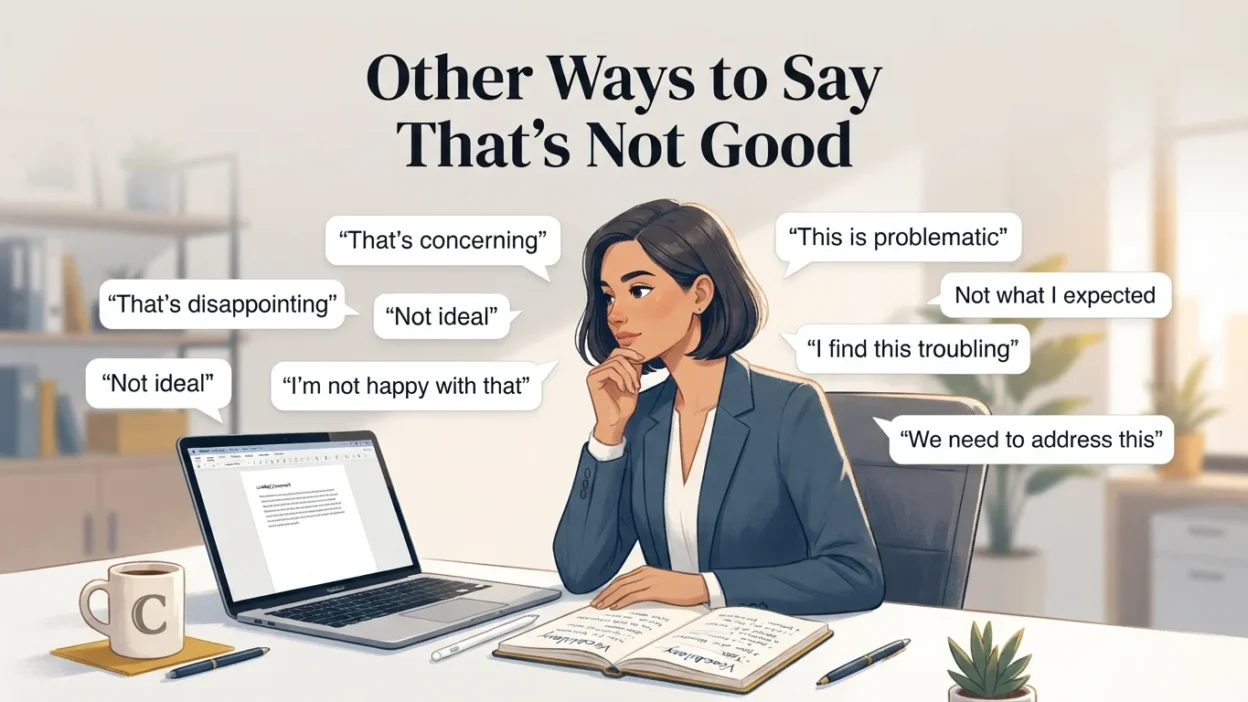
Learning other ways to say that’s not good helps you express disappointment, concern, or disapproval clearly while matching the situation and tone. In the English language, there are countless expressions for different shades of emotions and feelings. Choosing the right phrase can help you communicate your reaction more clearly instead of repeating the same expression.
For subtle unease, softer phrases can communicate concern without sounding overly negative. When you have deep concern or outright disapproval, stronger idioms and expressions may be more suitable. In my experience, varying your wording helps the message resonate with the listener’s emotions and the situation, whether you feel concerned or disappointed.
The rich range of English can sometimes seem like a tangle, but selecting different words makes it easier to communicate an effective response. Whether you want to sound concerned, disappointed, or strongly critical, choosing the appropriate expression helps you respond effectively and naturally.
Quick Answer
Some useful alternatives include “That’s unfortunate,” “That’s concerning,” “That doesn’t sound ideal,” “That’s disappointing,” “That’s not acceptable,” and “That could be better.” Choose a phrase based on whether you want to sound polite, professional, concerned, disappointed, or strongly critical.
Section 1: Polite Ways to Say That’s Not Good
That’s Unfortunate
Definition: This phrase expresses mild disappointment about an undesirable situation.
Usage Rule: Use it when you want to sound polite and avoid harsh criticism.
Practical Examples: “That’s unfortunate; I hope we can find another solution.”
Tips: It works especially well in professional conversations.
That’s Not Ideal
Definition: “That’s not ideal” means something is less suitable or desirable than expected.
Usage Rule: Use it when you want to express concern without sounding too negative.
Practical Examples: “The delay is not ideal, but we can adjust the schedule.”
Tips: This is one of the safest professional alternatives.
That’s a Shame
Definition: This expression shows mild disappointment or sympathy.
Usage Rule: Use it in friendly or semi-casual situations.
Practical Examples: “That’s a shame; I was hoping you could join us.”
Tips: Avoid it when a highly formal tone is required.
That’s Disappointing
Definition: This phrase directly communicates disappointment.
Usage Rule: Use it when an outcome does not meet your expectations.
Practical Examples: “That’s disappointing, especially after all the preparation.”
Tips: Your tone matters because it can sound stronger when spoken sharply.
That’s Less Than Ideal
Definition: This means the situation is not as good or suitable as desired.
Usage Rule: Use it for tactful criticism.
Practical Examples: “The current arrangement is less than ideal.”
Tips: It is useful in workplace communication because it sounds measured.
I’m Not Sure That’s a Good Idea
Definition: This phrase politely questions a decision or suggestion.
Usage Rule: Use it when you disagree but want to remain respectful.
Practical Examples: “I’m not sure that’s a good idea given the current deadline.”
Tips: Follow it with a constructive alternative when possible.
That Could Be Better
Definition: This means something does not meet the expected standard.
Usage Rule: Use it for gentle feedback or evaluation.
Practical Examples: “The presentation could be better with clearer examples.”
Tips: Explain what can be improved to make your feedback useful.
Section 2: Professional Alternatives
That’s Concerning
Definition: This phrase indicates that something may create a problem or deserves attention.
Usage Rule: Use it when discussing risks, mistakes, or unexpected developments.
Practical Examples: “The repeated delays are concerning.”
Tips: It sounds professional and serious without being aggressive.
That Requires Attention
Definition: This means an issue needs to be reviewed or addressed.
Usage Rule: Use it in the workplace, business, or formal communication.
Practical Examples: “This issue requires attention before we proceed.”
Tips: It focuses on the problem rather than blaming someone.
This Isn’t Quite Right
Definition: This phrase suggests that something contains an error or does not fit expectations.
Usage Rule: Use it when correcting work or identifying an issue.
Practical Examples: “This figure isn’t quite right; let’s check the original data.”
Tips: It is softer than directly saying something is wrong.
This May Need Improvement
Definition: It indicates that something needs to become better or more effective.
Usage Rule: Use it when giving constructive professional feedback.
Practical Examples: “The introduction may need improvement before publication.”
Tips: Mention specific improvements whenever possible.
This Isn’t Acceptable
Definition: This means something fails to meet an expected standard or requirement.
Usage Rule: Use it when the problem is serious and a clear boundary is necessary.
Practical Examples: “This level of service isn’t acceptable.”
Tips: Use this phrase carefully because it sounds firm.
This Falls Short
Definition: “This falls short” means something does not reach the required standard.
Usage Rule: Use it for professional evaluation or criticism.
Practical Examples: “The proposal falls short of our current requirements.”
Tips: Explain the missing requirement to keep your feedback objective.
We May Need to Reconsider This
Definition: This phrase suggests that a decision, plan, or approach may not be suitable.
Usage Rule: Use it when you want to encourage further discussion.
Practical Examples: “We may need to reconsider this approach before moving forward.”
Tips: It is diplomatic and encourages collaboration.
Section 3: Ways to Express Concern or Disapproval
I’m Concerned About This
Definition: This directly communicates worry about a situation.
Usage Rule: Use it when an issue could affect people, plans, quality, or results.
Practical Examples: “I’m concerned about the impact this delay may have.”
Tips: Explain the reason for your concern.
This Is Problematic
Definition: This means something creates difficulties or may lead to negative consequences.
Usage Rule: Use it in professional or analytical discussions.
Practical Examples: “This approach is problematic because it increases unnecessary costs.”
Tips: Support the statement with facts or specific reasons.
This Isn’t Working
Definition: This means a method, plan, or situation is failing to produce the desired result.
Usage Rule: Use it when discussing performance or ineffective solutions.
Practical Examples: “This process isn’t working, so we should consider another option.”
Tips: Pair the criticism with a practical solution.
I Don’t Think This Is Suitable
Definition: This phrase indicates that something does not fit the situation or requirements.
Usage Rule: Use it when rejecting an idea, option, or approach politely.
Practical Examples: “I don’t think this design is suitable for the target audience.”
Tips: It is less confrontational than simply saying “That’s bad.”
This Raises Some Concerns
Definition: This means certain aspects of something may cause problems or uncertainty.
Usage Rule: Use it when you want to highlight issues without making an absolute judgment.
Practical Examples: “The proposed timeline raises some concerns.”
Tips: This works well in meetings and formal reports.
I Have Some Reservations
Definition: This means you have doubts about a plan or decision.
Usage Rule: Use it when you want to express disagreement carefully.
Practical Examples: “I have some reservations about changing the process so quickly.”
Tips: It sounds thoughtful and professional.
I’m Not Comfortable With This
Definition: This communicates personal concern or disagreement about a situation.
Usage Rule: Use it when something conflicts with your expectations, standards, or boundaries.
Practical Examples: “I’m not comfortable with this approach without further review.”
Tips: Explain your concern calmly instead of making a personal accusation.
Section 4: Stronger Ways to Say That’s Not Good
That’s Not Acceptable
Definition: This strongly indicates that something fails to meet an important standard.
Usage Rule: Use it for serious problems that require correction.
Practical Examples: “This level of accuracy is not acceptable.”
Tips: Reserve it for situations where firm language is appropriate.
That’s Completely Unsatisfactory
Definition: This means something is far below the expected standard.
Usage Rule: Use it for serious professional complaints or evaluations.
Practical Examples: “The quality of the final report is completely unsatisfactory.”
Tips: Use evidence to support such strong criticism.
That’s a Serious Problem
Definition: This phrase clearly communicates that an issue has significant consequences.
Usage Rule: Use it when immediate attention may be necessary.
Practical Examples: “Missing these safety checks is a serious problem.”
Tips: Avoid using it for minor mistakes.
That’s Unacceptable
Definition: This means the situation cannot reasonably be allowed or tolerated.
Usage Rule: Use it when a clear standard or boundary has been violated.
Practical Examples: “Ignoring customer complaints is unacceptable.”
Tips: Keep your explanation factual and professional.
This Is Far From Ideal
Definition: This emphasizes that a situation is considerably worse than desired.
Usage Rule: Use it when you want stronger criticism without using insulting language.
Practical Examples: “Working without the necessary information is far from ideal.”
Tips: It is firm but still relatively polished.
This Is a Major Concern
Definition: This signals that an issue deserves serious consideration.
Usage Rule: Use it when the potential impact is significant.
Practical Examples: “The security risk is a major concern.”
Tips: Explain the potential consequences to make your point clearer.
This Needs to Be Addressed
Definition: This means a problem cannot simply be ignored.
Usage Rule: Use it when action or correction is required.
Practical Examples: “The communication issue needs to be addressed immediately.”
Tips: This is firm without directly attacking the person responsible.
Section 5: Casual and Natural Alternatives
That’s Rough
Definition: “That’s rough” shows sympathy when someone experiences something unpleasant.
Usage Rule: Use it in casual conversations with friends or familiar people.
Practical Examples: “You lost your job? That’s rough.”
Tips: It expresses empathy rather than direct criticism.
That’s Not Great
Definition: This is a softer, casual version of “that’s not good.”
Usage Rule: Use it when something is disappointing or below expectations.
Practical Examples: “The weather forecast is not great.”
Tips: It is natural in everyday conversation.
That Doesn’t Sound Good
Definition: This phrase expresses concern about information you have heard.
Usage Rule: Use it when reacting to news, plans, or a developing situation.
Practical Examples: “You haven’t heard from them for two days? That doesn’t sound good.”
Tips: It sounds conversational and empathetic.
That’s Not Great News
Definition: This phrase indicates disappointment about information or an outcome.
Usage Rule: Use it when reacting to unfavorable news.
Practical Examples: “The project was delayed again? That’s not great news.”
Tips: It is softer than saying “That’s terrible.”
That’s Pretty Bad
Definition: This phrase expresses stronger negative judgment in casual language.
Usage Rule: Use it when something is clearly below an acceptable level.
Practical Examples: “That’s pretty bad considering how much time we had.”
Tips: Avoid it in formal professional communication.
That’s a Bit Concerning
Definition: This expresses mild worry without sounding overly dramatic.
Usage Rule: Use it when you want to point out a potential problem gently.
Practical Examples: “The lack of preparation is a bit concerning.”
Tips: It is useful when you want to encourage someone to reconsider an issue.
I’m Not a Fan of That
Definition: This casual phrase means you do not like or support something.
Usage Rule: Use it with friends, colleagues you know well, or in informal conversations.
Practical Examples: “I’m not a fan of that approach.”
Tips: It sounds less harsh than directly saying something is bad.
Placement & Grammar Rules Table
| Synonym or phrase | Sentence position / placement | Tone / formality | Example sentence |
| That’s unfortunate | Beginning or standalone | Polite / professional | “That’s unfortunate, but we can find another solution.” |
| That’s not ideal | Beginning or after the subject | Professional / neutral | “The delay is not ideal.” |
| That’s concerning | Beginning or standalone | Professional / serious | “That’s concerning given the circumstances.” |
| That’s disappointing | Beginning or standalone | Neutral / direct | “That’s disappointing after all our preparation.” |
| That isn’t acceptable | Beginning or after a subject | Firm / formal | “This level of service isn’t acceptable.” |
| That doesn’t sound good | Beginning or standalone | Casual / neutral | “That doesn’t sound good.” |
| That’s not great | Beginning or standalone | Casual | “That’s not great news.” |
| This falls short | After the subject | Professional / evaluative | “The proposal falls short of our requirements.” |
| I have some reservations | Beginning | Diplomatic / professional | “I have some reservations about this plan.” |
| This needs to be addressed | Beginning or after the subject | Firm / professional | “This issue needs to be addressed.” |
Common Mistakes
One common mistake is using the same phrase in every situation. “That’s not good” may work in casual conversation, but professional communication often benefits from more precise alternatives such as “That’s concerning,” “That’s not ideal,” or “This needs to be addressed.”
Another mistake is using overly strong language for a minor issue. Saying “That’s unacceptable” when something is only slightly inconvenient can make your response sound unnecessarily aggressive. Match the strength of your words to the seriousness of the situation.
It is also important not to criticize without explaining the problem. Instead of simply saying “That’s bad,” explain what concerns you and, when possible, suggest a solution. This makes your communication clearer, more constructive, and more professional.
Practical Examples
In a workplace setting, instead of saying, “That’s not good,” you could say, “That’s concerning because the delay may affect the final deadline. We may need to reconsider the current schedule.” This communicates the problem while keeping the conversation focused on a solution.
In a casual conversation, you might say, “That doesn’t sound good. I’m sorry you’re dealing with that.” Here, the phrase expresses concern and empathy without making the response unnecessarily formal.
For stronger professional feedback, you could write, “The current results fall short of our expectations and need to be addressed before the project moves forward.” This wording is direct, but it explains the concern and identifies the need for action.
FAQs
What is a polite way to say “that’s not good”?
“That’s unfortunate,” “That’s not ideal,” and “That’s disappointing” are polite alternatives.
What is a professional way to say “that’s not good”?
Use “That’s concerning,” “This falls short,” “This may need improvement,” or “This needs to be addressed.”
How can I say “that’s not good” without sounding rude?
Choose softer language such as “That doesn’t sound ideal,” “I have some concerns,” or “I’m not sure that’s the best approach.”
What is a stronger way to say “that’s not good”?
For serious situations, you can say “That’s unacceptable,” “That’s a serious problem,” or “That is completely unsatisfactory.”
What can I say instead of “that’s not good” in an email?
In professional emails, “That’s concerning,” “That may create an issue,” or “This requires further attention” are appropriate.
What is a casual alternative to “that’s not good”?
You can say “That’s not great,” “That’s rough,” “That doesn’t sound good,” or “I’m not a fan of that.”
Is “that’s not ideal” rude?
No. “That’s not ideal” is generally a polite and diplomatic way to express that something is less desirable than expected.
Final Thoughts
Knowing other ways to say that’s not good gives you more control over your tone and message. You can express mild concern, disappointment, strong disapproval, or professional criticism without relying on the same phrase repeatedly.
The most effective choice depends on the situation, audience, and level of concern. Use softer alternatives when preserving relationships matters, and choose firmer expressions when a serious problem genuinely requires attention.