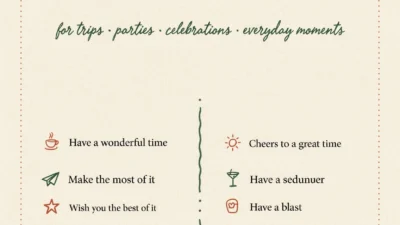
Saying “enjoy the rest of your day” is a friendly way to end a conversation, email, meeting, or message on a positive note. However, using the same expression repeatedly can make your communication feel predictable, especially in professional situations.
Choosing a suitable alternative allows you to match your wording to the relationship, situation, and tone. A warm phrase can make a personal message feel more thoughtful, while a polished alternative can create a professional and courteous closing in an email.
In this guide, you will find other ways to say enjoy the rest of your day for work, friends, customers, colleagues, formal communication, casual conversations, and everyday situations. Each option includes a definition, usage rule, practical example, and helpful tip.
Quick Answer
Some useful alternatives to “enjoy the rest of your day” include having a wonderful rest of your day, having a great afternoon, enjoying the remainder of your day, wishing you a pleasant day ahead, having a lovely rest of your day, and taking care of the rest of your day. The best choice depends on whether you want your message to sound professional, friendly, warm, or casual.
Professional Ways to Say Enjoy the Rest of Your Day
These expressions work particularly well in business emails, workplace conversations, client communication, customer service, and professional messages.
Have a Wonderful Rest of Your Day
Definition: This is a warm and polished way to wish someone a pleasant remainder of their day.
Usage rule: Use it when you want to sound professional while still showing warmth and friendliness.
Practical example: Thank you for taking the time to discuss the project with me. Have a wonderful rest of your day.
Tips: This phrase works well at the end of emails, meetings, phone calls, and customer interactions.
Wishing You a Pleasant Rest of Your Day
Definition: This expression politely wishes someone comfort and positivity during the remaining hours of their day.
Usage rule: Use it when you want a formal or courteous tone, particularly in professional correspondence.
Practical example: Thank you for your assistance. Wishing you a pleasant rest of your day.
Tips: It is particularly suitable when communicating with clients, customers, senior colleagues, or people you do not know well.
Have a Great Rest of Your Day
Definition: This is a natural and widely used alternative that communicates a positive wish for the remainder of someone’s day.
Usage rule: Use it in everyday professional communication when you want something friendly but not overly formal.
Practical example: I have attached the updated documents for your review. Have a great rest of your day.
Tips: It is an excellent all-purpose phrase because it sounds natural in both spoken and written communication.
Enjoy the Remainder of Your Day
Definition: This is a slightly more formal variation of “enjoy the rest of your day”.
Usage rule: Use it when you want professional wording without sounding excessively formal.
Practical example: Thank you for attending today’s meeting. We look forward to speaking with you again. Enjoy the remainder of your day.
Tips: “Remainder” gives the expression a polished tone and can work particularly well in formal correspondence.
Wishing You a Great Afternoon
Definition: This phrase focuses specifically on the afternoon rather than the entire remaining day.
Usage rule: Use it when you know that the person is communicating with you during the afternoon.
Practical example: Thank you for confirming the appointment. Wishing you a great afternoon.
Tips: Avoid using it late in the evening, as the time-specific wording may sound inappropriate.
Have a Pleasant Day Ahead
Definition: This expression wishes someone a comfortable and enjoyable experience during the upcoming part of their day.
Usage rule: Use it when the person still has activities, work, travel, or appointments ahead.
Practical example: Your booking has now been confirmed. Have a pleasant day ahead.
Tips: This works especially well in customer service and professional communication.
Wishing You All the Best for the Rest of Your Day
Definition: This is a thoughtful and supportive expression that combines a positive wish with a courteous closing.
Usage rule: Use it when you want to sound particularly considerate without becoming overly personal.
Practical example: Thank you for sharing your feedback with us. Wishing you all the best for the rest of your day.
Tips: It is useful when ending a meaningful professional interaction or responding to a customer.
Friendly and Warm Alternatives
When communicating with friends, familiar colleagues, or people you have a comfortable relationship with, you can use warmer expressions.
Have a Lovely Rest of Your Day
Definition: This phrase expresses a warm wish that the remaining part of someone’s day will be enjoyable.
Usage rule: Use it in friendly conversations, personal messages, and warm professional communication.
Practical example: It was lovely catching up with you. Have a lovely rest of your day!
Tips: “Lovely” makes the phrase warmer and more personable than “good” or “pleasant”.
Enjoy the Rest of Your Afternoon
Definition: This phrase specifically wishes someone an enjoyable afternoon.
Usage rule: Use it when the conversation takes place during the afternoon.
Practical example: It was great speaking with you today. Enjoy the rest of your afternoon.
Tips: Choose this option when you want your closing to feel more specific and natural.
Make the Most of the Rest of Your Day
Definition: This expression encourages someone to make good use of the remaining time in their day.
Usage rule: Use it with friends, colleagues, or people who appreciate encouraging language.
Practical example: You’ve got a busy schedule ahead, so make the most of the rest of your day!
Tips: This phrase has a slightly more energetic and motivational feel than a simple good-day wish.
Enjoy Your Day From Here On
Definition: This is a relaxed expression suggesting that the person should have an enjoyable experience for the remainder of the day.
Usage rule: Use it mainly in casual or friendly communication.
Practical example: I’m glad everything worked out. Enjoy your day from here on!
Tips: Keep this phrase for informal situations because it is more conversational than traditional professional closings.
Hope the Rest of Your Day Goes Well
Definition: This phrase expresses a sincere wish that everything continues positively.
Usage rule: Use it when someone has plans, responsibilities, or challenges still ahead.
Practical example: Good luck with your presentation this afternoon. Hope the rest of your day goes well.
Tips: This is especially useful when you want to show genuine consideration rather than simply end a conversation.
Have a Beautiful Rest of Your Day
Definition: This is a warm and expressive alternative that wishes someone a particularly pleasant remainder of the day.
Usage rule: Use it in personal messages and friendly conversations rather than highly formal business correspondence.
Practical example: Thanks for making my morning better. Have a beautiful rest of your day!
Tips: It works best when the relationship is warm enough to support a more expressive tone.
Enjoy the Rest of Your Day and Take Care
Definition: This combines a positive day wish with a friendly expression of care.
Usage rule: Use it when you want to close a conversation warmly and personally.
Practical example: Thanks again for everything. Enjoy the rest of your day and take care!
Tips: This is ideal for friends, familiar colleagues, and supportive personal conversations.
Casual Ways to Say Enjoy the Rest of Your Day
Casual alternatives are useful for text messages, chats, social media conversations, friends, family, and informal workplace interactions.
Have a Good One
Definition: “Have a good one” is a short, informal way to wish someone a pleasant remainder of their day.
Usage rule: Use it in relaxed conversations where a conversational tone is appropriate.
Practical example: Thanks for stopping by. Have a good one!
Tips: It is very natural in spoken English but may feel too casual for formal business correspondence.
Enjoy the Rest of It
Definition: This shortened expression refers to the remaining part of the person’s day or activity.
Usage rule: Use it only when the context clearly establishes what “it” refers to.
Practical example: You’ve got the afternoon off, so enjoy the rest of it!
Tips: Avoid this phrase when the context is unclear because the pronoun “it” can create ambiguity.
Have Fun for the Rest of the Day
Definition: This phrase encourages someone to enjoy themselves during the remaining hours of their day.
Usage rule: Use it for casual conversations, social plans, holidays, outings, or enjoyable activities.
Practical example: Enjoy the concert tonight and have fun for the rest of the day!
Tips: It is better suited to personal situations than serious professional communication.
Enjoy the Rest of Your Afternoon
Definition: This is a friendly and direct way to wish someone an enjoyable afternoon.
Usage rule: Use it during afternoon conversations when the person has more of the day remaining.
Practical example: I’ve got to head back to work now. Enjoy the rest of your afternoon!
Tips: It sounds natural in both casual speech and friendly messages.
Have a Good Afternoon
Definition: This is a simple and familiar expression used to wish someone well during the afternoon.
Usage rule: Use it when ending an interaction in the afternoon.
Practical example: Thanks for your help. Have a good afternoon!
Tips: It is simple enough for everyday use and professional enough for many workplace situations.
Enjoy Your Time
Definition: This phrase wishes someone a pleasant experience during whatever they are doing.
Usage rule: Use it when the person is going somewhere, taking time off, attending an event, or relaxing.
Practical example: Enjoy your holiday and enjoy your time with the family.
Tips: It is more natural when you know what activity or occasion the person is experiencing.
Take Care and Enjoy Your Day
Definition: This combines a caring farewell with a positive wish for someone’s day.
Usage rule: Use it when ending a friendly conversation or message.
Practical example: I’ll talk to you tomorrow. Take care and enjoy your day!
Tips: It creates a warm ending without sounding overly emotional.
Alternatives for Emails and Workplace Communication
Choosing the right closing matters in professional communication because the final sentence can influence how your message is perceived.
Thank You and Have a Great Rest of Your Day
Definition: This phrase combines gratitude with a positive closing.
Usage rule: Use it after someone has provided assistance, information, feedback, or cooperation.
Practical example: Thank you for sending the revised quotation. Have a great rest of your day.
Tips: It is especially effective in customer service and client-facing emails.
I Appreciate Your Time—Have a Great Day
Definition: This expression acknowledges someone’s time before ending the interaction positively.
Usage rule: Use it after meetings, consultations, interviews, or discussions.
Practical example: I appreciate your time today. Have a great day.
Tips: It communicates professionalism while making the closing feel more personal.
Thank You for Your Assistance and Have a Pleasant Day
Definition: This is a courteous professional closing that expresses appreciation and goodwill.
Usage rule: Use it when someone has helped you with a task or request.
Practical example: Thank you for your assistance with this matter, and have a pleasant day.
Tips: This is suitable for formal workplace and customer-service correspondence.
I Hope the Rest of Your Day Goes Smoothly
Definition: This phrase wishes someone a calm and successful continuation of their day.
Usage rule: Use it when someone has a busy schedule, an important task, or several responsibilities ahead.
Practical example: I know you have several meetings this afternoon. I hope the rest of your day goes smoothly.
Tips: This alternative feels thoughtful because it responds to the person’s circumstances.
Wishing You a Productive Rest of the Day
Definition: This professional expression wishes someone success and productivity during their remaining working hours.
Usage rule: Use it mainly in workplace communication.
Practical example: I’ll send the final figures shortly. Wishing you a productive rest of the day.
Tips: Avoid it when the person is finishing work or heading towards leisure time.
I Hope You Have a Pleasant Afternoon
Definition: This is a polite expression wishing someone a comfortable and enjoyable afternoon.
Usage rule: Use it in professional emails, meetings, calls, and customer interactions.
Practical example: Thank you for clarifying the requirements. I hope you have a pleasant afternoon.
Tips: It is a safe choice when you need polite wording without sounding overly familiar.
Wishing You a Positive Rest of Your Day
Definition: This phrase expresses a supportive wish for a positive continuation of someone’s day.
Usage rule: Use it when you want your professional message to sound encouraging and considerate.
Practical example: Thank you for your patience while we resolved the issue. Wishing you a positive rest of your day.
Tips: This can work particularly well in customer support, healthcare administration, education, and service-based communication.
Polite and Formal Alternatives
Formal alternatives are useful when communicating with senior professionals, clients, customers, institutions, or people you do not know personally.
Wishing You a Pleasant Remainder of Your Day
Definition: This is a formal variation of “enjoy the rest of your day”.
Usage rule: Use it when you want a polished and respectful closing.
Practical example: Thank you for your attention to this matter. Wishing you a pleasant remainder of your day.
Tips: “Remainder” gives this expression a formal tone, making it appropriate for official communication.
I Wish You a Pleasant Rest of Your Day
Definition: This formal phrase directly expresses a positive wish for the remaining part of someone’s day.
Usage rule: Use it when communicating respectfully in formal or semi-formal contexts.
Practical example: Thank you for considering our proposal. I wish you a pleasant rest of your day.
Tips: It sounds more formal than “have a great day”, so use it when the situation calls for professionalism.
May You Have a Pleasant Rest of Your Day
Definition: This is a courteous and highly polished expression of goodwill.
Usage rule: Use it selectively in formal or ceremonial communication.
Practical example: Thank you for joining us today. May you have a pleasant rest of your day.
Tips: Because it is quite formal, it can sound unnatural in ordinary casual conversation.
I Hope the Remainder of Your Day Is Enjoyable
Definition: This expression politely wishes someone an enjoyable continuation of their day.
Usage rule: Use it when a formal or carefully worded closing is appropriate.
Practical example: Thank you for your valuable feedback. I hope the remainder of your day is enjoyable.
Tips: This is a good choice when you want to avoid repetitive phrases in formal correspondence.
Wishing You Continued Enjoyment Throughout the Day
Definition: This phrase wishes someone continued positive experiences during the rest of their day.
Usage rule: Use it when the person is already enjoying an event, occasion, holiday, or special experience.
Practical example: We are delighted that you enjoyed the event. Wishing you continued enjoyment throughout the day.
Tips: This is more specialised than a standard day-ending phrase.
Thank You for Your Time, and Have a Pleasant Day
Definition: This closing combines professional appreciation with a courteous day wish.
Usage rule: Use it after a formal meeting, consultation, interview, or discussion.
Practical example: Thank you for your time and thoughtful questions. Have a pleasant day.
Tips: It provides a natural transition from the main message to the closing.
With Best Wishes for the Rest of Your Day
Definition: This is a polished expression of goodwill suitable for formal written communication.
Usage rule: Use it when you want a courteous and slightly elegant closing.
Practical example: Thank you again for your cooperation. With best wishes for the rest of your day.
Tips: This phrase works particularly well when a simple “have a good day” feels too ordinary.
Placement & Grammar Rules Table
| Synonym or phrase | Sentence position / placement | Tone / formality | Example sentence |
| Have a great rest of your day | End of sentence | Friendly / professional | Thank you for your help. Have a great rest of your day. |
| Enjoy the remainder of your day | Closing sentence | Professional | Thank you for attending. Enjoy the remainder of your day. |
| Have a lovely rest of your day | Closing sentence | Warm / friendly | It was lovely speaking with you. Have a lovely rest of your day. |
| Wishing you a pleasant afternoon | Email or conversation closing | Polite / professional | Thank you for your response. Wishing you a pleasant afternoon. |
| Hope the rest of your day goes well | End of message | Friendly / supportive | Good luck with your meeting. Hope the rest of your day goes well. |
| Have a good one | Standalone farewell | Casual | Thanks for stopping by. Have a good one! |
| I hope the rest of your day goes smoothly | Closing sentence | Thoughtful / professional | I know you have a busy schedule. I hope the rest of your day goes smoothly. |
| Wishing you a productive rest of the day | Workplace closing | Professional | I’ll send the documents shortly. Wishing you a productive rest of the day. |
| Take care and enjoy your day | Farewell | Friendly / warm | I’ll speak to you tomorrow. Take care and enjoy your day. |
| With best wishes for the rest of your day | Final email line | Formal / polished | Thank you for your cooperation. With best wishes for the rest of your day. |
How to Choose the Right Alternative
The most effective alternative is not necessarily the most formal one. It should match the situation and the relationship between the people communicating.
Consider the Relationship
Use friendly language with friends and familiar colleagues, while choosing more neutral wording for clients, customers, and professional contacts.
Definition: Relationship refers to how familiar or formal your connection with another person is.
Usage rule: Match the warmth of the phrase to the level of familiarity.
Practical example: “Have a lovely rest of your day!” works well with a colleague you know well.
Tips: When uncertain, choose a neutral phrase such as “Have a great rest of your day.”
Consider the Communication Channel
An email may require different wording from a text message or face-to-face conversation.
Definition: Communication channel refers to the method used to communicate, such as email, chat, phone, or conversation.
Usage rule: Use polished language in formal written communication and more conversational wording in casual channels.
Practical example: “Wishing you a pleasant afternoon” works well in an email, while “Have a good one!” suits a text.
Tips: Let the style of the surrounding message guide your closing.
Consider the Time of Day
Time-specific alternatives can make your communication sound more natural.
Definition: Time of day refers to whether the interaction happens in the morning, afternoon, or evening.
Usage rule: Use “afternoon” only when the timing makes sense.
Practical example: “Have a great afternoon” is appropriate at 2 p.m.
Tips: If you are unsure about the recipient’s local time, use “Have a great rest of your day.”
Consider the Purpose
A day wish can simply close a conversation or reinforce appreciation, support, or goodwill.
Definition: Purpose refers to what you want the closing phrase to accomplish.
Usage rule: Choose wording that supports the emotional or professional purpose of your message.
Practical example: “I appreciate your time. Have a great rest of your day” combines gratitude and goodwill.
Tips: A meaningful closing can make a short message feel more considerate.
Consider the Level of Formality
Formal, semi-formal, and casual contexts require different expressions.
Definition: Formality describes how professional, relaxed, or conversational your language sounds.
Usage rule: Use formal expressions with clients and official contacts and casual expressions with friends.
Practical example: “Wishing you a pleasant remainder of your day” is more formal than “Have a good one.”
Tips: Avoid overly formal language when the situation is relaxed.
Avoid Repetition
Using the same phrase repeatedly can make your emails or messages sound mechanical.
Definition: Repetition means using identical wording too frequently.
Usage rule: Rotate suitable alternatives when you communicate with the same people regularly.
Practical example: Instead of ending every email with “Have a great day”, occasionally use “Wishing you a pleasant afternoon.”
Tips: Only vary the wording when the alternative remains natural for the context.
Prioritise Natural Language
The best alternative should sound like something a real person would naturally say.
Definition: Natural language is wording that feels clear, appropriate, and conversational rather than forced.
Usage rule: Prefer simple expressions over unnecessarily complicated vocabulary.
Practical example: “Have a great rest of your day” may be more effective than an excessively elaborate formal expression.
Tips: Professional communication does not need to sound complicated to be credible.
Common Mistakes When Saying Enjoy the Rest of Your Day
Using an Overly Formal Phrase
A phrase such as “May you have a pleasant remainder of your day” can sound unnatural in a casual text.
How to avoid it: Match the formality of your closing to the relationship and communication channel.
Using Casual Language in Formal Emails
Expressions such as “Have a good one!” may be too informal for some clients or official communications.
How to avoid it: Choose neutral options such as “Have a pleasant rest of your day.”
Ignoring the Time of Day
Saying “Have a pleasant afternoon” late at night creates a mismatch between the wording and context.
How to avoid it: Use a time-neutral expression when you are unsure.
Repeating the Same Phrase
Ending every message with exactly the same wording can make communication feel automated.
How to avoid it: Keep several natural alternatives available and select the one that fits the specific situation.
Adding Unnecessary Complexity
Using obscure or excessively formal vocabulary does not automatically make communication more professional.
How to avoid it: Choose clear language that the recipient can understand immediately.
Using the Wrong Emotional Tone
A cheerful phrase may not be suitable after a serious or difficult conversation.
How to avoid it: Consider the emotional context before choosing a warm or enthusiastic closing.
Forgetting the Purpose of the Message
A closing should support the overall message rather than appear disconnected from it.
How to avoid it: Connect the final phrase with appreciation, encouragement, assistance, or goodwill when appropriate.
Practical Example Paragraphs
Example for a Professional Email
Thank you for taking the time to review the proposal and share your feedback. I have included the requested revisions and will be happy to answer any additional questions. Wishing you a pleasant rest of your day, and I look forward to hearing from you.
Example for a Customer Service Message
Thank you for your patience while we looked into this issue. We are pleased that the matter has now been resolved and appreciate your understanding. Have a great rest of your day, and please do not hesitate to contact us if you need further assistance.
Example for a Colleague
Thanks for helping me finish the report before the deadline. I really appreciate you taking the time to look over those final details. Have a lovely rest of your day, and I’ll catch up with you tomorrow.
Example for a Friend
I’m glad we finally managed to catch up. Hopefully, the rest of your plans go smoothly and you get some time to relax later. Enjoy the rest of your day and take care!
Example for a Client
Thank you for discussing the project requirements with us today. Your feedback has given our team a clearer understanding of the next steps. I hope the remainder of your day is enjoyable, and we look forward to working with you again.
FAQs
What is a professional way to say “enjoy the rest of your day”?
A professional alternative is “Wishing you a pleasant rest of your day” or “Enjoy the remainder of your day.” Both sound courteous without being overly casual.
What is a friendly way to say “enjoy the rest of your day”?
You can say “Have a lovely rest of your day,” “Hope the rest of your day goes well,” or “Take care and enjoy your day.” These options sound warm and natural.
Can I say “enjoy the remainder of your day” in an email?
Yes. “Enjoy the remainder of your day” is grammatically correct and slightly more formal than “enjoy the rest of your day”. It can work well in professional emails.
What is a short way to say “enjoy the rest of your day”?
Short alternatives include “Have a good one,” “Have a great afternoon,” “Enjoy!” and “Take care.” The best option depends on the context.
Is “have a great rest of your day” grammatically correct?
Yes. “Have a great rest of your day” is a natural and grammatically acceptable expression. It is commonly used in conversations, emails, customer service, and workplace communication.
What can I say instead of “have a good day” at work?
You can use “Have a great rest of your day,” “Wishing you a productive day,” “Have a pleasant afternoon,” or “I hope the rest of your day goes smoothly.”
What is a polite way to end a conversation?
A polite closing could be “Thank you for your time. Have a pleasant rest of your day.” This works particularly well in professional settings.
How can I sound less repetitive when ending emails?
Keep a small collection of appropriate closings and choose according to the context. For example, alternate between “Have a great rest of your day,” “Wishing you a pleasant afternoon,” and “I hope the rest of your day goes smoothly.”
Final Thoughts
Knowing other ways to say enjoy the rest of your day helps you communicate with greater flexibility and confidence. The right phrase can make an email sound more polished, a customer interaction more courteous, or a personal message more thoughtful.
The key is to match your wording with the relationship, situation, time of day, and level of formality. Simple expressions are often the most effective because they sound natural while still showing genuine goodwill.