“Enjoy and have fun” is a positive and friendly expression, but using the same phrase repeatedly can make everyday communication sound predictable. Choosing a more specific alternative allows you to match your words to the occasion, relationship, and level of formality.
Whether you are wishing a friend well before a party, sending someone off on holiday, congratulating a person on a special occasion, or writing a professional message, the right expression can make your words sound more natural. This guide explains useful alternatives to “enjoy and have fun” and shows how to use each one correctly.
Quick Answer
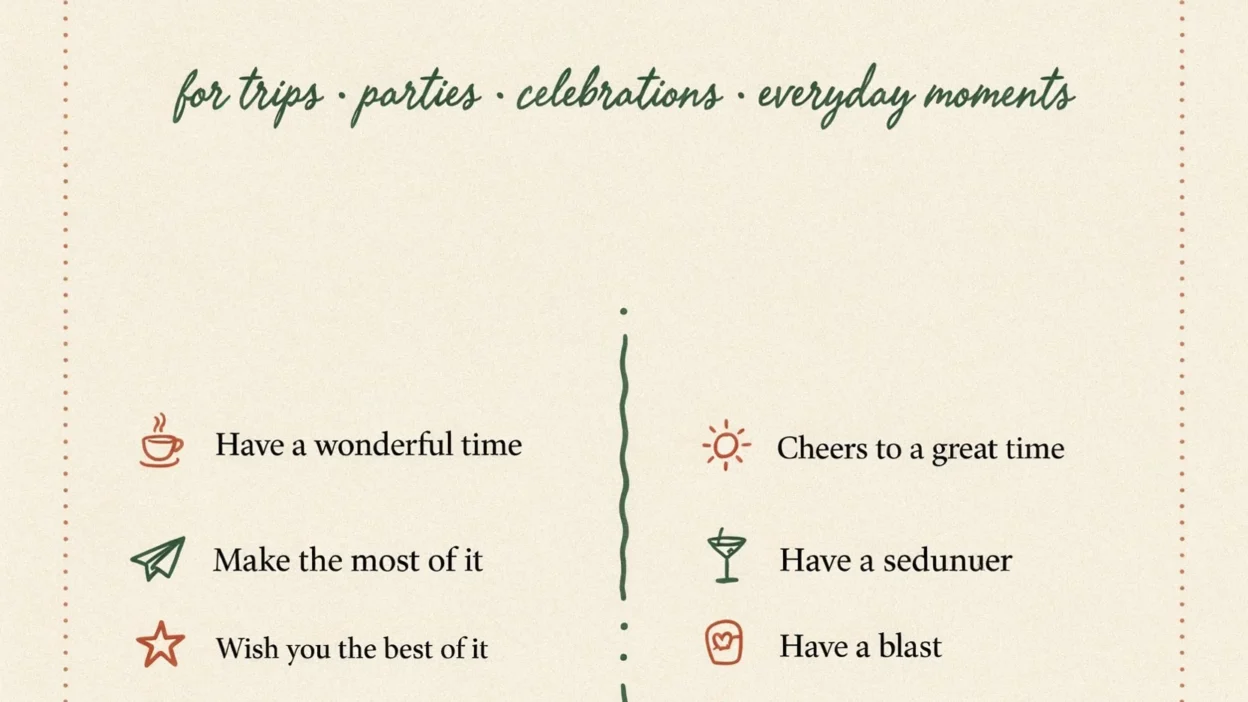
The best alternatives to “enjoy and have fun” include “have a great time,” “enjoy yourself,” “have a blast,” “make the most of it,” “enjoy every moment,” and “have an amazing time.” The ideal phrase depends on the situation and the tone you want to convey.
Friendly and Everyday Ways to Say Enjoy and Have Fun
These expressions are suitable for friends, family members, classmates, neighbours, and everyday conversations. They sound natural without being overly formal.
Have a Great Time
Definition: “Have a great time” is a friendly expression used to wish someone an enjoyable experience.
Usage rule: Use it before someone attends an event, meets friends, travels, or participates in an enjoyable activity.
Practical example: “Have a great time at the concert tonight!”
Tips: This is one of the most versatile alternatives and works in most casual situations.
Enjoy Yourself
Definition: “Enjoy yourself” means to have a pleasant and enjoyable experience.
Usage rule: Use it when encouraging someone to relax and appreciate what they are doing.
Practical example: “You have worked hard all week, so go out and enjoy yourself.”
Tips: It works particularly well when someone is going to a party, gathering, or social event.
Have a Good Time
Definition: “Have a good time” is a simple and widely understood way to wish someone enjoyment.
Usage rule: Use it in casual conversations, texts, and friendly messages.
Practical example: “Have a good time at the birthday party!”
Tips: It is a safe choice when you want something natural and straightforward.
Have a Blast
Definition: “Have a blast” means to have an extremely enjoyable or exciting time.
Usage rule: Use it for lively occasions such as parties, concerts, festivals, and nights out.
Practical example: “Have a blast at the festival this weekend!”
Tips: This phrase is more energetic and informal than “have a great time.”
Have a Wonderful Time
Definition: “Have a wonderful time” expresses a warm wish for a particularly pleasant experience.
Usage rule: Use it for holidays, celebrations, gatherings, and special occasions.
Practical example: “Have a wonderful time with your family.”
Tips: Choose this expression when you want to sound warm and thoughtful.
Make the Most of It
Definition: “Make the most of it” encourages someone to take full advantage of an opportunity or experience.
Usage rule: Use it when someone has limited time or a special opportunity.
Practical example: “You only have three days in Rome, so make the most of it.”
Tips: This phrase focuses on appreciating an opportunity rather than simply having fun.
Have Fun Out There
Definition: “Have fun out there” is a relaxed expression encouraging someone to enjoy an upcoming activity.
Usage rule: Use it when someone is heading out for an event, activity, trip, or social gathering.
Practical example: “You are off to the beach with your friends, so have fun out there!”
Tips: It is especially natural in casual conversations and text messages.
Casual and Playful Alternatives
When speaking with close friends or family, you can use more energetic and playful alternatives. These phrases are ideal for informal conversations, social media, and text messages.
Have an Amazing Time
Definition: “Have an amazing time” expresses enthusiasm and excitement about someone’s plans.
Usage rule: Use it before exciting events, holidays, parties, concerts, or trips.
Practical example: “Have an amazing time at the wedding!”
Tips: It sounds more enthusiastic than the standard “have fun.”
Have the Best Time
Definition: “Have the best time” is an enthusiastic expression wishing someone an exceptionally enjoyable experience.
Usage rule: Use it informally when someone is looking forward to something exciting.
Practical example: “Have the best time on your holiday!”
Tips: This phrase is particularly natural in friendly texts and social media messages.
Go Have Some Fun
Definition: “Go have some fun” encourages someone to stop worrying and enjoy themselves.
Usage rule: Use it with people you know well in relaxed circumstances.
Practical example: “You have finished all your work, so go have some fun.”
Tips: Avoid using it in formal professional communication.
Have a Fantastic Time
Definition: “Have a fantastic time” is an enthusiastic way to wish someone an enjoyable experience.
Usage rule: Use it for exciting plans, celebrations, holidays, and social activities.
Practical example: “Have a fantastic time at the festival!”
Tips: It is expressive while remaining natural and easy to understand.
Enjoy Every Minute
Definition: “Enjoy every minute” encourages someone to appreciate the entire experience.
Usage rule: Use it for holidays, celebrations, memorable trips, and special occasions.
Practical example: “Enjoy every minute of your holiday in Spain.”
Tips: This phrase adds warmth and makes your message feel more personal.
Have a Great One
Definition: “Have a great one” is a casual expression wishing someone a pleasant experience or day.
Usage rule: Use it mainly in informal conversations and quick goodbyes.
Practical example: “Have a great one, and I will see you tomorrow!”
Tips: It is concise and works especially well in text messages.
Enjoy the Moment
Definition: “Enjoy the moment” encourages someone to appreciate the present experience.
Usage rule: Use it for achievements, celebrations, milestones, and memorable experiences.
Practical example: “You worked so hard for this achievement, so enjoy the moment.”
Tips: It is a thoughtful alternative when you want your message to feel meaningful.
Warm and Thoughtful Ways to Say Enjoy and Have Fun
These alternatives are useful when you want to express genuine warmth rather than simply giving a casual goodbye.
Hope You Have a Wonderful Time
Definition: This phrase expresses a sincere hope that someone has a pleasant experience.
Usage rule: Use it before trips, celebrations, gatherings, and special events.
Practical example: “I hope you have a wonderful time at the anniversary celebration.”
Tips: Adding “I hope” makes the expression sound considerate and sincere.
Wishing You a Great Time
Definition: “Wishing you a great time” communicates warmth and goodwill.
Usage rule: Use it in messages, cards, social media posts, and friendly written communication.
Practical example: “Wishing you a great time on your trip!”
Tips: It sounds polished without becoming excessively formal.
Hope You Enjoy Every Moment
Definition: This phrase expresses a sincere wish that someone appreciates the entire experience.
Usage rule: Use it for weddings, birthdays, holidays, celebrations, and meaningful occasions.
Practical example: “Hope you enjoy every moment of your special day.”
Tips: It works particularly well in heartfelt messages.
Have a Memorable Time
Definition: “Have a memorable time” wishes someone an experience they will remember positively.
Usage rule: Use it for important journeys, celebrations, milestones, and significant events.
Practical example: “Have a memorable time during your first visit to Paris.”
Tips: It sounds more thoughtful than a simple “have fun.”
Enjoy This Special Time
Definition: This expression highlights the importance of a particular occasion or period.
Usage rule: Use it for weddings, family gatherings, holidays, and personal milestones.
Practical example: “Enjoy this special time with your family.”
Tips: It is especially effective when the occasion has emotional significance.
Treasure the Moments
Definition: “Treasure the moments” encourages someone to value meaningful experiences.
Usage rule: Use it when the situation is memorable, emotional, or personally significant.
Practical example: “Treasure the moments you spend together during the reunion.”
Tips: This phrase is reflective rather than playful, so use it for meaningful occasions.
Enjoy the Experience
Definition: “Enjoy the experience” encourages someone to appreciate what they are doing.
Usage rule: Use it for travel, new activities, educational opportunities, events, or unfamiliar experiences.
Practical example: “It is your first time visiting Japan, so enjoy the experience.”
Tips: It can sound casual, thoughtful, or professional depending on the context.
Professional and Polished Alternatives
When communicating with colleagues, clients, customers, or business contacts, “have fun” may sometimes sound too casual. These alternatives maintain positivity while sounding polished.
Have a Pleasant Time
Definition: “Have a pleasant time” is a polite and relatively formal way to wish someone enjoyment.
Usage rule: Use it when “have fun” feels too informal.
Practical example: “We hope you have a pleasant time at the conference.”
Tips: This expression works well in professional and customer-service communication.
Enjoy Your Time
Definition: “Enjoy your time” encourages someone to appreciate the period they are spending somewhere or doing something.
Usage rule: Use it for holidays, business trips, conferences, visits, or events.
Practical example: “We hope you enjoy your time in Manchester.”
Tips: It is simple, professional, and easy to adapt.
Have a Wonderful Experience
Definition: “Have a wonderful experience” wishes someone a positive and memorable experience.
Usage rule: Use it when discussing travel, services, programmes, events, or special activities.
Practical example: “We hope you have a wonderful experience during your stay.”
Tips: It is a strong choice for customer-facing communication.
Enjoy Your Visit
Definition: “Enjoy your visit” is a courteous expression used when someone visits a location, organisation, or event.
Usage rule: Use it with visitors, customers, guests, and colleagues.
Practical example: “Thank you for visiting our centre. We hope you enjoy your visit.”
Tips: It is particularly useful in hospitality, tourism, and customer service.
Have an Enjoyable Time
Definition: “Have an enjoyable time” is a polished variation of “have a good time.”
Usage rule: Use it in formal or semi-formal written communication.
Practical example: “We hope you have an enjoyable time at the event.”
Tips: It sounds professional without being excessively stiff.
We Hope You Enjoy the Occasion
Definition: This phrase expresses a professional wish that someone appreciates a particular event or celebration.
Usage rule: Use it for formal invitations, ceremonies, corporate events, and organised occasions.
Practical example: “We hope you enjoy the occasion and celebrate this achievement with us.”
Tips: It works particularly well in formal event communication.
Wishing You an Enjoyable Experience
Definition: This expression is a polished and courteous way to wish someone well.
Usage rule: Use it in formal emails, customer communication, travel messages, and professional correspondence.
Practical example: “Thank you for choosing our service. Wishing you an enjoyable experience.”
Tips: It provides warmth while maintaining a professional tone.
Alternatives for Trips, Holidays, and Travel
Travel situations often call for expressions that focus on enjoyment, discovery, relaxation, and memorable experiences.
Enjoy Your Trip
Definition: “Enjoy your trip” wishes someone a pleasant journey and destination experience.
Usage rule: Use it before someone travels for business or leisure.
Practical example: “Have a safe flight and enjoy your trip!”
Tips: Combine it with “safe travels” when you want to sound especially thoughtful.
Enjoy Your Holiday
Definition: “Enjoy your holiday” wishes someone a relaxing and pleasant holiday.
Usage rule: Use it when someone is taking time away from work or routine.
Practical example: “Enjoy your holiday and get plenty of rest.”
Tips: “Holiday” is especially natural in British English.
Make the Most of Your Trip
Definition: This phrase encourages someone to take full advantage of their travel experience.
Usage rule: Use it when someone is visiting a new destination or has limited time.
Practical example: “You only have a week in Italy, so make the most of your trip.”
Tips: It is useful when encouraging exploration and meaningful experiences.
Have an Unforgettable Journey
Definition: “Have an unforgettable journey” wishes someone an especially memorable travel experience.
Usage rule: Use it for important trips, adventures, and significant journeys.
Practical example: “Have an unforgettable journey across Europe!”
Tips: It creates a warm and enthusiastic tone.
Enjoy the Adventure
Definition: “Enjoy the adventure” encourages someone to appreciate an exciting or unfamiliar experience.
Usage rule: Use it for adventurous travel, outdoor activities, or new experiences.
Practical example: “Enjoy the adventure and make plenty of memories.”
Tips: This phrase works best when the trip involves exploration or excitement.
Have a Wonderful Holiday
Definition: “Have a wonderful holiday” is a warm way to wish someone an enjoyable break.
Usage rule: Use it before or during someone’s holiday.
Practical example: “Have a wonderful holiday with your family.”
Tips: It works for both casual conversations and polite messages.
Enjoy the Journey
Definition: “Enjoy the journey” encourages someone to appreciate the process as well as the destination.
Usage rule: Use it literally for travel or figuratively when someone is experiencing a new stage of life.
Practical example: “Good luck with your new adventure, and enjoy the journey.”
Tips: This phrase can sound inspirational and thoughtful.
Alternatives for Parties and Celebrations
Parties and celebrations usually call for energetic, cheerful, and enthusiastic expressions.
Enjoy the Party
Definition: “Enjoy the party” directly encourages someone to appreciate a social celebration.
Usage rule: Use it before or during a party.
Practical example: “I cannot make it tonight, but enjoy the party!”
Tips: It is short, natural, and ideal for casual messages.
Have a Fantastic Celebration
Definition: This phrase wishes someone an especially enjoyable celebration.
Usage rule: Use it for birthdays, anniversaries, graduations, weddings, and other events.
Practical example: “Have a fantastic celebration with your family!”
Tips: Mentioning the specific occasion can make your message more personal.
Enjoy the Festivities
Definition: “Enjoy the festivities” encourages someone to appreciate a series of celebrations or activities.
Usage rule: Use it for festivals, cultural events, weddings, holidays, and large celebrations.
Practical example: “Enjoy the festivities and celebrate with everyone!”
Tips: It sounds slightly more polished than “have fun.”
Celebrate and Enjoy
Definition: “Celebrate and enjoy” combines an invitation to celebrate with a wish for enjoyment.
Usage rule: Use it for achievements, milestones, birthdays, and special occasions.
Practical example: “You have earned this success, so celebrate and enjoy!”
Tips: This phrase works particularly well in congratulatory messages.
Enjoy Your Special Day
Definition: “Enjoy your special day” wishes someone happiness during an important personal occasion.
Usage rule: Use it for birthdays, weddings, anniversaries, graduations, and similar events.
Practical example: “Happy birthday! Enjoy your special day.”
Tips: It is warm, simple, and suitable for cards and messages.
Have an Unforgettable Celebration
Definition: This phrase wishes someone a celebration they will remember positively.
Usage rule: Use it for significant milestones and major celebrations.
Practical example: “Congratulations, and have an unforgettable celebration!”
Tips: It gives a stronger emotional impact than “have fun.”
Enjoy the Festive Spirit
Definition: “Enjoy the festive spirit” encourages someone to appreciate the cheerful atmosphere of a celebration.
Usage rule: Use it during seasonal celebrations, festivals, and community events.
Practical example: “Enjoy the festive spirit and spend some quality time with your loved ones.”
Tips: It is particularly useful for holiday-related messages.
Placement & Grammar Rules Table
| Synonym or phrase | Sentence position / placement | Tone / formality | Example sentence |
| Have a great time | Beginning or end | Friendly / neutral | Have a great time at the concert! |
| Enjoy yourself | Beginning or middle | Friendly / casual | Enjoy yourself at the party tonight. |
| Have a blast | Beginning or end | Casual / energetic | Have a blast at the festival! |
| Make the most of it | Beginning or middle | Friendly / encouraging | Make the most of your weekend away. |
| Enjoy every moment | Beginning or end | Warm / thoughtful | Enjoy every moment of your special day. |
| Have a wonderful time | Beginning or end | Warm / neutral | Have a wonderful time on your holiday. |
| Enjoy the experience | Beginning or middle | Neutral / professional | Enjoy the experience and learn as much as you can. |
| Have a pleasant time | Beginning or end | Formal / professional | We hope you have a pleasant time at the event. |
| Enjoy your visit | Usually at the end | Polite / professional | Thank you for visiting. Enjoy your visit! |
| Have an enjoyable time | Beginning or end | Formal / polished | We hope you have an enjoyable time at the conference. |
| Enjoy your trip | Beginning or end | Friendly / neutral | Enjoy your trip to Edinburgh! |
| Enjoy the festivities | Beginning or end | Polished / celebratory | Enjoy the festivities with your family. |
| Have the time of your life | Beginning or end | Very casual / enthusiastic | Have the time of your life on your holiday! |
Common Mistakes When Saying Enjoy and Have Fun
Using “Have Fun” in Every Situation
The phrase “have fun” is perfectly natural, but repeating it in every conversation can make your writing sound predictable. Choose a more specific expression when the occasion calls for it.
For example, use “enjoy your trip” for travel and “enjoy your visit” for a guest rather than relying on the same phrase every time.
Choosing an Expression That Is Too Casual
Phrases such as “have a blast” and “go have some fun” work well with friends but can sound inappropriate in formal emails.
In professional communication, consider “have a pleasant time,” “enjoy your visit,” or “wishing you an enjoyable experience.”
Using “Enjoy Yourself” Without Considering Tone
Although “enjoy yourself” is normally positive, the phrase can sound sarcastic depending on the context or delivery.
When writing, adding a warm detail can make your intention clearer: “Enjoy yourself at the party tonight!”
Confusing “Enjoyable” and “Enjoying”
“Enjoyable” describes something that provides pleasure, whereas “enjoying” describes the action of experiencing pleasure.
For example, “I hope you have an enjoyable trip” is correct, while “I hope you have an enjoying trip” is not natural English.
Ignoring the Occasion
A good alternative should match the activity. “Enjoy the festivities” suits a celebration, while “make the most of your trip” is more appropriate for travel.
Choosing context-specific language makes your communication more precise.
Making a Simple Message Too Complicated
You do not need a long sentence to wish someone well. A short expression such as “Have a great time!” can be more natural than an unnecessarily elaborate message.
Keep the wording appropriate to the relationship and situation.
Using Formal Language With Close Friends
Using phrases such as “wishing you an enjoyable experience” with a close friend may sound unnecessarily formal.
For casual relationships, choose expressions such as “have a blast,” “have the best time,” or “enjoy yourself.”
Practical Example Paragraphs
For a Friend
My friend is going to a music festival this weekend, so I could say, “Have a blast at the festival! Enjoy every minute and take lots of pictures.” This sounds enthusiastic and friendly without simply repeating “enjoy and have fun.”
For a Holiday
If a colleague is going away on holiday, I could write, “Have a wonderful time in Scotland. Enjoy your trip, relax, and make the most of your break.” This sounds warm while remaining suitable for a professional relationship.
For a Birthday
A natural birthday message could be: “Happy birthday! I hope you have an amazing time celebrating with your family and friends. Enjoy every moment of your special day.”
For a Professional Event
A professional message might say: “Thank you for attending our annual conference. We hope you have a pleasant time, enjoy the sessions, and find the event valuable.” This sounds more polished than simply saying “have fun.”
For a Party
If someone is going to a party, you could write: “I am sorry I cannot join you tonight, but have a fantastic time! Enjoy the party and celebrate properly.”
For a Special Occasion
For a wedding or anniversary, you could say: “Congratulations to you both! Wishing you a wonderful celebration and an unforgettable time with everyone you love.”
For Customer Communication
A customer-facing message could read: “Thank you for choosing our hotel. We hope you enjoy your stay and have a wonderful experience with us.” This keeps the tone welcoming and professional.
FAQs
What Is Another Way to Say “Enjoy and Have Fun”?
Some natural alternatives include “have a great time,” “enjoy yourself,” “have a wonderful time,” “have a blast,” “make the most of it,” and “enjoy every moment.”
What Is a Professional Way to Say “Have Fun”?
Professional alternatives include “have a pleasant time,” “enjoy your visit,” “have an enjoyable time,” “enjoy the experience,” and “wishing you an enjoyable experience.”
What Is a Cute Way to Say “Have Fun”?
You can say “have the best time,” “enjoy every minute,” “have an amazing time,” “make some wonderful memories,” or “go have some fun.”
How Do You Say “Have Fun” Without Saying It?
Instead of “have fun,” try “enjoy yourself,” “make the most of it,” “enjoy the moment,” “have a wonderful time,” or “hope you have an amazing time.”
What Is a Better Way to Say “Enjoy Yourself”?
Depending on the context, you can say “have a great time,” “have a blast,” “enjoy every moment,” “have a wonderful time,” or “make the most of your time.”
What Can I Say Instead of “Have Fun” in a Text?
For a casual text, try “Have a blast!”, “Have the best time!”, “Enjoy yourself!”, “Have an amazing time!”, or “Enjoy every minute!”
What Is a Polite Way to Wish Someone Fun?
“Have a wonderful time,” “I hope you have a great time,” and “Wishing you an enjoyable experience” are polite and versatile choices.
Final Thoughts
Knowing other ways to say enjoy and have fun gives you more flexibility in everyday and professional communication. The right expression can make a simple message sound warmer, more enthusiastic, thoughtful, or polished.
For casual conversations, “have a great time” and “enjoy yourself” are reliable choices. For special occasions, try “enjoy every moment” or “have an unforgettable celebration,” while professional situations often suit “have a pleasant time” or “wishing you an enjoyable experience” better.