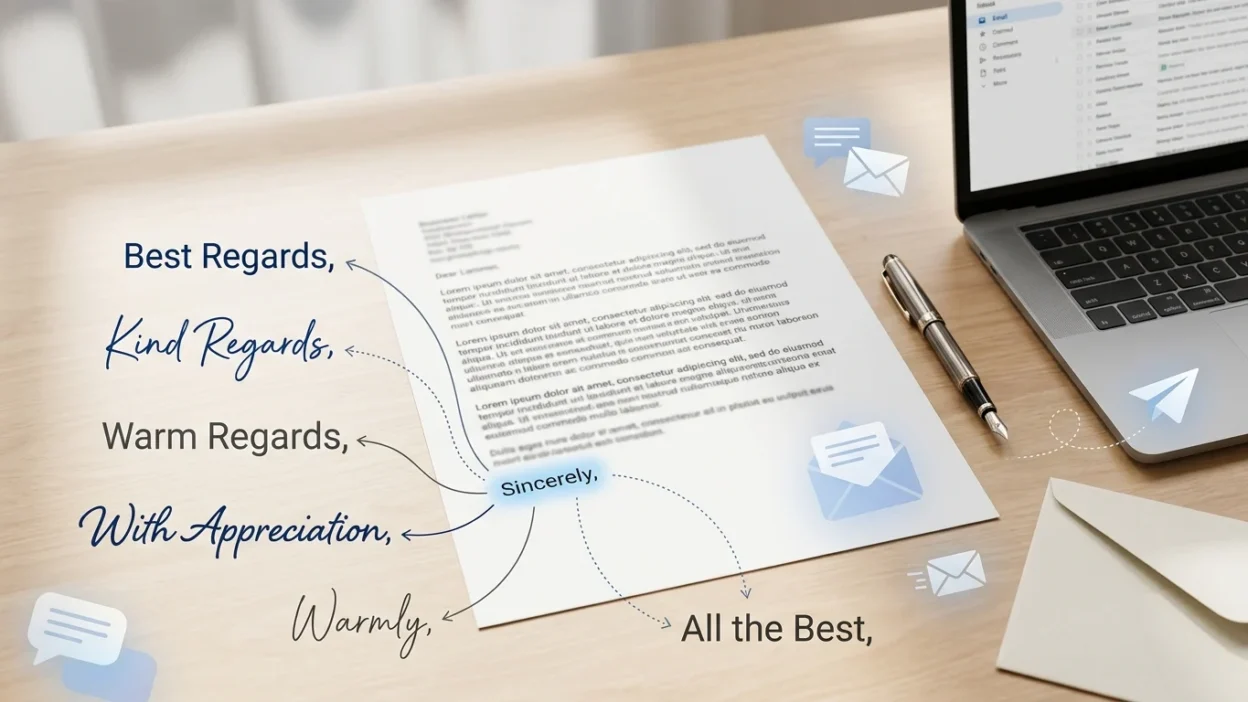
For practical writing, other ways to say sincerely can make a letter or email sound more genuine, warm, and professional. Choosing the right phrases for a personal message or business communication depends on the tone, purpose, and relationship with your client, colleague, recruiter, or other readers. A classic ending such as Best Regards can show respect and professionalism, while more heartfelt, friendly, or personal alternatives can add a thoughtful touch and make a note feel more authentic.
In my experience, carefully picked phrasing can transform ordinary emails and letters by giving them greater clarity, personality, and thoughtfulness. A meaningful and engaging sign-off can help you connect with readers and resonate with them more naturally, especially when your voice matches your writing style. Whether you want a creative, unique, fresh, or enthusiastic ending, the right choice can leave a lasting impression and communicate genuine care.
This guidance and these examples can make the process of creating stronger sign-offs easier. When improving your writing, consider the setting and the feeling you want your closing to carry, then choose an ending that feels natural rather than forced. This approach can help you enjoy writing more while making each message clearer and more suitable for its purpose.
Quick Answer
Common alternatives to “Sincerely” include Best Regards, Kind Regards, Warm Regards, Yours Truly, Respectfully, Best, and With Appreciation. The best option depends on your relationship with the reader, the purpose of your message, and the level of formality you need.
1. Professional Alternatives to “Sincerely”
1. Best Regards
Definition: “Best Regards” is a polite and professional closing used in emails and business letters.
Usage rule: Use it when you want to sound respectful and professional without being overly formal.
Practical example: “Thank you for reviewing the proposal. Best Regards, Daniel.”
Tips: This is a versatile choice for clients, colleagues, recruiters, and business contacts.
2. Kind Regards
Definition: “Kind Regards” combines professionalism with a slightly warmer feeling than a strictly formal sign-off.
Usage rule: Use it in workplace emails, customer communication, and professional correspondence.
Practical example: “Please let me know if you need any additional information. Kind Regards, Sarah.”
Tips: It works especially well when you have already developed a polite relationship with the reader.
3. Yours Truly
Definition: “Yours Truly” is a traditional closing that communicates politeness and sincerity.
Usage rule: It can be used in formal letters, although it is less common in everyday business emails.
Practical example: “Thank you for considering my application. Yours Truly, Michael Brown.”
Tips: Consider the overall style of your letter before choosing this more traditional phrase.
4. Respectfully
Definition: “Respectfully” expresses strong respect and is often associated with formal communication.
Usage rule: Use it when addressing an authority, making a formal request, or discussing a serious matter.
Practical example: “I appreciate your consideration of this request. Respectfully, James.”
Tips: Because it is formal, avoid using it for casual conversations with familiar colleagues.
5. With Appreciation
Definition: “With Appreciation” shows gratitude while maintaining a professional tone.
Usage rule: Use it when the recipient has helped you, provided information, or offered support.
Practical example: “Thank you for your assistance throughout the project. With Appreciation, Emma.”
Tips: Choose this closing when appreciation is one of the main purposes of your message.
6. With Gratitude
Definition: “With Gratitude” is a sincere sign-off that places emphasis on thankfulness.
Usage rule: Use it after receiving meaningful assistance, advice, support, or consideration.
Practical example: “Your guidance has been extremely helpful. With Gratitude, Olivia.”
Tips: It is warmer than many standard business endings, so use it when genuine appreciation is appropriate.
7. Respectfully Yours
Definition: “Respectfully Yours” is a formal closing that clearly communicates courtesy and respect.
Usage rule: Use it for formal correspondence where a serious or respectful tone is needed.
Practical example: “Thank you for taking the time to consider my request. Respectfully Yours, Robert.”
Tips: Keep this option for situations where its formal tone feels natural rather than using it in routine emails.
2. Warm and Friendly Alternatives
1. Warm Regards
Definition: “Warm Regards” adds friendliness while remaining suitable for many professional situations.
Usage rule: Use it when you want your email to feel personal without becoming too casual.
Practical example: “It was wonderful speaking with you today. Warm Regards, Lisa.”
Tips: This works well when you have an established relationship with the recipient.
2. All the Best
Definition: “All the Best” is a friendly sign-off that expresses goodwill and positive wishes.
Usage rule: Use it with colleagues, clients, friends, or professional contacts when a relaxed tone is suitable.
Practical example: “I hope everything goes well with your presentation. All the Best, Mark.”
Tips: It is particularly useful when you want to sound approachable and positive.
3. Best
Definition: “Best” is a short and modern email closing that communicates goodwill.
Usage rule: Use it for routine professional emails when the relationship does not require a highly formal ending.
Practical example: “I have attached the revised document for your review. Best, Rachel.”
Tips: Its simplicity makes it useful for frequent workplace communication.
4. Warmly
Definition: “Warmly” gives a message a personal, friendly, and caring tone.
Usage rule: Use it when the relationship is reasonably familiar and a warm ending fits the message.
Practical example: “Thank you again for your thoughtful advice. Warmly, Andrew.”
Tips: Avoid it in highly formal business correspondence where a more neutral closing may be expected.
5. Take Care
Definition: “Take Care” is a friendly closing that expresses goodwill toward the recipient.
Usage rule: Use it with friends, familiar colleagues, or people with whom you have a relaxed relationship.
Practical example: “Thanks for catching up today. Take Care, Jessica.”
Tips: It is usually too casual for formal applications, official letters, and highly structured business correspondence.
6. Have a Great Day
Definition: “Have a Great Day” ends a message with a positive and friendly wish.
Usage rule: Use it for everyday emails and customer communication when a cheerful tone is suitable.
Practical example: “Please contact us if you have any questions. Have a Great Day, Kevin.”
Tips: It can make short customer-service emails feel more welcoming.
7. Wishing You Well
Definition: “Wishing You Well” expresses goodwill and positive feelings toward the reader.
Usage rule: Use it when closing a supportive, personal, or transitional message.
Practical example: “I wish you success in your new position. Wishing You Well, Laura.”
Tips: This is more personal than a standard business sign-off, so match it to the relationship.
3. Alternatives for Business Emails and Letters
1. Thank You
Definition: “Thank You” is a direct closing that highlights appreciation.
Usage rule: Use it when the recipient is being asked to help, respond, review something, or take action.
Practical example: “Please send the completed form by Friday. Thank You, Daniel.”
Tips: Make sure the message genuinely involves a request or reason for appreciation.
2. Many Thanks
Definition: “Many Thanks” is a friendly professional expression of gratitude.
Usage rule: Use it for routine workplace requests and situations where someone is helping you.
Practical example: “I appreciate your help with the schedule. Many Thanks, Sophie.”
Tips: It is less formal than “Sincerely” but still appropriate for many professional emails.
3. With Thanks
Definition: “With Thanks” is a concise sign-off that communicates appreciation.
Usage rule: Use it when the message has a clear element of gratitude.
Practical example: “Thank you for sending the documents so quickly. With Thanks, Peter.”
Tips: It works particularly well in short business emails.
4. With Best Wishes
Definition: “With Best Wishes” expresses goodwill while maintaining a polite and professional tone.
Usage rule: Use it for messages involving congratulations, departures, new opportunities, or positive transitions.
Practical example: “Congratulations on your new role. With Best Wishes, Hannah.”
Tips: This closing adds warmth without becoming overly informal.
5. Yours Faithfully
Definition: “Yours Faithfully” is a traditional formal letter closing, especially in British English.
Usage rule: Traditionally, use it when a formal letter begins with a general greeting such as “Dear Sir or Madam.”
Practical example: “Thank you for considering my request. Yours Faithfully, James Wilson.”
Tips: Follow the conventions of the English variety and formal letter style you are using.
6. Yours Sincerely
Definition: “Yours Sincerely” is a formal closing commonly used when the recipient is addressed by name.
Usage rule: It is especially associated with formal letters rather than casual emails.
Practical example: “Dear Ms Smith, thank you for your response. Yours Sincerely, Daniel.”
Tips: In British English, distinguish its traditional use from “Yours Faithfully” when choosing a formal letter ending.
7. Cordially
Definition: “Cordially” is a polite and somewhat formal closing that communicates goodwill.
Usage rule: Use it when you want a professional ending that feels slightly less conventional than “Sincerely.”
Practical example: “Thank you for your time and consideration. Cordially, Emily.”
Tips: It can sound formal or old-fashioned in some modern email settings, so consider your audience.
4. Personal and Meaningful Sign-Offs
1. With Care
Definition: “With Care” communicates thoughtfulness and personal concern.
Usage rule: Use it when the relationship and subject matter support a more personal closing.
Practical example: “I hope you have a smooth recovery and plenty of support. With Care, Maria.”
Tips: Reserve it for messages where genuine personal warmth is appropriate.
2. With Warmth
Definition: “With Warmth” creates a sincere and personal ending with an affectionate tone.
Usage rule: Use it in personal correspondence or supportive messages rather than highly formal business letters.
Practical example: “Thank you for being there during such an important time. With Warmth, Alex.”
Tips: The emotional tone should match the relationship between the writer and recipient.
3. Fondly
Definition: “Fondly” expresses affection and positive personal feelings.
Usage rule: Use it with close friends, family members, or people with whom you share a meaningful relationship.
Practical example: “I will always remember our time working together. Finally, Claire.”
Tips: Avoid this sign-off in formal professional correspondence unless the relationship clearly supports it.
4. With Best Wishes
Definition: “With Best Wishes” can express sincere goodwill in both personal and professional contexts.
Usage rule: Use it when you want to end a message on a positive and considerate note.
Practical example: “I hope your next chapter brings many opportunities. With Best Wishes, Daniel.”
Tips: It is useful when a simple “Sincerely” feels too neutral for the situation.
5. Sending My Best
Definition: “Sending My Best” is a warm expression that communicates personal goodwill.
Usage rule: Use it in friendly correspondence when you want the closing to feel conversational.
Practical example: “I hope everything works out with your new project. Sending My Best, Nina.”
Tips: This is generally better suited to familiar contacts than formal business communication.
6. In Appreciation
Definition: “In Appreciation” communicates recognition for someone’s effort, kindness, or support.
Usage rule: Use it when appreciation is central to the message.
Practical example: “Thank you for your continued support of our team. In Appreciation, Thomas.”
Tips: It can make a thank-you message feel more deliberate and meaningful.
7. With Respect
Definition: “With Respect” expresses courtesy and acknowledges the importance of the recipient.
Usage rule: Use it in serious, formal, or sensitive correspondence when respect needs to be clear.
Practical example: “Thank you for considering the concerns outlined above. With Respect, Sarah.”
Tips: Because it can sound serious, avoid using it for casual everyday emails.
5. Choosing the Right Alternative for Your Situation
1. For a Job Application
Definition: A job application sign-off should communicate professionalism, confidence, and respect.
Usage rule: Choose formal options such as “Sincerely,” “Yours Sincerely,” or “Best Regards,” depending on the format.
Practical example: “Thank you for considering my application. I look forward to hearing from you. Sincerely, James.”
Tips: Avoid overly casual endings such as “Take Care” or “Cheers” in a formal application.
2. For a Client Email
Definition: A client email closing should maintain professionalism while supporting a positive working relationship.
Usage rule: “Best Regards,” “Kind Regards,” and “Warm Regards” are useful choices depending on familiarity.
Practical example: “Please let me know if you have any questions about the proposal. Kind Regards, Olivia.”
Tips: Match the sign-off to the tone already established in your communication with the client.
3. For a Colleague
Definition: A colleague sign-off can be professional while allowing more flexibility and friendliness.
Usage rule: Use “Best,” “All the Best,” “Kind Regards,” or “Thanks” according to the relationship and message.
Practical example: “Thanks for helping me prepare the presentation. Best, Ryan.”
Tips: Internal communication often allows a shorter and more conversational closing.
4. For a Recruiter
Definition: A recruiter email should end with a polished and respectful sign-off.
Usage rule: Choose “Best Regards,” “Kind Regards,” or “Sincerely” when discussing an application or interview.
Practical example: “Thank you for taking the time to speak with me about the position. Best Regards, Emma.”
Tips: Keep the ending professional because it contributes to the overall impression of your written communication.
5. For a Formal Letter
Definition: A formal letter requires a sign-off that follows accepted correspondence conventions.
Usage rule: Consider whether you addressed the recipient by name or used a general greeting before choosing “Yours Sincerely” or “Yours Faithfully.”
Practical example: “Thank you for your consideration. Yours Sincerely, Michael.”
Tips: Consistency between the greeting, body, and closing makes formal writing look polished.
6. For a Thank-You Message
Definition: A thank-you message benefits from a closing that reinforces appreciation.
Usage rule: Use “With Appreciation,” “With Gratitude,” “Many Thanks,” or “With Thanks” when appropriate.
Practical example: “Your advice helped me prepare for the interview. With Gratitude, Sophie.”
Tips: Let the reason for your gratitude guide the sign-off rather than automatically using “Sincerely.”
7. For a Friendly Message
Definition: A friendly message can use a relaxed closing that reflects the personal relationship.
Usage rule: Consider “All the Best,” “Warmly,” “Take Care,” or “Sending My Best” when the situation allows.
Practical example: “It was great catching up with you. Take Care, Daniel.”
Tips: The most natural sign-off usually sounds like something you would genuinely say to that person.
Placement & Grammar Rules Table
| Synonym or phrase | Sentence position / placement | Tone / formality | Example sentence |
| Sincerely | At the end of a formal letter or email | Formal | Sincerely, James |
| Best Regards | At the end of professional emails | Professional | Best Regards, Sarah |
| Kind Regards | Before the writer’s name | Professional and warm | Kind Regards, Daniel |
| Warm Regards | Before the writer’s name | Warm and professional | Warm Regards, Emma |
| Yours Sincerely | Formal letter closing | Formal | Yours Sincerely, Michael |
| Yours Faithfully | Formal letter after a general greeting | Very formal | Yours Faithfully, Olivia |
| Respectfully | At the end of formal or serious correspondence | Formal | Respectfully, Robert |
| Best | At the end of routine emails | Neutral and modern | Best, Laura |
| All the Best | Before the writer’s name | Friendly | All the Best, Mark |
| With Appreciation | Before the writer’s name | Warm and professional | With Appreciation, Nina |
| With Gratitude | Before the writer’s name | Personal and appreciative | With Gratitude, Alex |
| Thank You | At the end of a request or appreciation email | Professional and direct | Thank You, Peter |
| Take Care | At the end of friendly messages | Casual | Take Care, Jessica |
| Cordially | At the end of formal correspondence | Formal | Cordially, Thomas |
Common Mistakes When Using Alternatives to “Sincerely”
One common mistake is choosing a sign-off based only on how impressive it sounds. A phrase such as “Respectfully” may be grammatically correct but unnecessarily formal in a casual workplace email. Similarly, “Fondly” or “With Warmth” can feel too personal when addressing a new client or recruiter.
Another mistake is ignoring the relationship between the greeting and the closing. A highly formal opening followed by an extremely casual sign-off can make an email feel inconsistent. Writers should also avoid adding several closings together, such as “Best Regards, Sincerely,” because one clear sign-off is normally enough.
It is also important to consider regional conventions. Formal letter-writing practices can differ between British and American English, particularly with “Yours Sincerely” and “Yours Faithfully.” When writing for a specific organisation, profession, or country, checking its established correspondence style can help you avoid unnecessary errors.
Practical Example Paragraphs
Professional email:
Thank you for taking the time to discuss the project with me. I found your feedback extremely useful and will include the suggested changes in the revised proposal. Kind Regards, Daniel.
Client communication:
I appreciate your patience while we reviewed the account details. The requested information is now ready, and I have attached the updated document for your records. Best Regards, Sarah.
Personal message:
Thank you for always being willing to listen when I need advice. Your support has meant a great deal to me, and I hope we can catch up again soon. Warmly, Emma.
Formal letter:
Thank you for considering my application and for reviewing my qualifications. I appreciate the opportunity to present my experience and look forward to your response. Yours Sincerely, Michael Brown.
FAQs
1. What is the most professional alternative to “Sincerely”?
Best Regards and Kind Regards are widely useful professional alternatives, especially in workplace emails and business communication.
2. What can I use instead of “Sincerely” in an email?
Depending on the situation, you can use Best Regards, Kind Regards, Warm Regards, Best, Thank You, or With Appreciation.
3. Is “Best Regards” more casual than “Sincerely”?
“Best Regards” is generally professional but slightly less formal in feel than traditional formal-letter closings. It is commonly used in modern workplace emails.
4. What should I use instead of “Sincerely” in a friendly email?
For a friendly email, options such as Warmly, All the Best, Take Care, or Sending My Best may feel more natural when the relationship supports that tone.
5. Can I use “Kind Regards” with a client?
Yes. “Kind Regards” is commonly suitable for client communication because it combines courtesy, professionalism, and a moderate level of warmth.
6. What is the difference between “Yours Sincerely” and “Yours Faithfully”?
In traditional British formal-letter conventions, “Yours Sincerely” is generally associated with addressing the recipient by name, while “Yours Faithfully” traditionally follows a general greeting.
7. Is “Sincerely” still appropriate in professional emails?
Yes. “Sincerely” remains appropriate for formal correspondence, applications, official communication, and situations where a traditional professional tone is preferred.
8. What is a warm alternative to “Sincerely”?
“Warm Regards,” “Warmly,” and “With Best Wishes” can provide a warmer ending while remaining respectful, depending on the relationship and context.
Final Thoughts
Choosing other ways to say sincerely gives your writing more flexibility and helps your closing match the situation. Best Regards, Kind Regards, Warm Regards, and With Appreciation can serve different professional and personal purposes.
The key is to consider your audience, relationship, purpose, and desired level of formality before selecting a sign-off. A carefully chosen closing can make an ordinary email or letter feel clearer, more natural, and more thoughtful.