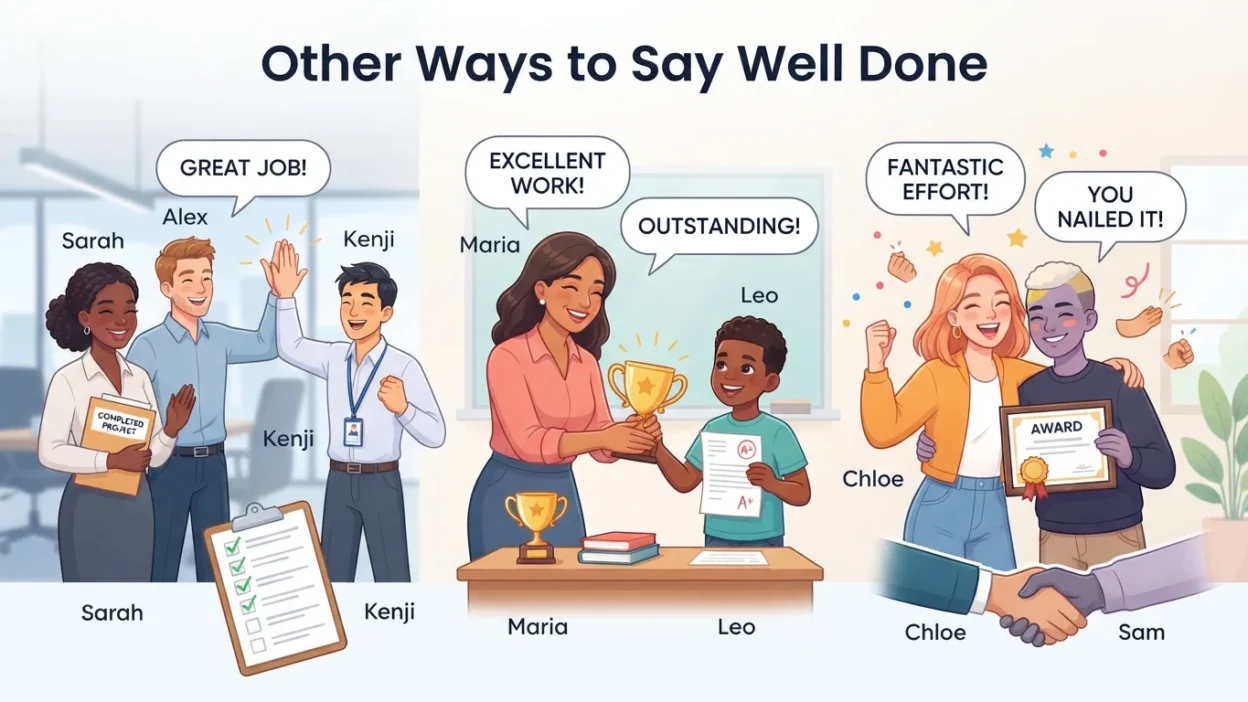
Finding the right words to praise someone can make your message more meaningful. While “well done” is a simple and positive expression, using the same phrase repeatedly can make your appreciation sound predictable. Learning other ways to say well done gives you more flexibility when congratulating someone on an achievement, recognizing hard work, or celebrating progress.
The best compliment depends on the situation, your relationship with the person, and the level of formality you need. A phrase such as “Excellent work” may suit a professional email, while “You nailed it!” can sound more natural when speaking with a friend. This guide explains practical alternatives with definitions, usage rules, examples, and tips.
Quick Answer
Some natural alternatives include “Great job,” “Excellent work,” “Fantastic effort,” “You did an amazing job,” “I’m impressed,” “Outstanding work,” “You nailed it,” and “Keep up the great work.” Choose a phrase according to the achievement, relationship, and tone you want to communicate.
Professional Ways to Say Well Done
1. Excellent Work
Definition: A professional way to praise high-quality work.
Usage rule: Use it when someone has completed a task particularly well.
Practical example: “Excellent work on the quarterly report.”
Tips: It works especially well in emails, meetings, and workplace feedback.
2. Outstanding Work
Definition: This means the person’s work is noticeably better than expected.
Usage rule: Use it for impressive professional or academic achievements.
Practical example: “Your presentation was outstanding work.”
Tips: Choose this when you want your praise to sound strong and formal.
3. Great Job
Definition: A simple expression of approval and appreciation.
Usage rule: Use it in both professional and casual conversations.
Practical example: “Great job handling that client meeting.”
Tips: It is one of the safest alternatives to “well done.”
4. Impressive Work
Definition: A phrase showing that someone’s performance caught your attention positively.
Usage rule: Use it when the result demonstrates skill or effort.
Practical example: “That was impressive work on such a short deadline.”
Tips: Add a specific achievement to make the praise more credible.
5. Excellent Performance
Definition: A formal expression recognizing strong performance.
Usage rule: Use it for employees, students, presentations, or evaluations.
Practical example: “You delivered an excellent performance during the presentation.”
Tips: This phrase is particularly suitable for formal feedback.
6. Great Work
Definition: A friendly but professional way to recognize quality.
Usage rule: Use it after someone completes a successful task.
Practical example: “Great work on organizing the project.”
Tips: Keep it short when responding quickly to workplace achievements.
7. Keep Up the Great Work
Definition: Praise combined with encouragement to continue performing well.
Usage rule: Use it when someone is consistently showing good progress.
Practical example: “You’re making excellent progress. Keep up the great work.”
Tips: It is useful for employee feedback, students, and ongoing projects.
Friendly Ways to Say Well Done
8. You Nailed It
Definition: An informal way to say someone succeeded perfectly.
Usage rule: Use it with friends, coworkers you know well, or in casual settings.
Practical example: “You nailed it with that presentation!”
Tips: Avoid it in highly formal correspondence.
9. You Crushed It
Definition: A very enthusiastic way to praise exceptional performance.
Usage rule: Use it in relaxed, energetic conversations.
Practical example: “You crushed it at the competition!”
Tips: This expression is casual and should match the relationship.
10. Fantastic Job
Definition: A warm expression of strong approval.
Usage rule: Use it when someone’s result is especially successful.
Practical example: “Fantastic job on the event!”
Tips: It works well in messages, conversations, and informal feedback.
11. You Did Great
Definition: A simple and personal way to praise someone’s performance.
Usage rule: Use it after an activity, performance, presentation, or challenge.
Practical example: “You did great during your interview.”
Tips: It sounds encouraging without being overly formal.
12. You Did Amazing
Definition: An enthusiastic compliment for an impressive achievement.
Usage rule: Use it when you genuinely want to express excitement.
Practical example: “You did amazing in the competition.”
Tips: “You did an amazing job” is slightly more complete in formal writing.
13. That Was Brilliant
Definition: A strong compliment showing admiration for an idea or performance.
Usage rule: Use it for creative, clever, or highly successful work.
Practical example: “That was brilliant! Your solution saved us hours.”
Tips: It is especially natural in British English.
14. You’re on Fire
Definition: A casual expression meaning someone is performing exceptionally well.
Usage rule: Use it when someone succeeds repeatedly.
Practical example: “Three successful presentations this week—you’re on fire!”
Tips: Keep this phrase for informal conversations.
Heartfelt Ways to Say Well Done
15. I’m Proud of You
Definition: A personal expression of admiration and emotional support.
Usage rule: Use it when someone’s achievement has personal meaning.
Practical example: “You worked so hard for this. I’m proud of you.”
Tips: This phrase is warmer than a simple professional compliment.
16. You Should Be Proud of Yourself
Definition: Encouragement that recognizes someone’s personal accomplishment.
Usage rule: Use it after a difficult challenge or meaningful achievement.
Practical example: “You completed the entire course. You should be proud of yourself.”
Tips: It is especially effective when the person has overcome difficulties.
17. I’m Really Impressed
Definition: A sincere statement showing admiration for someone’s ability or effort.
Usage rule: Use it when something genuinely exceeds your expectations.
Practical example: “I’m really impressed by how quickly you solved the problem.”
Tips: Mention what impressed you for a stronger compliment.
18. You’ve Done Something Wonderful
Definition: A warm way to recognize meaningful or positive work.
Usage rule: Use it for personal, creative, charitable, or emotional achievements.
Practical example: “You’ve done something wonderful for the community.”
Tips: It works best when the accomplishment has clear positive value.
19. You Deserve the Praise
Definition: This tells someone their achievement genuinely merits recognition.
Usage rule: Use it when others may also be recognizing their success.
Practical example: “You worked hard for this result, and you deserve the praise.”
Tips: It can make your appreciation feel thoughtful and sincere.
20. You’ve Made Me Proud
Definition: A personal expression of happiness about someone’s achievement.
Usage rule: Use it with people you have a close relationship with.
Practical example: “You handled that difficult situation with confidence. You’ve made me proud.”
Tips: Because it is emotional, use it where personal warmth is appropriate.
21. You’ve Earned This
Definition: Recognition that someone’s success came through effort or dedication.
Usage rule: Use it when hard work clearly contributes to the result.
Practical example: “After months of preparation, you’ve earned this success.”
Tips: This phrase emphasizes effort rather than talent alone.
Ways to Praise Effort and Progress
22. Fantastic Effort
Definition: Praise focused on the work someone put into an activity.
Usage rule: Use it even when the final result is not perfect.
Practical example: “Fantastic effort on the first draft.”
Tips: It is excellent for encouraging continued improvement.
23. Great Effort
Definition: A simple way to recognize dedication and hard work.
Usage rule: Use it when someone’s effort deserves acknowledgment.
Practical example: “Great effort preparing for the presentation.”
Tips: This is useful when you want to praise the process.
24. You’ve Come a Long Way
Definition: Recognition of someone’s progress over time.
Usage rule: Use it when comparing current performance with earlier efforts.
Practical example: “Your writing has improved so much. You’ve come a long way.”
Tips: This phrase is encouraging because it highlights growth.
25. Your Hard Work Paid Off
Definition: It means someone’s effort produced a successful result.
Usage rule: Use it after a period of preparation or persistence.
Practical example: “You passed the exam—your hard work paid off.”
Tips: It connects effort directly with achievement.
26. You’ve Made Great Progress
Definition: Praise for noticeable improvement or development.
Usage rule: Use it for ongoing work rather than only completed achievements.
Practical example: “You’ve made great progress with your presentation skills.”
Tips: This is particularly useful for teachers, managers, and mentors.
27. Your Effort Really Shows
Definition: A way to say that someone’s dedication is visible in the result.
Usage rule: Use it when quality clearly reflects hard work.
Practical example: “The final design looks excellent. Your effort really shows.”
Tips: It sounds genuine when paired with a specific observation.
28. You’re Making Excellent Progress
Definition: Encouragement for someone who is improving steadily.
Usage rule: Use it when the work is still developing.
Practical example: “You’re making excellent progress on the project.”
Tips: It motivates people without suggesting the task is already finished.
Creative and Enthusiastic Alternatives
29. Bravo!
Definition: A short expression of strong approval or admiration.
Usage rule: Use it after an impressive performance or accomplishment.
Practical example: “Bravo! That was an excellent presentation.”
Tips: It works particularly well for performances and creative achievements.
30. Kudos to You
Definition: An informal expression of praise and recognition.
Usage rule: Use it when someone deserves credit for an accomplishment.
Practical example: “Kudos to you for finishing the project early.”
Tips: It is friendly and works well in workplace messages.
31. Hats Off to You
Definition: A friendly expression of admiration and respect.
Usage rule: Use it for achievements requiring considerable effort or skill.
Practical example: “Hats off to you for completing the marathon.”
Tips: This phrase has a warm, conversational tone.
32. That’s the Way to Go
Definition: An encouraging expression showing approval of someone’s actions.
Usage rule: Use it when someone has made a smart or successful choice.
Practical example: “You solved the problem without delaying the project. That’s the way to go!”
Tips: It is best suited to informal or supportive communication.
33. You’re Doing an Amazing Job
Definition: Strong praise for someone’s current performance.
Usage rule: Use it when the person is actively working toward a goal.
Practical example: “You’re doing an amazing job managing the new team.”
Tips: It encourages continued effort rather than only celebrating completion.
34. That’s Excellent
Definition: A concise expression of approval.
Usage rule: Use it when reacting directly to an idea, answer, or result.
Practical example: “You found the issue already? That’s excellent.”
Tips: Its simplicity makes it useful in professional and everyday conversations.
35. What an Achievement!
Definition: An enthusiastic way to highlight the importance of someone’s success.
Usage rule: Use it for major milestones or memorable accomplishments.
Practical example: “You completed your first book—what an achievement!”
Tips: Use it when the accomplishment deserves special emphasis.
Placement & Grammar Rules Table
| Synonym or phrase | Sentence position / placement | Tone / formality | Example sentence |
| Excellent work | Usually at the beginning or end | Professional | “Excellent work on the report.” |
| Great job | Beginning or end | Friendly/Professional | “Great job on the presentation.” |
| Outstanding work | Beginning or end | Formal | “Outstanding work on this project.” |
| You nailed it | Usually after the achievement | Casual | “You nailed it with that presentation.” |
| Fantastic effort | Beginning or end | Warm | “Fantastic effort on the assignment.” |
| I’m impressed | Beginning | Personal/Professional | “I’m impressed by your preparation.” |
| Keep up the great work | Usually at the end | Encouraging | “You’re progressing well. Keep up the great work.” |
| Kudos to you | Beginning or end | Casual/Professional | “Kudos to you for finishing early.” |
| Your hard work paid off | Usually after the achievement | Warm | “You passed the exam; your hard work paid off.” |
| I’m proud of you | Beginning or end | Personal | “I’m proud of you for reaching this goal.” |
Common Mistakes When Saying Well Done
One common mistake is using the same compliment repeatedly. Even a positive phrase can lose its impact when it appears after every task. Instead, match the praise to the achievement. Use “Fantastic effort” when you want to recognize hard work, “Outstanding work” for exceptional quality, and “Keep up the great work” for ongoing progress.
Another mistake is ignoring tone and context. Saying “You crushed it” to a close friend may sound natural, but it may not be appropriate in a formal business email. Likewise, “I’m proud of you” carries a personal feeling that may not suit every professional relationship. Consider the person, situation, relationship, and purpose before choosing an alternative.
Avoid vague praise when you can be specific. Instead of simply saying “Great job,” explain what was successful: “Great job explaining the data so clearly.” Specific feedback sounds more sincere and gives the person useful information about what they did well.
Practical Examples
In a workplace setting, a manager might write: “Excellent work on the client proposal. Your research was thorough, and the recommendations were easy to understand. Keep up the great work as we move into the next stage.” This sounds more specific and professional than repeating “well done.”
For a friend, a warmer message may work better: “You worked for months to prepare for this competition, and your hard work paid off. You nailed it, and you should be proud of yourself.” These expressions recognize both the result and the effort behind it.
For a student, a teacher could say: “You’ve made great progress since your first assignment. Your organization has improved, and your effort really shows in this latest project.” This approach provides encouragement while showing the student exactly what has improved.
FAQs
What is another way to say “well done” professionally?
“Excellent work,” “Outstanding work,” “Great job,” and “Impressive work” are strong professional alternatives.
What is a more enthusiastic way to say well done?
Try “You nailed it,” “You crushed it,” “Fantastic job,” “Bravo,” or “What an achievement!”
How can I say well done without sounding repetitive?
Focus on what the person actually accomplished. Use phrases such as “Your hard work paid off,” “You’ve made great progress,” or “I’m really impressed.”
What is a good way to praise someone’s effort?
“Fantastic effort,” “Great effort,” “Your effort really shows,” and “Your hard work paid off” all emphasize dedication.
How do you say well done in an email?
For a professional email, use phrases such as “Excellent work on the project,” “Outstanding work,” or “I’m impressed with the results.”
What is a warm way to say well done?
“I’m proud of you,” “You should be proud of yourself,” and “You’ve earned this” are warm and personal options.
Is “kudos to you” professional?
Yes. “Kudos to you” can work in friendly professional communication, although it is more conversational than formal.
Can I say “you nailed it” at work?
Yes, if your workplace culture is relaxed and the relationship is informal. For formal communication, “Excellent work” or “Outstanding work” is safer.
Final Thoughts
Knowing other ways to say well done helps you make praise more specific, natural, and meaningful.
Choose expressions based on the person’s achievement, effort, relationship, and communication setting.
Professional phrases can recognize quality, while warmer expressions can celebrate personal success.
Specific praise is usually more powerful than repeating a generic compliment.
The best wording does more than say someone succeeded—it shows why their work mattered.
When your praise is thoughtful and appropriate, it can encourage confidence, motivation, and continued improvement.